Languages
Sunday, November 22, 2026



News and Views from the Global South


The Economic Impact of COVID-19 on Developing Countries – Part 2
What is likely to be the impact of the COVID-19 pandemic on developing economies? In the first of this two part article we looked at possible short term disruptions and discussed actions by the private sector and Governments.
Diverse Voices Should Be Represented in Coronavirus Experts on TV
During a crisis, such as the novel coronavirus, whose impact changes with every passing minute, the urge to listen to and watch the news, and get firsthand insights and real time updates can be constant. Indeed, millions of Americans are frequently checking the news. I know I am. What I’ve noticed on three of the major TV stations I’ve watched across the day is the absence of diversity in the experts commenting on the pandemic. This is inexcusable.
Reimagining Farming Post-Covid Pandemic
Together with medical services and transportation, farming and food production have been correctly identified as ‘essential services’ by all countries under lockdown. The Covid-19 pandemic has not yet made a dent in the food supply and so far, there are no reports of shortage of essential food and agricultural goods. All cities and towns are actively coordinating with government agencies, farms, businesses and transport companies to maintain the supply chain and ensure full availability of food for the population,
Human Rights and Compassion Must Guide Enforcement of COVID-19 Mitigation
Covid-19 infections continue to rise, bringing normal life to a virtualstandstill and causing countries to shut themselves off from the rest of the world.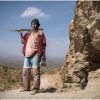
Growing Youth Activism for Environmental Protection in Africa
The mining sector in Africa is facing radical change as youth activists take action against the environmental degradation caused by mining industries. Tensions between activists and the mining industry have raised, however, concerns over human rights abuses.
Pandemic Crisis May Trigger Societal Restructuring
The Chinese word for crisis consists of two characters - “weiji”. Wei means danger and ji means opportunity. Every crisis is pregnant with danger and risks but also with opportunities – for some to make money, for others to learn valuable lessons, and for society to reorient or restructure its priorities, institutions and even the system.
Latin America Has Weak Defences Against the Pandemic
Health systems in Latin America, already falling short in their capacity to serve the population, especially the poor, are in a weak position and face serious risks when it comes to addressing the COVID-19 pandemic.
Coronavirus: Country Comparisons are Pointless Unless We Account for These Biases in Testing
Suppose we wanted to estimate how many car owners there are in the UK and how many of those own a Ford Fiesta, but we only have data on those people who visited Ford car showrooms in the last year. If 10% of the showroom visitors owned a Fiesta, then, because of the bias in the sample, this would certainly overestimate the proportion of Ford Fiesta owners in the country.
Martin Khor, Third Worldist
Martin Khor Kok Peng passed away just after the end of the first quarter of 2020. He leaves behind an unusually rich legacy. Atypically for people mainly working in the worldideas, he was also a very practical and pragmatic activist who successfully built and sustained several important initiatives which will live on after him.
U.N. Releases Report on Socio-economic Effects of Coronavirus
As the number of coronavirus cases continues to grow, concerns are simultaneously growing about the current and long-term effects this will have on certain demographics -- specifically, women, the youth, migrant workers, and many employees around the world.
What More than COVID-19 to Jolt G20 into Collective Action?
My recent study on “The G20@10: Time to shift gears” 1 shows that, during the past decade, the main joint, collective action of the G20 has been to issue communiqués and other types of statements.
Can We Use Digital Technology to Cushion the Pandemic’s Blow?
As the world grapples with COVID-19, governments face a daunting challenge: limiting the adverse impact of a pandemic that has ground economic activity to a halt, affecting people at a scale rarely seen before.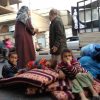
The Gaza Strip and COVID-19: Preparing for the Worst
The coronavirus is now present in Gaza, the populous Palestinian enclave blockaded by air, land and sea since 2007. An epidemic would be calamitous. Hamas should tighten public health measures; Israel should loosen restrictions so that medical supplies can enter and afflicted Palestinians can
Snapshot of Life under Lockdown in Bangladesh
 The Coronavirus pandemic is changing how we live our daily lives. The scale of the COVID-19 and its impact on our lives is unprecedented. When humanity gets past this, the world will be a very different place than the one we have known.

Coronavirus Proves Need for Free Healthcare for All– Now
The multi-layered crisis of the Coronavirus epidemic has been a dramatic shock to everyone. But, to communities affected by HIV and AIDS, the crisis has not only brought a further shock to already vulnerable people, it has brought other reactions too – a troubling sense of déjà vu, and a passionate, empathetic, fierce solidarity with all those affected by Coronavirus.
Surviving Domestic Violence in times of Covid19
“I come from Baglung District, a part of Dhawalagiri Zone in Nepal. My house overlooks the river. Do you know, our district is known for the suspension bridges?”, her eyes glimmer for a fraction of a second and then she breathes a heavy sigh! Her right hand is still wrapped in a scarf, while with the other she pats her 17-month-old. “If I ever get a chance I will take you to my village, we have a lot of medicinal plants.” She pauses while tears roll down as she continues our Facetime session. “I was 16 when I had my first child and I was 17 when my arm was broken by my mother-in-law.”
Dangers and Lessons of Present Multiple Crises
The Covid-19 pandemic, erupting in the background of lethargic global economy, could turn out to be the singular biggest crisis in a century. First reported in Wuhan, China, the corona virus has reached almost all countries. It has infected close to 1 million persons and caused over 40,000 deaths at time of writing; and the figures keep climbing. It is a health catastrophe which if not checked in its track would be the most serious since the Spanish Flu of 1918 that killed over 50 million people.
The Economic Impact of COVID-19 on Developing Countries
What is likely to be the impact of the COVID-19 pandemic on developing economies? It is difficult to make predictions, because much will depend on the spread of the disease, especially in Africa, Latin America, Asia and the Middle East, and the measures various Governments will take in the coming weeks and months.
The Need for Empathy in the Time of Coronavirus
The experience and interpretation of the Coronavirus pandemic oscillates between the personal and the general spheres. The official discourse and measures taken by authorities have a direct impact on our lives, change our daily existence and foster worries for the future. A dark cloud of uncertainty hovers above us. What do decision makers know? What can they do? What can we do? Many of us are secluded in our own homes, others in wards or hospitals, or even alone and far away from the ones they love:
Modern Day Slavery Reaches a Far Corner of the World
The deadly, fast-spreading coronavirus which upended three key UN conferences—on the empowerment of women, on nuclear disarmament and on indigenous rights—claimed another casualty last week when a commemorative meeting on the transatlantic slave trade was postponed.
Walking the Talk on Climate Change after the Pandemic: Reorienting State-Owned Enterprises towards Sustainability
This year started with the news of the appearance of a new virus, COVID-19. The impact and severity of its effects in public health, mortality and the world economy are overwhelming. No public health system was prepared for this crisis, and yet governments are reacting deploying different policies to mitigate the crisis, and recover as fast as possible.« Previous Page — Next Page »


Want to keep up with the latest news and views from the Global South? Sign up for IPS Daily News Report for daily emails with our top stories about international development, climate change, gender and more. (Formerly IPS TerraViva since 1993).

The Week with IPS

NEXT STOP - SDGs
Tracking global progress towards a sustainable world
Tracking global progress towards a sustainable world
