Languages
Sunday, November 22, 2026



News and Views from the Global South


Coming Down the Davos Mountain with a Gender Lens
In a recent report by World Economic Forum (WEF) shows women suffer a “triple whammy” in the workplace. Without drastic action, gender parity will take more than a lifetime to achieve. This is the challenge that Katja Iversen, President and CEO of Women Deliver is staring down.
From Cocoa to Chocolate, Made With Love in Africa
A premium chocolate maker in São Tomé and Príncipe is on a drive to promote the taste for "made in Africa" chocolate, and tap into a $100 billion global indulgence associated with Valentine’s Day.
The Hammer of Justice for Sexual Assault Victims Must Be Swift, Loud and Consistent
Every year Valentines Day is celebrated with great relish & celebration. People show their affection for another person or people by sending cards, flowers or chocolates with messages of love.
Why Paraguay Can Be a “Beacon State” for Forest Management
Imagine a forest that covered half of your entire country. A biodiverse forest which supports thousands of species from giant anteaters to armadillos to jaguars. A forest that is home to one the world’s last uncontacted tribes.1
Amplifying Voices of Climate Activists of Color
Recently, the Associated Press cropped out Ugandan climate change activist Vanessa Nakate from a photo at the World Economic Forum. The remaining activists in the photo, including Greta Thunberg, were all white.
Desert Locusts Invade East Africa
Widespread hatching and movement of destructive desert locusts will turn into a full-blown crisis in the coming weeks in East Africa and neighbouring countries, the UN Food and Agriculture Organization warns.
Female Genital Mutilation: Not just an Emotional and Health Impact on Women but a $1.4 Billion Dollar Cost to Communities
When society doesn't act to prevent Female Genital Mutilation (FGM) it has a massive economic cost -- over $1 billion -- on communities globally. And while the practice is starting to become less common over time, experts say a large number of women and girls still remain affected.
Restoring Competition in ”Winner-took-All” Digital Platform Markets
Digital platforms are at the centre of the global economy and daily lives of consumers. A handful of these platforms have become dominant in specific markets without facing meaningful competition. They include Amazon as a marketplace, Facebook in social networking, Google in search engines and Apple and Google in application stores.
Internet Needs New Global Regulations Against Online Sexual Exploitation
Online sexual exploitation is a global epidemic that is increasing at an alarming rate.
Landmark Law Empowers Women Farmers
When Pakistan’s eastern Sindh province passed the ‘Sindh Women Agricultural Workers Bill’ on 20 December, giving women in agriculture, livestock, fisheries and other agro-based work the same rights and benefits enjoyed by workers in the industrial sector, it was a revolutionary step for the whole of South Asia.
The Pacific Community launches the Pacific Healthy Recipe Contest
The Pacific Community (SPC) is calling for contestants to join the Pacific Healthy Recipe Contest and showcase their cooking skills and creativity to promote healthy eating and prevention of non-communicable diseases (NCDs).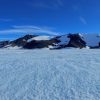
Ancient Antarctic ice melt caused extreme sea level rise 129,000 years ago – and it could happen again
Rising global temperatures and warming ocean waters are causing one of the world’s coldest places to melt. While we know that human activity is causing climate change and driving rapid changes in Antarctica, the potential impacts that a warmer world would have on this region remain uncertain. Our new research might be able to provide some insight into what effect a warmer world would have in Antarctica, by looking at what happened more than 129,000 years ago.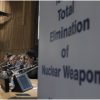
War No More
75 years ago following the end of the Second World War and the first time any state has dropped an atomic bomb, not once, but twice, on Hiroshima and Nagasaki, 51 countries from all continents met to create the United Nations.
Are Economic Systems Sexist?
Women’s unpaid care work is the hidden engine that keeps the wheels of our economies, businesses, and societies moving, yet it is not accounted for.
Investigation a Crucial Tool for Preventing Child Rights Violations in Armed Conflicts
There has been a disturbing increase in violence perpetrated against children in conflicts worldwide, coupled with almost total impunity.
Q&A: Africa Must Innovate its Food Systems in Order to Beat Hunger and Poverty
Africa needs to invest in agriculture by putting more resources into innovative research and development that can boost food and nutritional security, according to leading scientist, Nteranya Sanginga.
Intellectual Property Raises Costs of Living
Many medicines and medical tests are unaffordable to most of humanity owing to the ability of typically transnational pharmaceutical giants to abuse their monopoly powers, enforced by intellectual property laws, to set prices to maximize profits over the long-term.
Inequalities in Human Development in the 21st Century
Inequalities. The evidence is everywhere. And although they may be hard to measure and summarize, there is a sense in many countries that many are approaching a precipice beyond which it will be difficult to recover.
Synergy with Hydropower Plants Boosts Biogas Production in Brazil
Fomenting biogas production among agricultural producers may seem at first glance to be a distraction from the purpose of Itaipu, the giant hydroelectric power plant shared by Brazil and Paraguay, but in fact it is part of their energy business strategy.
How Encroachments, Willows and Silt Ate up Half of Kashmir’s Own Sea
Warming himself with a kangri (a firepot) kept under his pheran (a long winter cloak worn by Kashmiris), 66-year-old Mohammad Subhan Dar sat chatting with a bunch of his fellow villagers on a January afternoon on the edge of the road overlooking Wular Lake in Saderkote-Bandipora, northern India.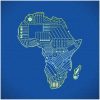
Could Africa’s Marketplace Platforms Help Upskill a Generation for the Digital Age?
By 2030, sub-Saharan Africa will be home to more than a quarter of the world’s population under 25. Between 15 and 20 million young people will enter the African workforce each year, joining the ranks of the millions of currently under- and unemployed people searching for better livelihoods.« Previous Page — Next Page »


Want to keep up with the latest news and views from the Global South? Sign up for IPS Daily News Report for daily emails with our top stories about international development, climate change, gender and more. (Formerly IPS TerraViva since 1993).

The Week with IPS

NEXT STOP - SDGs
Tracking global progress towards a sustainable world
Tracking global progress towards a sustainable world
