Languages
Sunday, November 22, 2026



News and Views from the Global South


Pulses for a Sustainable Future
Reducing poverty and inequalities, eliminating hunger and all forms of malnutrition and achieve food security for all – these are some of the most important objectives of the Sustainable Development Goals. Still, the rate of poverty and inequalities is increasing and over 820 million people are going hungry. In addition, 2 billion people in the world are food insecure with great risk of malnutrition and poor health. This alarming situation is further aggravated by current trends such as the rate of population growth, impacts of climate change, loss of biodiversity, soil degradation and many others. Transition to more sustainable food systems can provide adequate solutions to all these challenges. Pulses could play an important role in this transition, having nutritional and health benefits, low environmental footprint, and positive socio-economic impacts as well. What is required to promote and support the production and consumption of more pulses? This question is particularly relevant now, since 10 February is the World Pulses Day.
Coronavirus: A Flashback to Biological Warfare of a Bygone Era
In the wake of the latest coronavirus outbreak, movie buffs are drawing an eerie parallel with the film Contagion, a 2011 thriller based on a lethal airborne virus called Nipah and how the world’s medical community battled to find a cure for the pandemic.
Globalization of Indifference: Ai Weiwei and the Refugee Crisis
Humans belong to a species that is constantly on the move . Since some Homo Sapiens 125,000 years ago began to move from the African continent, humans can be found all over the world, even in such utterly inhospitable places as the icebound plateaus of Antarctica. By moving, humans have tried to escape inadequate food-supply or otherwise unacceptable living conditions. Natural forces have forced them to leave, or even more commonly – violent actions by other humans. With them migrants have brought their means of expression and interaction, some of them expressed through their art.
Do I Need Permission to Breathe? – A Migrant Woman’s Story
“I soiled my pants, I could feel the wetness seeping into my waistband, my eyes started to become blurry. Only the sound of the blaring television assured me that I was still alive. I tried to stop thinking and make my mind go completely blank. Over the years I have adapted and now I can make my mind go numb. But the only nagging question ringing on my mind during the last 45 seconds was: will this stain the carpet? Should I clean myself first or should I clean the carpet first? Which one is safer? Did he notice the stain?
Strengthening Caribbean Regional Integration
The Caribbean economies have long recognized the value of working together. Improving regional integration—for instance, through more intraregional trade and policy coordination—can help the region’s small-size economies build greater resilience and scale, as well as enhance bargaining power on the global stage.
UNFPA Highlights Need to Address Sexual and Reproductive Health of Women in Crisis Areas
The United Nations Population Fund (UNFPA) is appealing for $683million in their mission to address sexual and reproductive health services for women and girls in conflict areas in the world.
Organization of Educational Cooperation Established to Meet SDG4
 The Education Relief Foundation (ERF), jointly with the Republic of Djibouti, convened the III ForumBIE 2030 on Balanced and Inclusive Education On January 27-29 2020. This third ForumBIE 2030, with the overall aim to develop strategies for achieving the United Nations Sustainable Development Goal 4 (SDG 4) on inclusive and equitable quality education, concluded with the signing of the Universal Declaration on Balanced and Inclusive Education, which established a new international organization : 'Organization for Educational Cooperation'.

Vegetables Rot in Food Markets across Zimbabwe While Half the Population Faces Food Insecurity
Piles and piles of rotting vegetables at food markets situated right in Zimbabwe's central business district would elsewhere be viewed as a sign of plenty. But this Southern African nation has not been spared the irony of food wastage at a time of food shortages.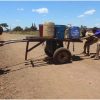
A Humanitarian Response to the Crisis in Zimbabwe
In November 2019, the UN’s Special Rapporteur on the Right to Food described Zimbabwe – a country once hailed as the bread basket of Africa – as a state on the brink of man-made starvation.
World’s Young Activists at War: First, Occupy Wall Street, Next Un-Occupy Palestine
The world’s young activists, numbering over 3.8 billion, are on the war path. The rising new socialist movements—which included “Black Lives Matter,” “Occupy Wall Street” “Un-Occupy Palestine” and "the #Me Too Movement" triggering women's marches— were aimed at battling racism, institutionalized inequalities, political repression and sexual harassment.
India’s Outdoor Workers on the Frontlines of Climate Change
Last June when more than half of India was reeling under daily temperatures topping 40 degrees Celsius, Nursing Behera’s 11-month-old son burned both his legs when a pot of boiling water fell on him.
World Drains Away Valuable Energy, Nutrients & Water in Fast-Growing Wastewater Streams
Vast amounts of valuable energy, agricultural nutrients, and water could be recovered from the world’s fast-growing volume of municipal wastewater.
Children are Bearing the Bitter Brunt of Counter-Terrorism Efforts: Report
Counter-terrorism efforts adopted by governments around the world in response to threats of terrorism are affecting children negatively in numerous ways, a report by Watchlist on Children and Armed Conflict (Watchlist) claimed last week.
Venezuela: Violent Abuses in Illegal Gold Mines
Residents of Venezuela’s southern Bolívar state are suffering amputations and other horrific abuses at the hands of armed groups, including Venezuelan groups called “syndicates” in the area and Colombian armed groups operating in the region, both of which exercise control over gold mines, Human Rights Watch said Tuesday, February 4.
Africa Must Prioritise Upskilling its Unemployed Youth, Development Bank Urges
Africa’s inability to produce adequate skills is negatively impacting its economic growth.
Coping with Australia’s Surfeit of Natural Disasters & Lessons to be Learned
I love visiting Canberra in the summer. The air is clean. The water in lake Burley Griffin is crystal clear and the "go boats" merrily bob up and down with their wine sipping occupants while black swans frolic in peace.
Financialization Increases Inequality
Financialization has worsened inequality through various channels, including macroeconomic policies. For example, quantitative easing and low, if not negative interest rates have fuelled credit and asset price bubbles, while fiscal spending cuts have adversely affected those depending on government assistance.
Women & Girls Up Front — the Humanitarian Response in Democratic Republic of Congo
Eleven-year-old “Anne” went to a health facility with her mother in the conflict-affected province of Ituri, in northeastern Democratic Republic of the Congo. At first, she could barely tell her story.
A Bigger Impact in a Smaller World: The China Situation
We are now living in a hyper communicative world where news does travel faster than lightning. Boundaries, borders, geographical and time differences have become next to obsolete in today’s speed driven world. At any point in time people, news and local occurrences can influence internationally without much local isolation. Along with the advantages of technology, communications and connections world is also facing new challenges that are proportionally evolving with advancement. One region affected today is affecting the global economy and population in frenzy of minutes, hours and days.
Digital Civil Registration Can Reduce the Number of ‘Invisible’ People and Bring Kenya Closer to the SDGs
A recent opinion piece in the New York Times titled, “Kenya’s New Digital IDs May Exclude Millions of Minorities” raises an issue that the UN is passionate about: that the pursuit of sustainable development should leave no one behind.
US Mideast Peace Plan: from a Paper Pharaoh & a Fake Moses
Israeli Prime Minister Benjamin (Bibi) Netanyahu was slapped corruption charges last week while he was hobnobbing with US President Donald Trump in Washington. Bibi has, apparently, done his homework in psychology. He knew the quickest way to get around Trump was to flatter him.« Previous Page — Next Page »


Want to keep up with the latest news and views from the Global South? Sign up for IPS Daily News Report for daily emails with our top stories about international development, climate change, gender and more. (Formerly IPS TerraViva since 1993).

The Week with IPS

NEXT STOP - SDGs
Tracking global progress towards a sustainable world
Tracking global progress towards a sustainable world
