Languages
Thursday, November 26, 2026



News and Views from the Global South


Press Freedom & Enforced Disappearances: Two Sides of the Same Coin in Sri Lanka
When Sri Lankan journalist Richard de Zoysa was abducted from his home in Colombo on the night of February 18th, 1990, his family knew there would be dark days ahead. The population was still reeling from one of the bloodiest episodes in the island nation’s history – a government counterinsurgency campaign to crush a Marxist rebellion in southern Sri Lanka, which left between 30,000 and 60,000 people dead at the hands of government death squads.
Blending Finance Not SDG Financing Silver Bullet
After largely failing to provide 0.7 per cent of their Gross National Income (GNI) in aid to developing countries for almost half a century since making the commitment, donor countries have recently promoted blended finance (BF) as a solution to the financing for development challenge. Blending refers to combining public development funds (in the form of grants, technical assistance or interest indemnification) with loans from private lenders.
Why Does Rural Poverty Equal Invisibility?
If an estimated 500 million smallholder farmers at a conservative estimate, produce 70 percent of the food we eat, why are they still so invisible in many countries? Governments, development agencies, non-governmental organizations and the private sector have been working for decades on rural development in developing countries but still rural areas lag far behind cities and outlying areas in terms of infrastructure, services, social and economic development, notwithstanding the contribution that rural producers make to supplying us with food.
Freezing & Reversing North Korea’s Nuclear Advances
For most of the past year, North Korea’s provocative long-range missile launches and a high-yield nuclear test, combined with the reckless threats of “fire and fury” and “preventive war” from the White House, have raised tensions and increased the threat of a catastrophic conflict in the region. Some of us warned that nuclear war was closer than at any point since the Cold War.
In Beacon of Press Freedom, Dark Spots Persist
Ghana is a living contradiction, at least in the arena of freedom of expression, free speech and press freedom.
Occupational Safety Improves in Latin America, Except Among Young People
Despite progress achieved in occupational safety in Latin America, the rates of work-related accidents and diseases are still worrying, especially among young people, more vulnerable in a context of labour flexibility and unemployment.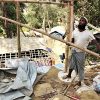
Bangladesh’s Rohingya Refugee Camps Face ‘Life Threatening’ Funding Crisis: Aid Agencies
Work by aid agencies in Bangladesh’s Rohingya refugee camps to create life-saving access routes and prepare people for floods, landslides and other disasters ahead of the upcoming monsoon and cyclone season is under imminent threat unless urgent funding is secured in the next six weeks, according to IOM, the UN Migration Agency.
New Index Measures Empowerment & Inclusion of Women in Agriculture
The pilot version of a new index for measuring empowerment and the inclusion of women in agriculture was launched April 27 in Washington DC.
Kenya- Overcoming Rivalry & Conflict Through Cultural Diplomacy
Cultural diplomacy is a soft power that promotes the exchange of ideas, information, art, and culture to strengthen friendship and cooperation among nations and communities.
Africa’s Millennials Using Technology to Drive Change
When some 276 teenage girls were kidnapped from their boarding school in northeastern Nigeria in April 2014, Oby Ezekwesili, a civil society activist and former World Bank vice president, was disheartened by the lacklustre response of her government and local television stations.
Revving Up Green Growth
While sustainable development may still seem elusive to some, a new initiative wants to pave a path for nations working towards a greener future. Partnering for Green Growth and the Global Goals 2030, or P4G, is a new partnership initiative that aims to boost countries’ efforts in achieving the globally adopted Sustainable Development Goals (SDGs).
Women Farmers in Peru Bring Healthy Meals to Local Schools
Getting children and adolescents to replace junk food with nutritious local organic foods is the aim of a group of women farmers in a rural area of Piura, on Peru’s north coast, as they struggle to overcome the impact of the El Niño climate phenomenon.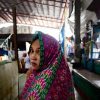
Holding on to Hope
Almost a year after the historic city of Marawi in Mindanao was attacked by extremists, tens of thousands of displaced Filipinos remain homeless, unlikely to return to their devastated homes anytime soon.
Displaced Pashtuns Return to Find Homes “Teeming” with Landmines
"If I'm assured that my home and my village has been de-mined, I'd be the first to return with my family," says 54-year old Mohammad Mumtaz Khan.
“Fake News” a Growing New Threat to Press Freedom
When a Malaysian politician of a bygone era was asked about the “leading newspapers” in his country, he shot back: “We don’t have any leading newspapers in our country because all our newspapers are misleading.”
Syrian children talk about their futures on the way to school in Jordan
In Jordan’s Azraq Camp where over 45,000 Syrian refugees are seeking shelter from the conflict across the border, 14-year-old Abdallah is finishing the 8th grade at a school run by the Ministry of Education.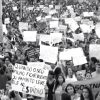
World Press Freedom Day 2018
 The theme for the 25th celebration of World Press Freedom Day is “Keeping Power in Check: Media, Justice and The Rule of Law,” focussing on the importance of an enabling legal environment for press freedom, and gives attention to the role of an independent judiciary in ensuring legal guarantees for press freedom and prosecution of crimes against journalists..

Myanmar Unlikely to Resolve Rohingya Problem Without International Help
The lead-up to the Australia-ASEAN Summit in Sydney on 16-18 March 2018 was characterised by widespread and well-publicised protests in Sydney against human rights abuses occurring in several ASEAN member countries – namely Cambodia, Myanmar and Vietnam.
From Declaration to Action: Improving Immunization in Africa
Inviolate Akinyi, a 46-year-old grandmother, is certain that her grand-daughter needs to get all her vaccines for her to grow up healthy and strong. She uses a mix of private and public clinics in Kibera, one of the largest informal settlement in Nairobi, to get the 15-month-old the shots she needs.
The Nowhere People: Rohingyas in India
A devastating fire in a shanty at Kalindi Kunj, a New Delhi suburb, that gutted the homes of 226 Rohingya refugees from Myanmar, including 100 women and 50 children, has trained a spotlight on India's ad hoc policy on international migrants.
Rohingya Refugee Families Reinforce Shelters, Relocate Ahead of Monsoon, But Dangers Remain in Crowded Bangladesh Camps
Over 40,000 Rohingya families in Bangladesh’s Cox’s Bazar refugee camps have now been trained in shelter upgrade techniques ahead of the fast approaching monsoon and cyclone season. Women are playing a key role as part of a major project being rolled out by IOM, the UN Migration Agency.« Previous Page — Next Page »


Want to keep up with the latest news and views from the Global South? Sign up for IPS Daily News Report for daily emails with our top stories about international development, climate change, gender and more. (Formerly IPS TerraViva since 1993).

The Week with IPS

NEXT STOP - SDGs
Tracking global progress towards a sustainable world
