Languages
Friday, November 27, 2026



News and Views from the Global South


UN Security Council Must Halt Disastrous March of Myanmar’s Ethnic Cleansing of Rohingya
Abdu Salam stayed in his village as Myanmar soldiers and local vigilantes burned down dozens of homes there last August. He stayed as news spread of atrocities that soldiers had committed in other Rohingya villages across northern Rakhine State. He stayed because Hpon Nyo Leik village was his home, the only home he’d known, and he wanted to protect his family’s property and right to live there.
Pyeongchang Olympics: A New Cornerstone for Peace and Prosperity
All eyes are on the 23rd Olympic Winter Games and 12th Paralympic Winter Games in PyeongChang this February. Top athletes will carry their national flags in an opening ceremony which has come to epitomize the international community. Sports fans worldwide eagerly await the Olympics, and this time there is cause for cautious optimism that sport diplomacy may lower tensions on the Korean Peninsula itself. Leaders, diplomats and citizens from the world over will witness North and South Korean athletes walking side by side. For this, there could be few better places than PyeongChang, which means peace (Pyeong) and prosperity (Chang): goals integral to the mission of the United Nations and the 2030 Sustainable Development Agenda.
UN Migration Agency Facilitates Release of Refugees from Indonesian Detention Centres
IOM, the UN Migration Agency, has facilitated the release of over 500 refugees from immigration detention centres in North Sumatra, Riau, and Riau Island provinces to community housing.
Bangladesh’s Garment Industry Boom Leaving Workers Behind
Although Bangladesh has made remarkable recent strides like building green factories and meeting stringent safety standards, garment workers here are still paid one of the lowest minimum wages in the world.
Efficient Water Management in Central Asia
In Tajikistan and other countries of Central Asia, local water user associations have proved vital for efficient irrigation management, and reasonably prolonged training is the key for enabling the associations to perform well.
Power of Partnerships in the Fight Against Poverty
The 2030 Agenda is the most ambitious plan governments have ever developed to eradicate extreme poverty and safeguard our planet. While it is a global agenda, it will only be achieved by addressing the multidimensional aspects of poverty and through ensuring ownership on the part of communities, local authorities and individuals.
GGGI Eyes Expanding Role in Triggering Pro-poor Green Growth
Green used to be the color of money. Now it’s the word we use to mean actions that don’t hurt perhaps even help the environment. Moving from paper currency to the world we live in is progress!
Humanitarian Response Plan for Spreading Crisis in Nigeria
The 2018 Humanitarian Response Plan (HRP) for north-east Nigeria demonstrates the commitment of the international community to the people of Nigeria. It is also a clear and positive indication of the strong and continued partnership between us - the international humanitarian community - and the Government of Nigeria.
Inequality also Relates to Education, Health & Illiteracy, not Wealth Alone
Antipoverty group Oxfam International got a lot of attention for claiming that there’s a global “inequality crisis,” but a far more important point is entirely neglected: globally, income distribution is less unequal than it has been for 100 years.
How It Feels to Survive Slavery: Ira’s story
“A client called at night and ordered a girl. I was sleeping when suddenly I was told to go to the client. He was already drunk and aggressive. I was scared to stay with him. He made me drink and I had to obey. You feel neither pain nor shame when you are drunk. Everything goes easier. I woke up in the morning and got ready to leave when he told me to stay. He told that he had paid for the whole day and I must work it off. The door was closed. He hid the door keys and my phone. He claimed that he had paid for my services and could do with me whatever he wanted… He fell asleep soon again. I didn’t find the keys. I thought I could exit through the window. It was the third floor and there was a fire escape ladder nearby. I decided to climb over the balcony to the ladder. And fell down… Everything happened very quickly. I felt no pain… I remember that I tried to stand up but couldn’t and saw my bones sticking out of my arms. I passed out. I came round in the ambulance. Later – only in the intensive care unit. There I told my name and where I came from. Doctors called my relatives. Later my family moved me back to Belarus. It was super expensive.”
“No Time to Waste” in Ending FGM
More than 200 million women around the world have experienced some kind of female genital mutilation (FGM) and more could be at risk, a UN agency said.
Gaza Health Sector on Verge of Collapse
UN agencies have sounded the alarm on the rapidly deteriorating humanitarian situation in Gaza, pointing to the devastating repercussions of the ongoing fuel shortages.
Three Opportunities for Humanitarians in 2018
As 2018 begins, the challenges of humanitarian crises are momentous. Humanitarians are responding to large-scale emergencies in the Democratic Republic of Congo (DRC), Iraq, Syria and Yemen.
China, Once the Final Resting Place for Half the World’s Trash, Bans Waste Products
China, once the final resting place for half the world’s trash, has just banned the import of certain plastic, paper and textile waste. Western countries are scrambling to shift ‘the problem’ elsewhere – but there could be another way. They could invest more in the circular economy, which would also help them achieve the 2030 Agenda. But what exactly is the circular economy?
One Migrant’s Brutal Odyssey Through Libya
Thirty-year-old Nazir Mohammed sits on one of the two sofas in his single room in Kwame Danso, a small town about 290 kilometres north of Ghana’s capital Accra, reflecting on life back in Libya.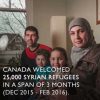
A New Home – Resettling Syrian Refugees to Canada
At the end of 2015, the Government of Canada requested the International Organization for Migration (IOM) to support the Prime Minister’s commitment to admit 25,000 Syrian refugees from the Middle East. IOM quickly deployed logistics and operational staff from around the globe to complete the humanitarian operation which spanned three months from December 2015 through February 2016.
UN Refugee Agency Calls for Aid and Peace in South Sudan
As South Sudan quickly becomes Africa’s largest refugee and humanitarian crisis, the world must come to its aid, said the UN refugee agency. The UN Refugee Agency (UNHCR) has launched a global appeal to support displaced persons amid South Sudan’s rapidly deteriorating humanitarian situation.
As Peace Talks Resume, South Sudan Continues Assault on Press Freedom
A ceasefire agreement signed on December 21 between the South Sudanese government and opposition forces has revived a 2015 peace process and brought hope that the conflict will not persist into its fifth year.
Business Unusual will Drive Africa’s Quest to achieve Health Care for All
Africa’s quest for health continues to be held back by a combination of factors such as natural disasters and pandemics, prevailing high rates of communicable and rising incidence of non-communicable diseases, sedentary lifestyles, road accidents and greater population mobility.
Survival of Indigenous Tribes in Bangladesh Starts at School
Just before sundown on Jan. 30, a group of women day labourers from the Shantal indigenous community are in a rush to wind up their work harvesting potatoes in a field in the village of Boldipukur, some 15 km away from Rangpur district in northern Bangladesh.
Healthy Nutrition Spreads in El Salvador’s Schools
Eating healthy and nutritious food in schools in El Salvador is an effort that went from a pilot plan to a well-entrenched programme that has now taken off.« Previous Page — Next Page »


Want to keep up with the latest news and views from the Global South? Sign up for IPS Daily News Report for daily emails with our top stories about international development, climate change, gender and more. (Formerly IPS TerraViva since 1993).

The Week with IPS

NEXT STOP - SDGs
Tracking global progress towards a sustainable world
