Languages
Tuesday, November 17, 2026



News and Views from the Global South

A Pressure on Silicon Valley: Is the U.S. Ready for a Shift in Tech Dominance?
While the U.S. argues over tariffs, China, Japan, and South Korea are quietly reshaping their tech markets, shifting towards regional dominance – signaling a potential turning point in global tech leadership.
Lessons from the Global South on Transforming AgriFood Systems
The state of food and nutrition security in the Global South masks the great strides and investments made to increase agricultural yields to feed a rapidly growing population. As discussions deepen at the ongoing CGIAR Science Week, plenary discussions on Wednesday (April 9) explored transformative strategies and innovations driving agricultural resilience across Africa, the Caribbean, and Latin America.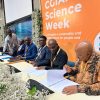
Partnerships Expected to Enhance Agricultural Development
Two crucial partnerships were signed at the CGIAR Science Week in Nairobi today (April 9, 2025), aimed at delivering research for development at scale across Africa.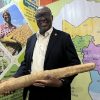
Farmers Need Science Solutions in Their Hands Sooner Than Later
Climate change is outpacing science and farmers are paying the price. Agricultural research innovations need to reach farmers before it is too late.
ASEAN-CGIAR Regional Programme Can Encourage South-South Collaboration
The ASEAN-CGIAR program "unlocks opportunities to look at commodities in the region, interest, markets, and capacity building, Director General of the International Rice Research Institute (IRRI) Dr. Yvonne Pinto said during a plenary that focused on fostering regional integration, scaling innovation, and amplifying the impact of CGIAR's research in addressing agricultural challenges.
Myanmar Reels From Its Strongest Earthquake in Over a Century
The 7.7 magnitude earthquake that struck central Myanmar on March 28, marked the strongest earthquake the nation has experienced in over a century and the second deadliest in it’s history. The earthquake caused extensive damage in Myanmar and Thailand, with infrastructures in southern China and Vietnam also having been affected.
A Make-or-Break Moment for Global Development Finance—& the Role Philanthropy Must Play
This June, world leaders will gather in Seville for the Fourth International Conference on Financing for Development (FfD4), a milestone opportunity to reimagine how the global economy delivers for people and the planet. But the real question isn’t whether this historic convening will happen. It’s whether it will matter.
Science-Backed Solutions Buoying Water Security in East Africa
In East Africa, climate change has made water a lifeline and threat. In a region highly dependent on rainfall for growing crops, climate change is threatening water security but science-backed solutions are helping turn the tide.
The Current Plight of Haitians: Interview with a Mason in the Dominican Republic
On March 18, the first plane with deportees from the US landed in Cap-Haïtien. Of the 46 passengers, 25 were convicted felons. Taking effect on April 24 the US Department of Homeland Security will revoke the temporary legal status of more than 210,000 Haitians. They had by the Biden administration been granted a safe haven, but all these Haitians are now expected to be deported back to a country immersed in a humanitarian crisis.
Growing Legacy: Raising Ambition in Agriculture Scientific Research as CGIAR Unveil New Portfolio
Global food and nutrition insecurity levels are hurtling towards a catastrophe. To counter these problems, leading world experts say science is the 'silver bullet.' That science will build climate-resilient agri-food systems, improve livelihoods across the value chain, and ensure more affordable, nutritious food while safeguarding the environment.
Behind the Feeding of the 5,000 (or Should That Be 10,000) at CGIAR Science Week
Good Food for All is the motto of The Chef's Manifesto, a project that brings together more than 1,500 chefs from around the world to explore how to ensure the food they prepare is planet-friendly and sustainable.
A Long and Winding Path to Revitalize Passenger Trains in Mexico
Retired blacksmith and mechanic José Hernández nostalgically recalls the passenger trains that once passed through his hometown of Huamantla in the state of Tlaxcala, southeastern Mexico.
Taliban View Even Women’s Cosmetics as a Threat to Their Rule
Women in Afghanistan have borne the brunt of the Taliban’s extremist Islamist rule. Four years on, there appears to be no end in sight.
Welcoming Science: CGIAR Week-Long Focus on Innovation for Food, Climate-Secure Future
The world’s leading scientists and decision-makers in agriculture, climate, and health are meeting in Nairobi this week to promote innovation and partnerships towards a food, nutrition, and climate-secure future. As current agrifood systems buckle under multiple challenges, nearly one in 11 people globally and one in five people in Africa go hungry every day.
In Central America’s Dry Corridor, Farmers Find Ways to Harvest Water and Food – VIDEO
 In Central America’s Dry Corridor, climatic conditions hinder water and food production because rainfall in this ecoregion—from May to December—is less predictable than in the rest of the isthmus.

Digital Democracy at a Crossroads. Key Takeaways from RigthsCon2025
In an increasingly digital world, democratic practices are evolving to encompass new forms of participation. Digital democracy – the use of technology to enhance civic action, movement building and access to information – has become a crucial force in shaping local and global political landscapes.
We Can Solve Global Challenges Through Global Public Investment
Watching on our screens the devastation wrought by the earthquake which struck South-East Asia last week has brought a stark reminder of our shared vulnerability in this interconnected world. It has exposed again, too, the weak beams of traditional funding models that struggle to ensure a timely response to disasters.
How to Agree an Armistice in Ukraine: Lessons from Korea
The armistice agreement that ended the Korean War in 1953 has been mentioned as a possible model for how to end the fighting in Ukraine. This makes sense. The Trump administration, however, seems to opt for a quick deal like the 1973 Paris agreement on Vietnam or the Minsk agreements of 2014–15, combining “ceasefires in place” with vain prospects of subsequently reaching a genuine peace agreement.

CGIAR Science Week Seeks Solutions for a Food-Secure, Climate Resilient Future
CGIAR and the Kenyan Agricultural and Livestock Research Organization (KALRO) are bringing together the world’s leading scientists and decision-makers in agriculture, climate, and health for the first CGIAR Science Week. This gathering will be a key moment to advance research and innovation, inspire action, and establish critical partnerships that can secure investment in sustainable food systems for people and the planet.
Challenging the Taliban’s Violations of Afghan Women’s Rights
The Taliban’s egregious violations of women's rights in Afghanistan, especially banning women from education and even from speaking in public, are beyond the pale. Imposing economic sanctions alone, however, has not changed in any significant way the Taliban’s treatment of women.
Trapped by Tradition: The Widows of Ukerewe and the Ritual They Cannot Escape
The night after her husband was laid to rest, 24-year-old Vivian Magesa sat in the dimly lit brick-walled house, surrounded by women from her late husband’s family. She had spent the past few days in mourning, wrapped in a white shroud, her head shaved as custom dictated. But as the hushed voices of her in-laws filled the room, Magesa realized her grief was far from over.« Previous Page — Next Page »


Want to keep up with the latest news and views from the Global South? Sign up for IPS Daily News Report for daily emails with our top stories about international development, climate change, gender and more. (Formerly IPS TerraViva since 1993).

The Week with IPS

NEXT STOP - SDGs
Tracking global progress towards a sustainable world
Tracking global progress towards a sustainable world
