Languages
Thursday, November 19, 2026



News and Views from the Global South
Africa
HEALTH: The Silent Killer that Continues to Claim Children’s Lives
Medical experts have warned that malaria and HIV have monopolised interventions geared towards curbing child mortality in Kenya, thus ignoring the equally deadly killer, diarrhoea. This disease has silently claimed the lives of hundreds of children every year.
Cassava Combating Rural Hunger in Zambia
In Zambia, a silver lining has emerged for widespread rural hunger and poverty, thanks to homegrown agricultural research. Local scientists have successfully developed four new, early-maturing and high- yielding cassava cultivars in an ambitious research project conducted in the cassava-rich Luapula Province, under the on-going Root and Tuber Improvement Programme (RTIP).
The Peace Dividend in South Sudan
This is the story of Francis Odong, a southern Sudanese man from Eastern Equitoria state.Tribe Warns of War over Sudan Vote
A tribal leader in Sudan's flashpoint region of Abyei has given a war warning, six days before south Sudan votes on whether to split from the north.HIV/AIDS: Fund Rejection Worries Health Campaigners
Health rights activists in Malawi are expressing concern over the recent rejection of the country’s proposal for close to six hundred million dollars to the Global Fund to fight HIV, tuberculosis and malaria between 2011 and 2016.
HUMAN RIGHTS: Mauritian Sex Workers Demand Rights
"Sex workers rights are human rights", close to a hundred people shouted during a recent march in Rose-Hill, a major town in Mauritius. Their aim was to sensitise the population, particularly the parliamentarians, to the state of sex workers on the island.Student Drop Out Rate on the Increase Despite Free Education
2010 will go down in history as the year when the first batch of pupils to benefit from the government’s introduction of free primary education sat for their Kenya Certificate of Primary Education (KCPE).
AGRICULTURE – SOUTH AFRICA: Small Scale Farmers Face Uphill Battle
Just before sunrise 39-year -old Alan Simons, an emerging small-scale farmer, gets ready for his usual nine-hour day of harvesting, packing and deliveries. In his black Nissan van he drives ten kilometres to the seaside town of Strand outside of Cape Town to pick up his six workers, all of who are women.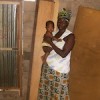
GAMBIA: Families Left Homeless by Floods
Amie Manneh and her family lived securely in their single-bedroom home in Bundung, 15 kilometers from the capital, Banjul. Then their home was destroyed by heavy rainfall in September. Since then Amie, her husband and six children have been living in the damaged house.MALAWI: Women Claim Equal Share of Family Property
Seated on a wooden bench at her Katoto township house in Mzuzu, Grace Mkandawire’s face reflects the traumatic experiences she has endured since her husband’s death in 1998. She looks lost and confused and as she narrates her story there is fear, hatred and resignation that Malawi’s Marital Property Law of (1882) disenfranchises poor women like her.
POLITICS- NAMIBIA: Numbers of Women in Government Declining
Twenty years after independence, representation of women in senior government structures and in Parliament is declining in Namibia. According to the latest demographic survey results of August 2010, out of a population of around 2 million, women outnumber men 10:9. In 2001, the ratio was 94 males per 100 females.
FOOD CRISIS: Two New Varieties of Vegetables on Kenyan Food Market
Agriculture remains one of the most significant economic activities in Kenya. It accounts for over 24 percent of Gross Domestic Product (GDP) with an estimated 70 percent of total production coming from small scale farmers who typically have about 2-5 acres of land, depending on the region.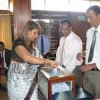
MAURITIUS: They Do Politics Differently
"I do politics every day, but partisan politics? No, thank you," says Jane Ragoo, long-time trade unionist and social worker. She believes in working to bring about change in society and improve people’s lives but has no interest in clambering onto a truck to campaign for office.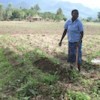
AGRICULTURE: Desperation Over Subsidies
As the rains start to fall in Malawi, marking the beginning of the growing season, government is continuing to implement the fertiliser and seed subsidy programme which has since made the country a bread basket in the Southern African Development Community, SADC.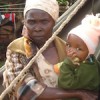
HUMAN RIGHTS: Festive season a nightmare for Kenya’s Displaced
The Christmas season comes with joy and merrymaking in Kenya, where preparations for the festivities are underway as people crowd the street to shop for clothes and gifts. But even as the cheer spreads all around, the situation is different for the thousands of internally displaced Kenyans (IDP's) still living in various camps.
POLITICS: Human Suffering Escalates in Cote d’Ivoire
For three days, 25-year-old Ousmane Traoré attended the private clinic in the populous district of Abobo, north of Abidjan. Suffering from gunshot wounds to the head and abdomen as a result of the Ivorian opposition demonstrations, he was forced to leave the main hospital in Treichville, south of Abidjan, due to a lack of assistance.
KENYA: Mobile Phones to the Rescue for Pregnant Women
Pumwani Maternity Hospital, in the impoverished Nairobi neighbourhood of Eastlands, is the site of a trial project using mobile phones to help HIV-positive mothers avoid passing the virus on to their children.
WATER: Early Rains Rekindle Interest in Rainwater Harvesting
In Thembekie Gwebu’s yard under the roof leaves stands a curious giant green plastic container with a plastic pipe connected to the gutter. She has been asked a number of times by curious visitors and passers-by what the contraption is, and she happily explains.
POLITICS: Women Still a Parliamentary Minority in Kenya
While some countries like Liberia can boast that they have a female President, Kenya is still grappling with allowing women room to exercise their leadership roles in Parliament and at local government level.
REFUGEES: Liberians Struggle to Cope With Fleeing Ivorians
Albertine Yahwah sits on a hard wooden bench, cradling her little baby in her arms. The 20 year-old walked from the Ivory Coast with her two children and her husband to reach this small town across the border in Northern Liberia.
WATER: Miracle Man Eases Village’s Water Woes
Hermes Chimombo, a welder in his 50s, is a revered man in the impoverished Naotcha Township. Armed with rudimentary tools and a passion to ease people’s suffering, he has tapped a spring in the mountain above the slum to provide water for its 25,000 residents.« Previous Page — Next Page »


The Week with IPS

NEXT STOP - SDGs
Tracking global progress towards a sustainable world
Tracking global progress towards a sustainable world
