Languages
Friday, November 20, 2026



News and Views from the Global South
Africa
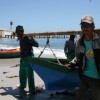
Fisheries Can Play Key Role in Africa
Fisheries contribute at least $10 billion dollars to African economies every year. In countries such as Angola, Egypt and Namibia, fisheries are vital economic drivers.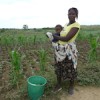
SOUTHERN AFRICA: Growing Seed Security
Farmer Obed Dlamini, like many of his colleagues from Swaziland, finds it difficult to find quality maize seeds each planting season. Not only are the seeds expensive but they are often not available.
AFRICA: ‘Welcome to My Taxi – Let’s Do Business with My Cellphone’
In cities across Africa, being an entrepreneur requires no office, business card or investors. All it takes is a cell phone, according to Adele Botha, a researcher at the Council for Scientific and Industrial Research (CSIR) in South Africa.
SOUTH AFRICA: ‘Tea Bag’ Filter Provides Safe Drinking Water
Though it may look like a tea bag, straining water through this recently developed filter could provide a cheap, easily replenished source of water for those who need it most.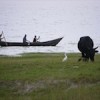
EAST AFRICA: Protecting Lake Victoria’s Top Predator
Coordinated conservation measures to arrest the steep decline of stocks of Nile perch in Lake Victoria are showing encouraging results - for fish, if not for fishing communities around the lake.
SOUTH AFRICA: Public Health Strained by Nurses’ Strike
Striking health workers have continued their work stoppage despite accusations that it endangers patients' lives. They are part of a nationwide strike by public sector workers that has some observers concerned that rising wage demands could harm South Africa's economy.
UGANDA: Unfriendly Nurses and Culture Hinder Male Involvement in HIV Prevention
Irene Wangolo was advised to undergo an HIV test during her antenatal visit and to return to the clinic with her husband so they could be counselled on preventing HIV transmission to their unborn baby. But her husband refused to accompany her saying it was not his business and Wangolo never returned to the clinic in Bungokho in eastern Uganda. So she missed all the services, including the prevention of mother-to-child transmission (PMTCT).MALAWI: Women Candidates Hard Hit by Election Postponement
News that Malawi’s November local government elections are to be postponed yet again has hit female candidates hard – and mostly in their pockets. And it could mean that the country will have less female candidates to vote for when they finally go to the polls.HEALTH-UGANDA: Problems with Anti-Counterfeit Bill Persist
Health rights activists still insist that, despite some improvements to Uganda’s controversial Anti-Counterfeiting Bill, it will affect the availability of generic medicine if enacted in present form.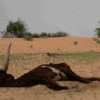
Mali Nomads Flee Drought
Nomadic communities in northern Mali's desert regions are facing one of the most serious droughts of the last twenty years.Mobile HIV Test Unit a Hit in Congo
"I came here out of curiosity, but I ended up taking an AIDS test. I have the results," Gerard, 30 years old, told IPS. He adds, right before leaving: "The results are negative."
SOUTH AFRICA: Teachers’ Voices Heard in Public Sector Strike
 South African teachers - along with other public service employees - have embarked on an indefinite strike over wages. The unions are demanding an 8.6 percent wage increase. Government says it cannot afford to offer 1.3 million striking public servants any more than seven percent.
AGRICULTURE-SOUTH AFRICA: ‘There Is No Dignity’
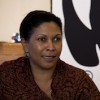
South African farm workers – especially female labourers – continue to be exploited, despite the existence of national labour laws and regulations designed to protect them. But in the absence of information and education about their rights, workers have a hard time claiming them.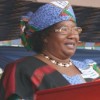
MALAWI: Campaign Against Female Vice President a Campaign Against Equality
The future of women’s political representation in Malawi has come into question as the ruling Democratic People’s Party (DPP) launched a smear campaign against its own member, the country’s female Vice President Joyce Banda. Many had hoped Banda would become the country’s first female president in 2014.
KENYA: A Bid to Save Macadamia Crops
Joseph Ndirangu Muriithi is a worried man. After watching the fall of coffee farming in Kenya a decade ago, he now fears that his other cash crop will also go into decline as a new disease preys on his macadamia trees.
SOUTH AFRICA: Climate Change Policy Ignores Women Farmers
When asked if they have already felt the effects of climate change, Mary-Anne Zimri and Katrina Scheepers eagerly nod their heads. The two small-scale farmers say lack of rain this winter has foiled their planting season, ruined their harvest – and drastically slashed their income.ZIMBABWE: Children Crossing Borders in Search of HIV Treatment
A new type of migration is taking place in Zimbabwe. While in the past people crossed the borders into South Africa and Botswana seeking work and fleeing from their repressive circumstances, now a silent migration of HIV-positive children seeking antiretroviral treatment (ART) is taking place.
HEALTH-KENYA: Attempts to Modernise Traditional Circumcision Rites
During every year that ends in an even number, the month of August is a special occasion for young men in Kenya’s Western Province. During this month thousands of boys aged between 10 and 18 undergo male circumcision – something that is seen as an important rite of passage into manhood among their communities. But it is also a time were nearly half the young men circumcised will have to fight for their lives.HEALTH: S. Africa Becomes a Victim of its ARV Treatment Success
Almost a million South Africans are already on lifelong antiretroviral (ARV) treatment and this number is supposed to triple in the next decade if the South African government keeps to its implementation plan.
ZAMBIA: Water Committee Prospers in Lusaka
Residents of Lusaka's George Compound remember the bad old days in the early 1990s, when the area suffered ugly outbreaks of waterborne diseases.Fears for South Africa’s Press Freedom
International media freedom watchdog Reporters Without Borders ranks South Africa's press as among the freest on the continent. Two proposed new measures are drawing unfavourable comparisons to repressive laws in Zimbabwe and Ethiopia.« Previous Page — Next Page »


The Week with IPS

NEXT STOP - SDGs
Tracking global progress towards a sustainable world
Tracking global progress towards a sustainable world
