Languages
Friday, November 20, 2026



News and Views from the Global South
Africa

MALAWI: Green Belt Initiative Taking Shape
Let the rains fail, even for several successive seasons, and Malawi should still be able to produce enough to feed itself.ZIMBABWE: Constitutional Reform Resumes
Months of delays may prove to have strengthened the process of producing a new constitution for Zimbabwe. When a 65-day public consultation finally begins, citizens will be primed and ready.
UGANDA: Railway Revival Planned
The collapse of the Uganda Railway Corporation 15 years ago opened up lucrative opportunities for privately-owned road transporters. But the high cost of maintaining the highways carrying heavy truck and bus traffic is leading government to take a fresh look at the rails.
ANGOLA: Togo Footballers Attacked
Armed men have opened fire on a bus carrying Togo's national football squad to the Africa Cup of Nations tournament in Angola, killing the driver and wounding at least two players, officials have said.
NIGERIA: Lake Communities Left High and Dry
The fittest are fleeing the shores of Lake Chad: Adamu Modu, a young fisherman, is joining a stream of able-bodied men heading south to find work in the southern part of the country.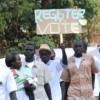
SOUTH SUDAN: Women’s Eyes on the Political Prize
January marks the fifth anniversary of the Comprehensive Peace Agreement (CPA) which ended a bitter north-south civil war in Sudan. With important elections scheduled for April, women are debating and fighting for an expanded role in the new institutions of government.ZIMBABWE: Economy Crippled By Political Uncertainty
The Zimbabwean government has been working hard to attract international investors to revive the country’s failing economy. Success on this front in 2010 may hinge on the coalition government convincing investors their capital will be secure.SOUTH AFRICA: HIV Stigma Persists
HIV-related stigma and discrimination remain a key concern in South Africa, despite the multitude of HIV awareness campaigns that have been launched by government and civil society organisations throughout the years, health experts say.UGANDA: Bond Issue Could Mean New Homes
Few Ugandans are able to find a bank willing to loan them money to buy a house; in a culture where every man is expected to own his house, moves by Stanbic Bank to provide financing for home and auto purchases are welcome.ZAMBIA: Bringing Phones to the Countryside
Cellular phones have quickly become a popular and effective means of communication in Zambia, but their use has been concentrated in urban areas. Government and NGOs are now trying to extend these services to rural people.
KENYA: Mapping An African Slum
In early November, a group of explorers set out to map a blank space in Africa’s map. Twelve youths armed with global positioning system (GPS) devices made the rounds of the Nairobi slum of Kibera.
TANZANIA: Addressing Energy Crisis Through Alternatives and Efficiency at Household Level
Tanzania's electricity grid is fed by a mixture of natural gas, diesel and hydropower; however, over the past few years the country has experienced severe blackouts and power rationing in urban areas due to drought and subsequent low-water levels.
SOUTH AFRICA: Late Start For Crayfish Season
Long after the official opening of the crayfish season in South Africa on November 15, the boats lay idle on the beach in West Coast fishing villages like Paternoster. Fishing permits from the Marine and Coastal Managment unit (MCM) of the Department of Environmental Affairs and Tourism had not been issued.
SOUTH AFRICA: ‘They Haven’t Got a Choice: They Must Go to Sea’
Because of an unfair fishing quota system, more and more small South African fishing communities struggle to survive.COTE D’IVOIRE: Independent Candidate Pledges Reconciliation
Presidential elections in Côte d'Ivoire, scheduled for Nov. 29, were postponed until February or March 2010. Among the candidates who will try to take advantage of some additional time to campaign will be the sole independent candidate, Jacqueline Oble.
TANZANIA: Community Still Worried By Mine Contamination
Susanna Solomon is still tending her shamba, but she won't eat the harvest from her farm when it's ready.HUNGER: New Warning on Food Security for Horn of Africa
The European Commission Humanitarian Aid Department (ECHO) has raised a red flag over the worsening food security situation in the Horn of Africa.
ENVIRONMENT-CONGO: Defence of Great Apes Begins With Children
"But why do they kill gorillas, why do they trap them and put them in cages? One day, if i'm president, i'll stop all those who kill gorillas, chimpanzees and bonobos," says 11-year-old Judicaëlle, a student at the Holy Sprit of Moungali School in Brazzaville.NIGERIA: Fears for the Future as Religious Violence Claims 35
Government has again clashed with a religious sect in the state of Bauchi. Just under six months ago, an Islamist sect called Boko Haram launched attacks on police stations across four northern states, and hundreds of lives were lost before the situation was brought under control.KENYA: Anti-Money Laundering Bill Passes, But Does Govt Mean Business?
Kenya's Parliament finally passed the Proceeds of Crime and Anti-Money Laundering Bill in December. But while the passing of the bill is viewed as a highlight of the Tenth Parliament, many fear it may just be a gimmick by the government to appease international partners.
LIBERIA: New Army Faces Greatest Challenge
More than a year ago several hundred newly trained Liberian soldiers staged a one-day strike at the Armed Forces of Liberia (AFL) headquarters.« Previous Page — Next Page »


The Week with IPS

NEXT STOP - SDGs
Tracking global progress towards a sustainable world
Tracking global progress towards a sustainable world
