Languages
Saturday, November 7, 2026



News and Views from the Global South
Global
Is the UN Fighting a Losing Battle Against World’s Corrupt Leaders?
A hilarious anecdote, recounted in the New York Times years ago, related to the widespread corruption embedded in the political culture of a Southeast Asian country where crooked politicians were willing to provide receipts every time they received a bribe—big time bribes.
Why We Need More Women in Power
What is the first thing that comes to your mind when you read the words, women and power? The accepted wisdom is that women can be powerful, but not without the constant reference to their gender - which is often based on a set of unconscious biases towards them. Is she competent enough, effective, articulate without being too assertive or too aggressive. Is she a straightjacket, is she too emotional, will her family life impact her work or vice versa. Is she smart enough to camouflage her intelligence, is she ready for a key position, is it worth making her powerful?
The Ocean’s Silent Killer: Breaking Down Overfishing
You don’t have to look too hard to find some news network or media outlet talking about water pollution, plastic waste, CO2 emissions, and climate change.
Fresh Air, Clean Water
You want to breathe fresh air and have access to clean water? I guess you do, just like all of us. As populations in the so-called developed countries, we love to go for holidays in places where on high mountains you get to breathe deeply and enjoy the fresh air, where the oceans or lakes are clean and refreshing. And how do we arrive there? Mostly by airplanes or cars, polluting the air whilst travelling to the desired destinations, causing harm to people and the planet. Interestingly, many people today, calculate their flight’s CO2 footprint and pay a certain amount of money to invest in renewable energy projects, in order to feel better about their travelling and to receive tax deductibility (depending on regulations of their country).
The Pandemic Should Not Leave Developing Countries Without a Voice (or a Vote)
Requiring in-person voting to elect the governing bodies of UN agencies may exclude the countries most affected by travel restrictions derived from the pandemic
‘Let’s Talk About Sex’ Discussion Highlights Risks to Women
Every two minutes, a girl or woman dies from pregnancy or childbirth-related complications, including unsafe abortions. Every year, around 12 million girls are married while in their childhoods. An additional 10 million are now at risk of child marriage due to the Covid-19 pandemic.
From Non-aligned to One Aligned
June 4, 2021 marks 30 years since the killings of an undisclosed number of Chinese protestors at Beijing’s Tiananmen Square. For many years, the Chinese government and its ruling Chinese Communist Party (CCP), with characteristic understatement, called it the ‘June Fourth incident’.
UN’s Battle Against Climate Hazards Undermined by a Devastating Pandemic
The United Nations has been in the forefront of an ongoing battle against the growing hazards of climate change, including the destruction of different species of plants and animals, the danger of rising sea-levels threatening the very existence of small island developing states (SIDS), and the risks of oceans reaching record temperatures endangering aquatic resources.
Agroecology Under Threat
This week*, the Committee on World Food Security (CFS) is expected to endorse recommendations on agroecological and other innovative approaches for sustainable food systems, after an intense period of negotiation involving governments, UN agencies and institutions, Indigenous People’s organizations, civil society, and the private sector.
Naomi Osaka’s Bravery can be a Teachable Moment about Mental Health
Recently, Naomi Osaka, the number 2 ranked women’s tennis player in the world, said she would not participate in the press conference at the French Open (Rolland-Garros) because she wanted to protect her mental health.
Life Below Water – the UN Calls for Action on Ocean Protection
President of the United Nations General Assembly Volkan Bozkir has told a high-level debate on oceans that the world cannot afford to delay action on ocean protection. “There is simply no scenario wherein we live on a planet without an ocean,” he said.
Bridging the Gaps Between Climate Action & Biodiversity Preservation
With the climate negotiations getting more and more intense in the light of ensuring meaningful achievements in the upcoming COP- 26 summit in Edinburgh, an event that is key to move forward the pathway towards a net zero future started in Paris, this year World Environment Day on June 5 assumes an even more emblematic meaning.
2021: The Year that Matters for the Poorest People on the Planet
This year is being described as pivotal for climate change. That’s not only because we’re reaching a point of no return when it comes to the rise in global temperature, it’s because the 26th UN Climate Change Conference of the Parties – commonly known as COP26 – is due to take place in November in Glasgow.
Pandemic Relief Policies Need More Resources, Better Design
Pandemic relief measures in developing countries have been limited by modest resources, fear of financial market discipline and policy mimicry. COVID-19 has triggered not only an international public health emergency, but also a global economic crisis, setting back decades of uneven progress, especially in developing countries.
Slower Population Growth: The Goods and the Bads
Results from the 2020 population censuses in the United States and China recently made headlines. But rather than recognizing the social, economic and environmental benefits of slower rates of population growth for the U.S., China and the planet, much of the media stressed the downsides of slower growth and wrote about population collapse, baby bust and demographic decline.
It’s Time to Reimagine Our Relationship with Nature
Our natural earth is dying. It is on the brink of collapse. Due to human impacts the planet is losing species – its biodiversity – at a rate so alarming it’s said to be comparable to the 5th mass extinction 65 million years ago, bringing the era of the dinosaurs to an end. Just 15% of the world’s forests remain intact, and only 3% of the world’s oceans are free from human pressures.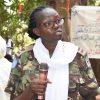
The Kenyan Peacekeeper Championing the Ideals of the Women, Peace and Security
Major Steplyne Buyaki Nyaboga of Kenya singles out the establishment of gender-responsive military patrols in farming communities in Central Darfur, Sudan as one of the proudest moments of her two-year mission with the African Union–United Nations Hybrid Operation (UNAMID).
– Why Experts are Saying It’s a ‘Make or Break’ Moment for Forests –
On the occasion of World Environment Day, 5 June 2021, drawing from IPS’s bank of features and opinion editorials published this year, we are re-publishing one article a day, for the next two weeks. The original article was published on April 28 2021
Are There Clinically Meaningful Differences Between anti-COVID-19 Vaccines?
Despite claims by the industry and some politicians, there are no clinically meaningful differences among the variety of vaccines approved under emergency use authorisation (EUA).
Why Stakeholder Coalitions Could Be Key to the Glasgow Climate Summit’s Success
The past few weeks brought a burst of optimism on the climate front. It began on April 18 with the US-China announcement on climate cooperation. This was followed in quick succession by the EU Parliament’s vote to cut emissions 55% by 2030, the UK’s promise of a 78% cut by 2035, Japan nearly doubling their commitment from 26% to 46% based on 2013 levels and US President Biden’s pledge of a 50-52% reduction, also by 2030 (compared with 2005 levels).
– Youth Demand Action on Nature, Following IUCN’s First-Ever Global Youth Summit –
On the occasion of World Environment Day, 5 June 2021, drawing from IPS’s bank of features and opinion editorials published this year, we are re-publishing one article a day, for the next two weeks. The original article was published on April 23 2021
« Previous Page — Next Page »





The Week with IPS

NEXT STOP - SDGs
Tracking global progress towards a sustainable world
Tracking global progress towards a sustainable world
