Languages
Sunday, November 8, 2026



News and Views from the Global South
Global

Q&A: Land Restoration can Help Restore Post-COVID-19 Economy
Investing in sustainable land management and land restoration will help build economies post-COVID-19 and help poor people increase their incomes as the destruction of global food chains by the pandemic provides a chance for ensuring diversity in production through ensuring the inclusion of local producers.
No ‘Business as Usual’ for Children Post-COVID-19, say Laureates & Leaders
Addressing delegates at the end of the virtual 3rd Fair Share for Children Summit, 2014 Nobel Peace Laureate Kailash Satyarthi told global citizens that “business as usual” in dealing with COVID-19 is not going to be tolerated. “We’re not going to accept the miseries of child labour and trafficking to continue to be normal,” he said.
A New Social Contract Needed for Children on the Move
Forced to flee wars and disasters, sometimes without family, and struggling to survive in the worst of circumstances, children on the move have long led very precarious lives. Be they refugees, internally displaced or asylum seekers, vulnerable and marginalised, they lose years of childhood. They are exposed to the worst forms of abuse, such as commercial exploitation and violence. Today, their situation is dire as they remain at the very bottom of the list to receive emergency measures to protect them from the impacts of COVID-19.
Save 70 million Lives Through #FairShare of COVID-19 Response Fund, Youth Urge Governments
Young people have added their voice in calling on world leaders to allocate at least 20 percent of the COVID-19 stimulus package to the marginalised children and youth.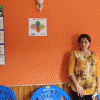
Acidic Masculinity
The recent attack on 22 year old Pavitra Karki has yet again stoked the discourse on acid attacks and gender based violence in Nepal. Pavitra is one of the many young women in Nepal who were targeted by young males, a tragic but more and more common occurrence in the country and elsewhere in South Asia.
Hold Corporates Accountable for Using Child Labour, Nobel Laureates Urge World Leaders
The COVID-19 pandemic should give governments across the world an opportunity to hold corporates accountable against child labour. Kailash Satyarthi, the 2014 Nobel Peace Laureate, made this submission at the virtual 3rd Fair Share for Children Summit.

COVID-19 Pandemic an Opportunity to Re-evaluate How we Treat World’s Starving Children
While COVID-19 pandemic has affected the entire world, Nobel Laureates and world leaders have today expressed concern that ongoing crisis is far from being an equaliser. The pandemic has revealed that the most vulnerable and marginalised populations, including and especially children, remain largely unprotected against the virus and its impacts.
Why COVID-19 Vaccines Need to Prioritize ‘Superspreaders’
Once safe and effective COVID-19 vaccines are available, tough choices will need to be made about who gets the first shots.
Re-inventing Multilateral Solidarity: Rhetoric, Reaction or Realignment of Power?
Multilateral solidarity is gaining traction as the slogan for mobilizing support for international cooperation and for the UN. Is it replacing or merely renaming cross-border obligations, many of which have been enshrined over decades in UN treaties, conventions and agreements, and the principle of common but differentiated responsibility in their implementation?
Hopes and Challenges for the First-Ever Food Systems Summit
Building inclusive and healthier food systems, and safeguarding the health of the planet will be some of the key priorities at the first-ever Food Systems Summit next year.
TikTok, Trump and the Need for a Digital Non-Aligned Movement
Recent weeks have seen a dramatic escalation in the U.S.’ stance towards tech companies from the People's Republic of China (PRC). After hounding the telecommunications company Huawei for years, the social networking app TikTok is the latest Chinese company to enter the firing line.
Caring for Poorest and Most Underserved Children Vital for Creating a Better World
Kerry Kennedy has a clear mission – along with Nobel laureates and leading international figures – she wishes to ensure that hard-won gains in children’s rights are not destroyed by the economic fallout from the COVID-19 pandemic.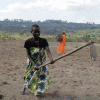
UN’s First-Ever Food Systems Summit to Fight Impending Emergency
Food systems involve all the stages that lead up to the point when we consume food, including the way it is produced, transported, and sold. Launching a policy brief on food security in June, UN chief António Guterres warned of an “impending food emergency”, unless immediate action is taken.
Nobel Laureate Kailash Satyarthi on Where to Find the $1 trillion Needed for Marginalised Children
 Nobel Laureate Kailash Satyarthi says that $1 trillion can solve many of the problems the world's most marginalised communities are facing.

Exclusive: Kailash Satyarthi Warns over a Million Children Could Die Because of COVID-19 Economic Crisis
Nobel Laureate Kailash Satyarthi warns of the danger that over one million children could die, not because of the COVID-19 pandemic, but because of the economic crisis facing their families. In an exclusive interview with IPS, Satyarthi said that without prioritising children we could lose an entire generation as evidence mounts that the number of child labourers, child marriages, school dropouts and child slaves has increased as the COVID-19 pandemic spread across the globe.
A Red Notice against Trump?
When INTERPOL is asked to intervene against targeted killing. Introduction Last June, news broke that Iran had issued an arrest warrant and asked INTERPOL for help in detaining US President Donald Trump and dozens of others it believed had carried out the drone strike that killed a top Iranian general in Baghdad.1 INTERPOL denied this request,2 stating that it “would not consider requests of this nature” because “it is strictly forbidden for the Organisation to undertake any intervention or activities of a political, military, religious or racial character.”3
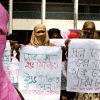
UN Women Calls for Accelerating its Unfinished Business
Twenty-five years ago, the Fourth World Conference on Women in Beijing set a path-breaking agenda for women’s rights. As a result of the two-week gathering with more than 30,000 activists, representatives from 189 nations unanimously adopted the Beijing Declaration and Platform for Action.
World Risks Losing Entire Generation of Children, Nobel Laureates Warn
The COVID-19 pandemic has upended the lives of millions of people worldwide, accounted for over 869,000 deaths, destabilised the global economy and triggered a marked rise in poverty and hunger in the developing world. But the fallout from one of the most devastating consequences of the spreading virus is on the lives of a growing new generation: children.
The First “Virtual” Post-Pandemic UN General Assembly Meeting
Although we have not convened in this Hall since March, New York-based delegations have worked tirelessly to uphold the values and principles set out in the Charter of the United Nations, whilst contending with the COVID-19 pandemic.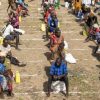
COVID-19: Without Help, Low-Income Developing Countries Risk a Lost Decade
While the COVID-19 crisis is sending shockwaves around the globe, low-income developing countries (LIDCs) are in a particularly difficult position to respond. LIDCs have both been hit hard by external shocks and are suffering severe domestic contractions from the spread of the virus and the lockdown measures to contain it. At the same time, limited resources and weak institutions constrain the capacity of many LIDC governments to support their economies.
“Hidden” Costs of Our Food Systems
Five years after the adoption of the 2030 Agenda we are far from achieving the Sustainable Development Goals (SDGs). According to the recently launched SOFI Report (The State of Food Security and Nutrition in the World 2020), we are not on track to eradicate poverty, hunger and malnutrition. On the contrary, with the current trends, the global number of undernourished people in 2030 would exceed 840 million. Moreover, WHO has reported alarming rates of overweight and obesity, globally affecting 39% and 13% of the adult population, respectively.« Previous Page — Next Page »





The Week with IPS

NEXT STOP - SDGs
Tracking global progress towards a sustainable world
Tracking global progress towards a sustainable world
