Languages
Wednesday, November 11, 2026



News and Views from the Global South
Global

“Long March to Justice”: Appointed Judge to Investigate Syrian War Crimes
A former French judge has been appointed as the head of an independent team tasked with investigating war crimes in Syria.
UN Needs a 21st Century Development System
Allow me first of all to express my deep gratitude to all the colleagues that have worked hard – in the Secretariat, in the Agencies, Funds and Programmes – to allow for this report to be ready on time. And to the leader of the team – the Deputy Secretary-General, Amina Mohammed – who has been not only the inspiration, but also the centre of management and strength to make things happen, and to make things happen with the required ambition and with the required detail.
Is Religion the New Colonial Frontier in International Development?
A decade ago, it was difficult to get Western policy makers in governments to be interested in the role of religious organizations in human development. The secular mind-set was such that religion was perceived, at best, as a private affair. At worst, religion was deemed the cause of harmful social practices, an obstacle to the “sacred” nature of universal human rights, and/or the root cause of terrorism. In short, religion belonged in the ‘basket of deplorables’.
Top 300 Cooperatives Generate 2.5 Trillion Dollars in Annual Turnover
The top 300 cooperatives alone generate 2.5 trillion dollars in annual turnover, more than the Gross Domestic Product (GDP) of France, according to the UN Department of Economic and Social Affairs (UNDESA).
Ending Child Marriage Could Add Trillions to World Economy
The benefits of ending child marriage are many—boosting a young girl’s morale and increasing her chances of education and work, and by that virtue, curbing high population rates in developing economies and boosting growth.
Tokyo Workshops: Are Media and the Business Community Doing Enough on Sustainable Development ?
Why and how should the media report on the Sustainable Development Goals (SDGs) in an engaging way? Can the SDGs deliver global development? And what are the role and challenges of business leadership in advancing these goals?
Nikki Haley Grilled in US Congress on America’s Role in the UN and the World
Five months into her stint as United States ambassador to the United Nations, Nikki Haley faced two days of often-sharp questioning on June 27 and 28 by influential panels of the United States Congress. They demanded justification for the Trump administration’s decision to slash funding to the United Nations, particularly cuts to the UN Population Fund, Unicef, UN Women and the World Food Program.
Education, a Building Block for Sustainable Peace
Millions lack access to quality education around the world—but how can the international community change this?
More Bang for Your Buck: Saving Lives by Investing in the Poorest
Investing in the health of the poorest communities saves almost twice as many lives, according to a UN agency’s analysis.
Working Toward a World Without Parkinson’s Disease
As one expert recently noted, if Parkinson’s were an infectious disease, we would call it an epidemic. Worldwide, 10 million people live with Parkinson’s disease, a number expected to double in the next 20 years. While there is no cure for Parkinson’s and no proven way to slow its progression, there is new reason to hope for a world without Parkinson’s.
Why Is International Human Rights Law Such an Easy Target?
"Earlier this month, Britain’s Prime Minister called for human rights laws to be overturned if they were to "get in the way" in the fight against terrorism. Specifically, Theresa May said there was a need "to restrict the freedom and movement of terrorist suspects when we have enough evidence to know they are a threat, but not evidence to prosecute them in full in court."
Any Way to Help Slow Down Climate Change… Individually?
 It is no secret that the biggest responsible for climate change is greed. The greed of the world’s largest private corporations, which blindly seek unlimited high financial benefits. And the greed of those politicians who are also blindly keen about holding their temporary power at any cost, thus not daring to challenge big business. Ordinary people can meanwhile help slow down such a hellish race.

Putting the Spotlight on Women Migrant Workers
Migrant workers, and their economic contribution to the development of both the country of origin and the host country, have caught the eye of governments and policymakers worldwide.
Rural Poverty? Cooperatives!
Humanity has had and has big projects. Mastery of nature is one, still going on. Middle range phenomena have been mastered, but not the micro level of viri–HIV is a current case–nor the macro level of climate–to the contrary, humanity is making it worse.
“Torture Works” — in All the Wrong Ways
“Torture works” might rank among the most sweeping generalisations ever uttered, one brutal in its disregard of the pain and suffering created by this abhorrent practice. Indeed, torture works, but to all the wrong ends.
“Black Soils” – Excessive Use of Arsenic, Cadmium, Lead, Mercury…
Soils are polluted due mostly to human activities that leave excess chemicals in soils used to grow food, the United Nations reports.
The World Is Burning
Record high temperatures are gripping much of the globe and more hot weather are to come. This implies more drought, more food insecurity, more famine and more massive human displacements.
“Big Reflection” Needed on Opioid Crisis
Opioids are among the most devastating drugs and are creating a crisis of epidemic proportions, said the UN drug agency.
Children Now More Than Half of the 65 Million Displaced
Around 20 people are newly displaced every minute of the day, according to a new report. In its annual Global Trends report, the UN’s refugee agency UNHCR has recorded unprecedented and concerning levels of displacement around the world.
The World Society Needs to Express Greater Solidarity for Refugees Worldwide
The world is heading into troubled waters as we are witnessing an unprecedented movement of people – refugees, migrants and internally displaced persons (IDPs) alike – fleeing from misery, poverty and conflicts. The refugee crisis that has swept across Europe and the Middle East is becoming the 21st century’s most protracted crisis with no immediate solution in sight. The world has not witnessed a more complex movement of people since the end of the Second World War; thousands of human beings undertake perilous and treacherous journeys in hope for a better and a safer future. Many of them perish during these hazardous journeys.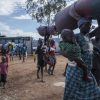
New Inhumane Record: One Person Displaced Every Three Second
Nearly 66 million people were forcibly displaced from their homes last year, the United Nation refugee agency has reported.« Previous Page — Next Page »





The Week with IPS

NEXT STOP - SDGs
Tracking global progress towards a sustainable world
Tracking global progress towards a sustainable world
