Languages
Tuesday, October 13, 2026



News and Views from the Global South
Global

Amplifying the SDGs Requires Fresh Storytelling Tactics
With the latest United Nations Sustainable Development Goals (SDGs) Report revealing that much progress toward the SDGs has been reversed, the UN has focused on how to amplify the goals and hold member states accountable for tackling them amid current crises.
Unprecedented Threats Against “Right to Protest” on the Rise World-wide
The French writer and philosopher Voltaire (1694-1778), once famously remarked: "I disagree with what you have to say, but I will defend unto death, your right to utter them.” But that political axiom hardly applies to multiple governments in Asia, Africa, Europe and Latin America—including Greece, UK, Thailand, Hong Kong, India, Myanmar, Chile, France, Democratic Republic of Congo and Cyprus – where the right to protest, along with freedom of speech, are increasingly in jeopardy.
Reject CPTPP, Stay out of New Cold War
Joining or ratifying dubious trade deals is supposed to offer miraculous solutions to recent lacklustre economic progress. Such naïve advocacy is misleading at best, and downright irresponsible, even reckless, at worst. TPP ‘pivot to Asia’ US President Barack Obama’s ‘pivot to Asia’ after his 2012 re-election sought to check China’s sustained economic growth and technological progress. Its economic centrepiece was the Trans-Pacific Partnership (TPP).
A New World Order is Dawning – But will it be Liberal or Illiberal?
With the invasion of Ukraine, Russia effectively destroyed the European peace order. Now, Europe needs to find ways to contain its aggressive neighbour, while its traditional protector, the United States, continues its shift of focus to the Indo-Pacific.
Grassroots Organizing Should Dump Biden and Clear Path for a Better Nominee in 2024
Pundits are focused on Joe Biden’s tanking poll numbers, while progressives continue to be alarmed by his dismal job performance. Under the apt headline “President Biden Is Not Cutting the Mustard,” last week The American Prospect summed up: “Young people are abandoning him in droves because he won’t fight for their rights and freedom.”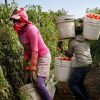
Hundreds of Millions of Human Workers Treated Worse than Robots
While the world’s big private business pours billions of dollars in producing automatic machines and assuring their optimal functioning, bareley no money has been invested in the hundreds of millions of human workers, who are left shockingly unprotected, treated like cheap robots, or even worse.
World Faces Cascading Crises Causing Profound Suffering & Multiple Famines
Our world is in deep trouble – and so too are the Sustainable Development Goals (SDGs). Time is running out. But there is still hope. Because we know what we need to do:
Food Security: We Are Still Going Backwards
The signs of the last few years indicate a continuous setback towards achieving food security. The Food and Agriculture Organization of the United Nations’ (FAO) annual report, "The State of Food Security and Nutrition in the World (SOFI)”, prepared together with other UN agencies and presented on July 6th leaves no doubt about the dangerous situation in which we find ourselves regarding the real possibilities of eliminating hunger and poverty by 2030, as solemnly proposed by the international community in October 2015 in New York.
News Fatigue, Anti-Vax and Wars
During the beginning of the pandemic, people wanted to learn more about COVID-19. Enclosed in their homes they watched with fear and fascination how the pandemic swept over the world, while comparing numbers of affected people and the death-toll in different countries. Watching COVID’s rampage became a kind of horror show. However, already after a few months with death-tolls rising and isolation not being over anytime soon, psychological fatigue set in. Judging from media coverage it now appears as if the pandemic finally is over, which is far from being the case.
The World is Burning. We Need a Renewables Revolution
Nero was famously accused of fiddling while Rome burned. Today, some leaders are doing worse. They are throwing fuel on the fire. Literally.
Aid for Power in New Cold War
Long a means for powerful nations to influence developing countries, development finance has gained renewed significance in the new Cold War. Unlike during the US-Soviet Cold War, the rivalry now is between mixed market capitalist systems.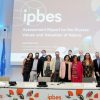
Narrow Valuation of Nature is Widening Biodiversity Loss
Nature has diverse values for different people, but it is poorly evaluated, and this is driving the global biodiversity crisis, top scientists say in a new report.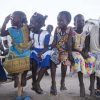
What Future for a World of 8 Billion?
What does a young girl from Juba, in South Sudan, an 8-year-old boy living in the slums of Mumbai, in India, a young mother from the south of Lima, in Peru, and an 83-year-old man enjoying retirement in the suburbs of Stockholm, in Sweden, have in common?
India & China Continue to Lead –as World Population Projected to Reach 8.0 Billion
India and China, two Asian nuclear powers who are also longstanding rivals embroiled in the geo-politics of the Indian Ocean region, have remained two of the world’s most populous nations accounting for over a billion people each. But as the world’s population reaches the 8.0 billion mark, come November, India is projected to surpass China.
Wild Species Central to Human Survival, New IPBES Report Offers Options for their Sustainable Use
Fifty thousand wild species meet the needs of billions of people worldwide, providing food, cosmetics, shelter, clothing, medicine and inspiration. But now, a million species of plants and animals face extinction with far-reaching consequences, including endangering economies, food security and livelihoods.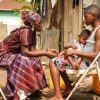
A World of 8 Billion, Yes, But (II): The Unseen, Untold Story of the 50%
While women and girls have been so far enjoying some of their due rights in Western high-income countries, the overwhelming majority of teenagers and adult women in the impoverished regions of the current world’s population of 8 billions continue to suffer all kinds of inequalities.
Intersecting Crises are Impeding the UN’s Sustainable Development Goals, Threatening Peace & Security
This week marks the mid-way point to the 2030 Agenda on Sustainable Development and with it the release of the UN’s Sustainable Development Goals Report 2022.
A World of 8 Billion, Yes, But Only a Few Are Seen as Human Beings
Far-right Brazilian president, Jair Messias Bolsonaro, was quoted a year ago or so as saying to a small group of indogenous people that they “now look a bit more like humans.”
Indigenous Peoples Must Continue To Challenge Human Rights Violations: PODCAST
 Today we are starting a new series focused on human rights. For people working to create a more sustainable and just world – as we are – a human rights based approach makes sense as it starts from the premise that only by recognizing and protecting the dignity inherent in all people can we attain those goals.
UN Predicts 68 Percent of World’s Population will be Living in Urban Areas by 2050
When we think of urbanization we often end up referring to the increasing number of megalopolises that are sprawling around the world. Yet less thoughts are given on the fact that the future patterns of urbanization will be centered on secondary cities or semi urban spaces, now becoming extensions of these gigantic cities.
The Camel, the Needle– and the UN’s first Woman Secretary-General
A 2.0 version of an ancient Biblical saying reads: It is easier for a camel to pass through the eye of a needle than for a woman to become the Secretary-General of the United Nations. The male/female ratio for the Secretary-General stands at 9 vs zero. And the Presidency of the General Assembly (PGA), the highest policy-making body at the UN, is not far behind either.« Previous Page — Next Page »





The Week with IPS

NEXT STOP - SDGs
Tracking global progress towards a sustainable world
Tracking global progress towards a sustainable world
