Languages
Monday, November 23, 2026



News and Views from the Global South
Latin America & the Caribbean

HAITI: Resettlement Plan Excludes Almost 200,000 Families
One year and one month after Haiti's horrendous earthquake, the world's eyes are focused elsewhere.ARGENTINA: Progress in the Fight for Gender Identity
"In my family, they always saw me as a girl, but at school they called me by my boy's name, which is why I dropped out," Paula Sosa, a transvestite who recently managed to change her name on her identity document, told IPS.
Water Evaporates in Peru’s For-Export Crops
As freshwater disappears from the super-populated Peruvian coast, the most water-intensive crops are expanding unabated as highly profitable exports. Observers warn about the harm this is causing and demand greater responsibility from the government and all involved.PERU: Government under Fire for Waiving Environmental Certificates for Dams
The Peruvian government has been forced to offer talks with governors, the ombudsperson's office and Catholic Church leaders, to stem the outcry over two emergency decrees that waive the requirement for environmental certificates for 33 investment projects, including hydroelectric dams in the Amazon rainforest.ECONOMY-LATIN AMERICA: The Downside of Strong Currencies
Latin America returned in 2010 to the strong economic growth it enjoyed over the past decade, after only a minimal slowdown during the global crisis that broke out in 2008. But the weakness of the dollar relative to local currencies is a cause for concern among governments and sectors that produce goods for export.
RIGHTS-PERU: At Last, Reparations for Civil War Victims
Peru will begin to pay individual monetary reparations to victims and survivors of the 1980-2000 counterinsurgency war, with top priority put on elderly people in remote villages in the country's impoverished highlands, where most of the human rights violations took place.
Surviving the Sexist Genocide in Guatemala
"He would punch my head all the time, pull my hair, smack and kick me. And he would make me wear long sleeves to hide the bruises; even on my wedding day I had a black and blue mark on my arm," Heidi Velásquez told IPS in Guatemala.ARGENTINA: Boom in Gay-Friendly Theatre
The nearly 200 theatres in the Argentine capital have been staging an increasing number of plays exploring gender identity or specifically gay issues in recent years, in mainstream, fringe and state-run productions.COLOMBIA: Increasingly Broad Social Movements Fight Mining
Social mobilisation against gold-mining is growing in Colombia, which is now one of the world's biggest per capita polluters of mercury, used in artisanal mining, according to the United Nations Industrial Development Organisation (UNIDO).MEXICO: “They Don’t Want Their Town to Vanish” – Underwater
The people of three towns that would be flooded by the El Zapotillo dam to be built in the western Mexican state of Jalisco have refused to be relocated and are fighting to save their homes.
PERU: Popular Women Vote-Catchers Stand in for Real Participation
Women candidates nominated for the presidential and legislative elections in Peru in April tend to be big names in the worlds of sports, television or show business, or are following family tradition. But political parties are failing to promote meaningful participation by women in politics.
MEXICO: Agave Sweetens Economic Prospects of Indigenous Women
With a wooden spoon in hand, Hortencia Rómulo briskly stirs the amber-coloured liquid cooking in an enormous steel pot.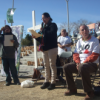
MEXICO: Fasting for Life in Land of Death
"The moral reserve of this country is low. People have let too many things happen without taking to the streets...and they continue to let them go by," peace activist Pietro Ameglio told IPS in this Mexican border city.
NICARAGUA: Gender Revolution in Schools Not Reflected at Work
Karla Mendoza, a 26-year-old Nicaraguan, has worked hard to have a professional career. But despite two technical degrees, courses in computer science and public relations, a nearly complete university degree, and eight years of work experience, she is not there yet.
Central America Raises Its Voice in Defence of Its Migrants
Spiralling violence against Central American migrants in Mexico has prompted legal reforms, diplomatic actions, and the creation of new mechanisms to protect citizens in this region.MEXICO: Migrants – Victims of Crime, Not Criminals
Although Central American migrants continue to face all kinds of abuses and even death on their way north through Mexico to the U.S. border, experts and activists have begun to see a slight change in approach to the issue.CENTRAL AMERICA: Tragedies Suffered; Lessons Learned?
The disasters caused by torrential rains in South America have set off alarm bells in Central America, whose extreme vulnerability was made all too clear over the last few years when it was slammed by hurricanes Mitch and Stan and tropical storm Agatha.HEALTH-PERU: Cost of Medicines Out of Control
When the price of medicines for treating cancer soared by up to 64 percent in 2010, the Peruvian government set up a watchdog commission that will also monitor prices of drugs for diabetes and HIV/AIDS.CUBA: Looking for Roots Across the Ocean
Their tanned skin is weathered by years of sun, and their voices preserve traces of accents from different parts of Spain.
PERU: Rural Education Reflects Ethnic, Socioeconomic Inequalities
In rural villages in the Amazon district of Datem de Marañón in northern Peru, teachers often have 70 students in their one-room schoolhouses and travel two or three days to get to their jobs, said Emir Masegkai, describing the challenges of providing education in remote areas of this South American country.The Ethics of Social Networking for Journalists
The digital revolution is turning people into producers, as well as consumers, of media content. But this new reality has yet to be fully assimilated, and journalists face questions and uncertainties about their social role, their duties and also their rights.« Previous Page — Next Page »


The Week with IPS

NEXT STOP - SDGs
Tracking global progress towards a sustainable world

