Languages
Monday, November 23, 2026



News and Views from the Global South
Latin America & the Caribbean
Caribbean Fighting a Losing Battle Against Food Imports
For much of late October, Caribbean ministers of agriculture, journalists, farmers and academics gathered in this tiny but picturesque south Caribbean island in a rearguard bid to refocus a region used to existing mostly for tourism on agriculture, given a mounting food import bill and fears of yet another global food crisis.Honduras Has Much to Explain in Human Rights Exam
Honduras must answer to the United Nations Human Rights Council this week with respect to the numerous complaints of human rights violations committed before, during and after the Jun. 28, 2009 coup d'état that overthrew President Manuel Zelaya.
HAITI: Quake Refugees Seek Moratorium on Evictions
The children standing at the tent beside the filthy pool of water put their needs simply when asked what they wish for: "À manger; l'école," they said, practically in unison. In English, "We want to eat; we want to go to school."BRAZIL: The Ironies of Politics
The irony of politics is that the principles upheld by a party are often contradicted in practice, in the struggle for office or the exercise of power. Brazil's elections, in which Dilma Rousseff was chosen as the country's first woman president, offer some apt illustrations.Salvadoran Prisons – Hubs of Organised Crime
Decades of government neglect, a corruption-racked penitentiary system and a growing wave of violent crime have combined to move El Salvador's prisons even further away from their stated purpose of rehabilitation while strengthening their role as veritable schools of crime.MEXICO: Altars to Victims of Violence on Day of the Dead
"It's painful to build an altar of offerings to your dead child," Abraham Fraijo, one of the leading activists in a citizens' movement against violence and impunity in Mexico, wrote in his Twitter account while taking part in a series of protests during the celebrations of the Day of the Dead.Fighting Violence with Death in Guatemala
As the movement for the abolition of the death penalty gains ground worldwide, Guatemala is seeking to reintroduce capital punishment, which has been in legal limbo since 2000. Congress has already approved a law paving the way for the execution of 41 death row inmates.PERU: After Toxic Mine Spill, Locals Demand Both Jobs and Cleanup
Four months after Peru's worst toxic spill of mining waste, workers at the Caudalosa mine are demanding that it be reopened, while local communities want more cleanup of the rivers they depend on for water supplies.
BRAZIL: Women Still a Small Minority in Congress, But Top Job Is Now Theirs
Although women are a majority of the population, the electorate, and doctoral students in Brazil, have more years of schooling on average than men, and hold almost half of all formal sector jobs, they remain a tiny minority in positions of political power. But South America's giant will now have its first woman president, Dilma Rousseff.ARGENTINA: Experts Optimistic, Farmers Cautious on Grain Harvest
Agricultural analysts are predicting a strong grain harvest for Argentina, where soy, maize and wheat are among the engines driving the national economy. But farmers are more circumspect as they plant this year's crops in the southern hemisphere spring season.ECUADOR: Diversity in Remembering the Dead
Tens of thousands of Ecuadorians are set to visit cemeteries on Tuesday, the traditional "Día de Finados" (Day of the Deceased). But while city residents tend to spend the day in mourning, for many indigenous peoples it is a day of celebration, of reunion with their ancestors.BRAZIL: Substantive Issues Missing from Election Campaign
In Brazil, 136 million voters will head to the polls in Sunday's presidential runoff election, after a campaign heavy on recriminations and moralistic attacks and weak on substantive issues.MEXICO: No Solution in Sight for Apaxco Pollution Conflict
A waste processing company and the surrounding community are at odds over the operation of a plant that provides energy for Mexico's cement industry.
Haitian Mothers Find Care in Dominican Republic, but Future Is Bleak
In the spacious lobby of the Nuestra Señora de Altagracia maternity hospital, more than a hundred people wait quietly in chairs, overlooked by a 20-foot-high coloured mosaic inset portraying the patron saint of the Dominican Republic.
LATIN AMERICA: Hunger Strikes Fuelled by Institutional Deafness
Protesters ranging from prisoners to government leaders have resorted to hunger strikes in Latin America in recent years to press their demands. Behind the growing use of the extreme protest measure is a lack of institutional responses, according to experts.
PARAGUAY: Economy Soaring – For the Few
Paraguay's economy is currently growing at the fastest rate in Latin America, due to by growing demand and high prices for agricultural products, especially soy, which is driving the expansion. But the question is whether the benefits of the boom will trickle down to the poor majority.
PERU: New Leftwing Mayor of Lima to Face Uphill Task
When Susana Villarán is sworn in as mayor of the Peruvian capital on Jan. 1, she will face tough challenges, such as a meagre budget for public works, 1.5 million city residents without clean water and a mismanaged nutritional supplement programme.
HAITI: Cholera Outbreak Highlights Clean Water Crisis
The man arrived from Arcahaie, near St. Marc in central Haiti where a cholera outbreak exploded last week, initially overwhelming the local medical grid. It was an hour's journey to a hospital in Lafiteau, near the capital, where he died on Sunday.
ARGENTINA: Kirchner’s Death Raises Questions About President Fernandez
The death of former Argentine President Néstor Kirchner (2003-2007) Wednesday brought to an end the political partnership he formed with his wife, President Cristina Fernández. Now all eyes are on her.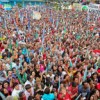
BRAZIL: Workers’ Party Support Base Redoubles Efforts for Victory
Every vote counts for the two candidates competing for the presidency of Brazil in next Sunday's runoff, and the governing Workers' Party (PT) is galvanising its electoral base into active campaigning, after the complacency instilled by eight years in power.MEXICO: Native Tourism Businesses Need to Sell Themselves Better
Native tourism companies dedicated to the preservation and promotion of indigenous culture and to sustainable development face a number of hurdles, especially in terms of marketing and commercialising their services.« Previous Page — Next Page »


The Week with IPS

NEXT STOP - SDGs
Tracking global progress towards a sustainable world

