Languages
Monday, November 23, 2026



News and Views from the Global South
Latin America & the Caribbean
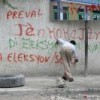
HAITI: Empty Promises, Empty Votes
"We are not going to the election in tents. We want housing before elections." These words were chanted in Creole and held high on placards during a recent demonstration at Haiti's crumpled National Palace, where protesters decried "inhumane" conditions in the camps for displaced people and condemned the government and NGOs which they said have abandoned them.MEXICO: Freedom of Information Laws a Model; Not So the Practice
Mexico has suffered a setback in terms of government transparency and access to public information, according to Thomas Blanton and Kate Doyle, experts with the Washington-based National Security Archive (NSA).
ARGENTINA: Activists File Writ of Habeas Corpus – for Legal Abortion
Heartened by the passage of a same-sex marriage law in Argentina, women's organisations in this South American country stepped up their demands for the legalisation of abortion, on the Day for the Decriminalisation of Abortion in Latin America and the Caribbean.
CARIBBEAN: Sharing the Pain of Climate Change
With a recent study warning that the Caribbean could lose six percent of its Gross Domestic Product annually to the ravages of climate change, some experts say that a combination of adaptation funding and risk pooling is the region's best hope for the future.VENEZUELA: Opposition Comeback Presages New Political Crisis
The vigorous comeback of the opposition in Venezuela's newly elected parliament strengthens pluralism in this oil-rich country, although it may presage a new political crisis in the medium term, according to analysts.
LATIN AMERICA: Peru Urges Regional Alliance Against Drug Trade
The nations of Latin America must ally themselves -- regardless of their roles as drug producers, consumers or transit routes -- in a full-force fight against drug trafficking, says Peru, which plans to lead the way.
VENEZUELA: Chavez Allies Set to Win Majority in Congress
The opposition is getting ready for a comeback in Sunday's parliamentary elections in Venezuela, although President Hugo Chávez's allies seem set to win a comfortable majority, perhaps as much as two-thirds of the seats.MEXICO: Bicentennial Nothing to Celebrate, Say Indigenous Peoples
"I don't understand why we should celebrate [Independence]. There will be no freedom in Mexico until repression against indigenous peoples is eliminated," says Sadhana, whose name means "moon" in the indigenous Mazahua language.Trinidad Scraps Controversial Smelter
The new government of Trinidad and Tobago wasted little time. In fact, Finance Minister Winston Dookeran took less than 30 seconds of a two-hour budget presentation to announce that the People's Partnership government, headed by the country's first female prime minister, Kamla Persad Bissessar, was scrapping the $66.6 million dollar smelter plant project involving investors from China and Brazil.
COLOMBIA: Devastating Blow for FARC Rebels
The death of guerrilla commander Luis Suárez, aka Jorge Briceño or "Mono Jojoy", is a "devastating blow" for Colombia's FARC insurgents, military affairs analyst Ariel Ávila told IPS.MEXICO: Soaring Bottled Water Use Highlights Mistrust of Tap Water
More bottled water is consumed per capita in Mexico than in any other country in the world, according to a U.S. consultancy -- a fact that alarms non-governmental organisations because it highlights the lack of access to safe tap water.
Rights Activist Challenges Jamaica’s Status Quo
For the last 50 years, Jamaica's modern history has been shaped by two powerful parties - the Jamaica Labour Party and the People's National Party. Although dozens of others have periodically emerged, the political graveyard has inevitably been their final resting place.
LATIN AMERICA: Five Million Women Have Fallen Prey to Trafficking Networks
The fight against human trafficking in Latin America is ineffective and has led to the emergence of intra-regional markets for the trade, according to experts and activists meeting this Hjek in this Mexican city.
ARGENTINA: Pioneer in Mainstreaming Gender Perspective in Justice System
Judges and other judicial officers in Argentina have begun to receive training on gender equality and women's rights, as part of a broad programme that could serve as a model for similar initiatives in the rest of Latin America.CENTRAL AMERICA: Youth Gangs – Reserve Army for Organised Crime
In El Salvador, Honduras and Guatemala, the expression "de rodillas ante las pandillas" is not just a catchy rhyme referring to youth gangs bringing the countries to their knees but is an accurate description of reality today: these criminal groups, born and evolved in violence, wield ever-increasing power.
MEXICO: Gender Violence Hits Behind the News
Amalia is an indigenous Maya girl from a rural community in southern Quintana Roo, on Mexico's Caribbean coast. She is 11 years old, and in August became the youngest mother in the country when she gave birth to a baby girl, 51 cm long and just under three kg.
LATIN AMERICA: Crisis Not a Thing of the Past for NGOs
The countries of Latin America, with few exceptions, have weathered the global recession of the past two years relatively well, while they simultaneously continued the process of shedding neoliberal policies in their most fundamentalist form. But in financial terms, non-governmental organisations have not fared so well.
Haitian Women Struggle to Keep Hope Alive
"I'm going to do everything possible to raise my daughter. My daughter is my future. And I can see my future in her," says Mirlene Saint Juste, a rice merchant in the Opoto market of Gonaives in northern Haiti.MEXICO: Artists Push ‘Other’ Bicentennial Viewpoint
"The homeland is not the flag / the anthem is not the country / that is just the varnish / that adorns the outside," states a poem written in Spanish by artist Enrique Cisneros in reference to Mexico's ongoing bicentennial celebrations.
ARGENTINA: Fighting to Save Glaciers as They Retreat
Argentina's glaciers, along with Chile's the most extensive of South America, manifest the damage caused by climate change, while they also face threats from mining and major transportation infrastructure projects. A law to protect them has been postponed yet again.
Inequality, Chile’s Bicentennial Challenge
Chile is celebrating 200 years of independence as one of the Latin American countries with the lowest proportion of poor people, but also one of the most unequal.« Previous Page — Next Page »


The Week with IPS

NEXT STOP - SDGs
Tracking global progress towards a sustainable world

