Languages
Monday, November 23, 2026



News and Views from the Global South
Latin America & the Caribbean
More Than 200 Ways of Becoming a Mother
"You can only have one mother," as the saying goes, but in Brazil there are 215 ways of becoming a mother, one for each of the ethnic groups in this South American country. Promoting maternal health while respecting cultural traditions is a major health challenge.CLIMATE CHANGE: Uruguay Fends Off Health Threats – So Far
The incidence of cardiovascular, respiratory and water-borne diseases is rising in Uruguay in tandem with climate change, while dengue fever and malaria lurk at the country's borders. Higher temperatures are encouraging the presence of insect vectors carrying diseases that were eradicated decades ago, experts say.
COLOMBIA: Paramilitaries Don’t Want to Take the Blame Alone
The so-called para-politics, para-institutions and para-economy in Colombia "have their place in the dock" among the accused, said eight former leaders of ultra-right armed paramilitary groups, now demobilised and charged with crimes against humanity in the nation's decades-long civil war.Controversy Dogs Brazil’s Racial Equality Law
The Statute of Racial Equality, soon to be signed into law in Brazil, is at the centre of a controversy between those who consider it a historical achievement, like the abolition of slavery in 1888, and those who see it as failing to satisfy the demands of the black movement.MEXICO: Local Media in the Line of Fire
It is open season on local media in states and cities in the interior of Mexico, which are virtually unprotected against violent attack and have been the worst hit by the murders of at least eight journalists this year.Caribbean Leaders Inch Forward on Regional Integration
For 37 years, Caribbean leaders have fended off charges from critics that the 15-member regional grouping Caricom is nothing more than a talk shop.
Q&A: “Latin America Faces an Environmental Emergency”
The Latin American economy based on exploitation of natural resources does not create social well-being and is unsustainable in the context of climate change, says Uruguayan Eduardo Gudynas, lead researcher at the Latin American Centre for Social Ecology (CLAES).
Bolivian Lowlands Get Life-Saving Flood Warning System
An early warning system to alert people living in the lowlands of the northern Bolivian department of Beni about imminent flooding of the mighty Mamoré and Ibare rivers is saving lives, food and goods, and overcoming the uncertainty that led to enormous losses in the past.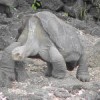
GALÁPAGOS: The Return of the Giant Tortoise
The historic reintroduction of giant tortoises is under way on Pinta Island, where not a single one of the famous animals that gave their name to the Ecuadorian archipelago of Galápagos remained.
Afro-Brazilian Communities in the Shadow of Space Facility
A space launch centre built in their territory has altered the way of life that members of "quilombos" - village communities originally founded by runaway slaves - have maintained for a century and a half in this municipality in the Brazilian state of Maranhao.
Flooded with NGOs, Haiti Looks to Fall Presidential Polls
They descended in droves after the Jan. 12 earthquake devastated the French-speaking Caribbean Community (Caricom) country, killing an estimated 300,000 people and leaving more than one million homeless.
COLOMBIA: Palm Planters and Displaced People Wait for New Government
Twenty-three African palm plantation owners, who invested 34 million dollars in Colombia up to 2003 and have spent another 15 million dollars on a palm oil refinery, are soon to be sentenced by a court.CENTRAL AMERICA: Rampant Violence Means Childhood Interrupted
Very early one recent morning in the eastern Guatemalan municipality of Esquipulas, the residents slept soundly -- until heart-rending screams from the street broke the calm.MEXICO: Autonomous Triqui Community Wary of New State Government
The autonomous indigenous Triqui community of San Juan Copala, in the southern Mexican state of Oaxaca, is maintaining a cautious attitude towards the state government to take power after winning Sunday's elections.AMERICAS: We Need Sustainable Development Banks, Say NGOs
Non-governmental organisations from across the Americas are demanding that the World Bank and the Inter-American Development Bank institute policies that favour sustainable energy and help mitigate climate change.
MEXICO: Conservation Can Be a Weapon Against Poverty
"I cut down all of that section," said Esteban Martínez as he pointed to a rectangle of land cleared of trees in the central Mexican state of Querétaro.ARGENTINA: Poorest First Served with Free Digital TV
In contrast to what has happened in most countries that have switched from analogue to digital television, in Argentina the technological leap has begun with the poorest households.
PERU: ‘Don’t Minimise’ Impacts of Amazon Oil Spill
Pluspetrol's Jun. 19 petroleum spill has left the Marañón River, in the Peruvian Amazon, with oil and grease levels thousands of times greater than the maximum allowed for human consumption, affecting more than 4,000 local residents.URUGUAY: Women Join Forces in the Parliamentary Trenches
Women lawmakers in Uruguay have joined forces across party lines, in spite of criticism from colleagues in their own parties, and have built majorities to approve laws in favour of gender equality and other rights that have been denied for years.
BRAZIL: Belo Monte Dam Means Floods for Some, Drought for Others
"There will be two years of abundance, and then famine," says Brazilian indigenous leader José Carlos Arara, laying bare his opinion of the promises that the Belo Monte hydroelectric dam will not alter the living conditions of the people in this part of the eastern Amazon.
ECUADOR: Like Mother, Like Multi-Tasking Daughter
In Ecuador, girl workers conform to universal statistics: they drop out of school less than boy workers, because they learn from an early age to juggle earning an income with looking after younger siblings and getting an education.« Previous Page — Next Page »


The Week with IPS

NEXT STOP - SDGs
Tracking global progress towards a sustainable world

