Languages
Tuesday, November 24, 2026



News and Views from the Global South
Latin America & the Caribbean
COLOMBIA: Spying Knows No Borders
Venezuela's Minister of Interior and Justice, Tarek El Aissami, presented a report Oct. 29, 2009, to his country's National Assembly. That report is believed to have resulted, two days later, in the murder of two people on a farm in neighbouring Colombia, near the capital.ECUADOR-COLOMBIA: Quito Presses Bogota on Alleged Spying
The government of Ecuador has issued its third request in eight months to Colombia for complete and detailed information on alleged telephone espionage committed against Ecuador's President Rafael Correa.Caribbean Summit Seeks United Front to Economic Crisis
Caribbean Community (Caricom) leaders are gathering here next week for their annual summit still struggling to recover from the two-year global economic and financial crisis that has taken a major toll on their individual economies.
PARAGUAY: Clean Water Out of Reach for Native Peoples
Of the many things that are not within the reach of everyone in Paraguay, safe drinking water is the one the indigenous population longs for most.MEXICO: Laws Criminalising HIV Transmission Are Discriminatory
In 30 of Mexico's 32 states there are laws penalising transmission of HIV, the AIDS virus, which are regarded by experts as discriminatory and ineffective in curbing the epidemic.
BRAZIL: Belo Monte Dam Will Change Way of Life on Xingu River
At dawn, the "captain" fired on the village leader and the shooting began. "The forest trembled," says one survivor: the local indigenous people fled, leaving their dead behind. Only one young girl remained. But she sank her teeth into the chest of one of the assailants with such force that they slit her throat to pull her off him.HONDURAS: The Military Still Have Veto Power
The de facto veto power that the military exercised with the toppling of president Manuel Zelaya exactly one year ago today effectively blocks any possible political or electoral reforms, experts say.URUGUAY: Incubating Businesses and ICT Job Prospects
"Without this opportunity, I might never have been able to get a higher education," says Paolo Carabajal, one of the beneficiaries of a digital development plan in this city in northwestern Uruguay.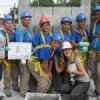
Brick by Brick, Women Builders Make Their Way in Brazil
It looks like any other construction site: wheelbarrows full of bricks, boards and steel bars trundling back and forth to a soundtrack of hammering, sawing and drilling. But there is a difference: some of the construction workers underneath the hard hats are women.BRAZIL: Forestry Law Reforms Augur More Disasters
While the Brazilian authorities tally the death toll and the economic losses caused by recent torrential rains in the northeast, activists warn that a legislative bill to modify the Forestry Code will only worsen the effects of extreme weather, which is increasingly frequent in the context of climate change.BOLIVIA: 69-Year-Old Native Leader Heads 1,500-Km March
Indigenous elder Ernesto Noé, 69, is once again leading his people on a long march from Bolivia's Amazon jungle, to protest environmental damages caused by the oil industry and demand respect for native land rights.
URUGUAY: Rio de la Plata Under Land-Based Attack
Unregulated population growth along Uruguay's southern coast has hurt the Río de la Plata (River Plate) along an extensive stretch where the freshwater mixes with the Atlantic's salty seas, warn scientists.MEXICO: More Soldiers in the Streets, More Violence
The Mexican army's participation in the counternarcotics war led by the government of conservative President Felipe Calderón has triggered a jump in violence in the areas where the troops are on the ground, according to an analysis by a U.S. statistics expert.Not Everyone in Peru Is Winning “Championship” Against Poverty
The Peruvian government is taking advantage of the broadcasts of the World Cup football games in South Africa to air an ad touting a reduction in the poverty rate from 48 to 34 percent between 2005 and 2009 as an achievement of the administration of President Alan García.
RIGHTS: Inter-American Court Finds Colombia Guilty in Senator’s Murder
Time does not heal everything. Finding the Colombian state guilty in the murder of Patriotic Union (UP) Senator Manuel Cepeda, the Inter-American Court of Human Rights considered the 16 years of impunity enjoyed by the masterminds behind the killing an aggravating factor.BRAZIL: Murky Finances Haunt 2014 Football World Cup
Delays in construction to prepare for the 2014 football World Cup, to be hosted by Brazil, bring to mind the budget overruns and the secretive bidding process ahead of the Pan-American Games held in Rio de Janeiro in 2007.LATIN AMERICA: Majority Favours Legalising Abortion – But Not for All Cases
The majority of people surveyed in Brazil, Chile, Mexico and Nicaragua are in favour of legalising therapeutic abortion, but not all forms of elective abortion, according to a study by the Latin American Faculty of Social Sciences (FLACSO).Female Presence Growing in Brazil’s Gangs
They are no longer simply the girlfriends of gang members. Women have increasingly become members themselves of Brazil's youth gangs over the past decade -- though they have yet to reach the leadership positions of their male colleagues.
COLOMBIA: Drug Trade’s Hold on Football Persists
Football, the most popular sport in Colombia, has been subject to heavy pressures from drug trafficking since the mid-1970s. A new study shows that the illicit trade continues to tarnish the upper echelons of this sport.
Argentine Province a Bastion of Opposition to Gender Quotas
Argentina was the first country in the world to adopt a national gender quota law to boost women's political participation. But nearly 20 years later, the legislation that inspired the rest of Latin America continues to run into resistance in one province.COLOMBIA: New President-Elect, Same Old Story
Former Colombian Defence Minister Juan Manuel Santos was elected president with the votes of just 30 percent of all voters on the electoral rolls, while turnout stood at a mere 45 percent in this country caught up in a civil war since 1964.« Previous Page — Next Page »


The Week with IPS

NEXT STOP - SDGs
Tracking global progress towards a sustainable world

