Languages
Tuesday, November 24, 2026



News and Views from the Global South
Latin America & the Caribbean
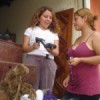
GUATEMALA: Giving Poor Women Entrepreneurs a Boost
Rosenda Gómez, a 53-year-old mother of five, knows all about challenges. To overcome them, she started a modest sausage business in Guatemala, and thanks to her leadership skills and training and other support she received, she is now an example of the economic empowerment of women.
Q&A: “Sustainability Is Paramount for Latin American Development”
Although the financial, climate, energy and food crises continue to create new challenges, Colombian biologist Margarita Astrálaga believes that now could be the time for Latin America "to advance towards a more equitable and sustainable development."RIGHTS-PERU: Severe Setbacks for Justice in Cases Involving Military
Human rights groups in Peru are complaining about drastic setbacks in the attempt to hold members of the security forces responsible for crimes against humanity committed during the country's counterinsurgency war.At 100 Days, Chilean President Hard to Pin Down Politically
He describes himself as centre-right, but several of his policies have been classified as "progressive". As he completes his first 100 days in office, telegenic Chilean President Sebastián Piñera is surprising both allies and opponents, while social organisations are keeping a careful watch.ARGENTINA: Turning Wasteland into Woodland
In Santiago del Estero, one of the Argentine provinces hit hardest by deforestation and desertification, an oasis of native tree species is being created to restore the soil and entice back farmers who were forced to leave their land.
ENERGY: Brazilian Dams in Peru’s Jungle, to Supply Brazil
An energy deal that Peru and Brazil signed this week in the Amazon city of Manaus in Brazil is opposed by environmentalists and local indigenous communities in Peru where the planned hydroelectric dams will be built. What is at stake?Critical Media Hit by Legal Actions in Venezuela
Guillermo Zuloaga, owner of the Globovisión television channel has fled Venezuela to avoid an arrest warrant issued by a court a week after President Hugo Chávez complained that Zuloaga was not being held in prison pending trials for illegal business practices, and for remarks that were deemed "offensive" to the president.
LATIN AMERICA: Photos a Leveller for Maids and Their Employers
Fifty pairs of women -- maids and their employers -- from Argentina, Chile and Colombia abandoned their daily routines to pose for photographs for a project about the hierarchical relationship that unites them.
MEXICO: Extending the Reach of Safe Abortion
By 5:00 AM, dozens of women are already lined up outside of this clinic in the Mexican capital. Most come with their mothers, sisters, husbands, friends or boyfriends. A few show up alone.
PARAGUAY: “Pause” Farming Expansion in Gran Chaco, Say Activists
Extensive cattle farming in northwestern Paraguay is the leading cause of deforestation in the Gran Chaco, one of the world's leading regions in biodiversity and South America's second largest forested area, after the Amazon.MEXICO: Torture – Routine and Uninvestigated
While the Mexican government defends the use of the military in its counter-drug offensive, human rights organisations report that the use of torture against local police officers and others arrested in the war on drugs has become routine.ARGENTINA-URUGUAY: Joint Environmental Monitoring, a Way Forward?
A mutual inspection system, like the one Argentina and Brazil have developed for the nuclear industry, could contribute to solving the conflict between Argentina and Uruguay over pulp mills on border rivers.
BRAZIL: The Football Nation Doesn’t Forget Its Heroes
Long known as "the football nation," Brazil today is seeking a new title: recognition as a global economic and political power -- though without denying the sport that made it famous.COLOMBIA: Future Holds More of the Same
Few doubt that former defence minister Juan Manuel Santos will be the next president of Colombia, and that he will continue the policies of President Álvaro Uribe. Santos, as Uribe's heir, will basically be more of the same.CENTRAL AMERICA: Food Security Further Undermined by Climate Disasters
Adverse climatic conditions and weather-related disasters are damaging crops in El Salvador and neighbouring countries in Central America, aggravating the food vulnerability that the region already faces.LATIN AMERICA: Predatory Harvests
Industrial-scale monoculture farming is violating the human rights to adequate food and housing, as well as labour, territorial and environmental rights in Latin America, according to a report released Monday in the Mexican capital.ARGENTINA: Over 40 and Jobless? Click Here
Tired of being sidelined in the job market because he was over 40, an Argentine computer specialist created a labour exchange for people his age and older, which in just a few months grew to nearly 6,000 people.
CLIMATE CHANGE: As Humans Advance, Andean Glaciers Recede
The spectacular glacier Number 15 of Antisana, one of the Ecuadorean capitals' sources of potable water, lost at least 36 percent of its original mass in the last 50 years.
CHILE: Maternity Leave – Longer, or for All Working Mothers?
"In Chile, women carry the entire burden of maternity," says teacher Fabiola Quiñones, who applauds the government's proposal to extend pre- and post- natal leave to six months -- but only if all new mothers who work can have that option.
JAMAICA: Women Caught Between Police and Loyalty for Gang Leader
"I am very much afraid...I'm traumatised," sobbed Marsha, as she recounted the violence that ripped through the constituency of West Kingston last month as police and soldiers searched for Christopher "Dudus" Coke, the reputed head of one of the most notorious criminal organisations in the Western hemisphere.
RIGHTS-COLOMBIA: Uribe Lashes Out at Sentence for Senior Officer
Surrounded by a protective phalanx of stern generals and police chiefs, Colombian President Álvaro Uribe assailed a court ruling that sentenced a senior army officer for human rights crimes committed nearly 25 years ago.« Previous Page — Next Page »


The Week with IPS

NEXT STOP - SDGs
Tracking global progress towards a sustainable world

