Languages
Tuesday, November 24, 2026



News and Views from the Global South
Latin America & the Caribbean
JAMAICA: Young Offenders Caught Up in Adult System
For years, Jamaica's correctional system has been under the glare of the international spotlight.
HEALTH-BRAZIL: When the City Makes You Sick
Limiting your cholesterol through diet may not be enough to maintain cardiovascular health in polluted cities like São Paulo in Brazil: the particulates suspended in the air alter the molecular composition of LDL, popularly known as "bad cholesterol," making it even more dangerous.
CHILE: Will Presidential CEO Modify Regional Political Scenario?
Will right-wing billionaire Sebastián Piñera's arrival to the presidency in Chile modify the overall political outlook in Latin America? Analysts consulted in various countries have different takes on the question.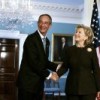
Q&A: “It’s Not Easy to Fight Impunity”
Guatemalan President Álvaro Colom said he intends to extend the mandate of the International Commission against Impunity in Guatemala (CICIG), in this interview with IPS during a three-day visit to the United States.RIGHTS-PERU: No Justice for Indians in Amazon Massacre
Although the technical investigations cleared two of the indigenous demonstrators accused in the murders of 12 policemen during a bloody June 2009 clash between native protesters and the security forces near the northern Amazon jungle town of Bagua, they are still behind bars.
BRAZIL: Carnival, a Complex Annual Revolution for Women, Gays
Fátima Oliveira, one of Brazil's few black women doctors, always goes to "the best carnival," in Sabará, a city of 130,000 people in the state of Minas Gerais, where "men dress up as women" at a celebration that is "very informal, very local, with few tourists."
ENERGY-ARGENTINA: Agrofuels Rev Their Engines
In a measure that was delayed by supply problems, this year Argentina is beginning to require that gasoline be mixed with ethanol and diesel fuel with biodiesel, at a proportion of five percent, to possibly reach 20 percent by 2015.EL SALVADOR: Killings Bear Hallmarks of Death Squads
Human rights defenders and analysts in El Salvador suspect that death squads were responsible for two highly coordinated attacks in which 12 young men were killed this month.
ENVIRONMENT-HONDURAS: Forest Corruption a Major Challenge
The effects of climate change in Honduras have a local accomplice. Not only are forests suffering from global warming; they are also the victim of illegal logging.
CENTRAL AMERICA: Women Eke Out a Living in Informal Economy
"I've been working in the streets since I was a girl. My parents didn't send me to school, so it's really hard for me to find a job," says Carol Orozco, 31, who forms part of the veritable army of vendors hawking their wares on the streets of Central America.RIGHTS: Nicaragua Refuses to Discuss Therapeutic Abortion
Nicaragua slammed the door on any possible debate on the restitution of therapeutic abortion - performed to save the life of the pregnant woman - despite demands that it do so voiced during a United Nations review of human rights in the country.
HAITI: Quake Victims Overwhelm Medical Capacity
Seriously injured people continue to provide deep challenges to the city's barely functioning hospitals, weeks after a massive earthquake overwhelmed medical staff.RIGHTS-MEXICO: Reporters, Activists Demand State Protection
Journalists and human rights activists in Mexico are frantically seeking a mechanism to protect them from attacks related to their work, but the state has been slow to respond. The Colombian model might provide a solution.URUGUAY: Making the Secret Shame of Illiteracy a Thing of the Past
"Excuse me, I forgot my glasses, could you tell me what that sign says?" This was one of the ruses commonly used by Juan Gómez, who was too embarrassed to admit that at the age of 77, he had never learned to read or write.CHILE: Another Chance for Reparations for Pinochet Victims
Over the next six months, a new commission will receive testimony from victims of the 1973-1990 dictatorship of the late General Augusto Pinochet, who have not qualified for reparations since Chile's return to democracy.
HAITI: Tensions Put on Hold as Dominican Republic Reaches Out
Despite a history of often tense relations, the first nation to render assistance to Haiti after last month's devastating earthquake was its island neighbour, the Dominican Republic.
COLOMBIA: Magazine Closure Deals Major Blow to Investigative Reporting
What would have happened in Colombia if the financing of former president Ernesto Samper's (1994-1998) election campaign by the Cali cartel had not been uncovered?CHILE: Mapuche Indians Set Up Autonomous Legal Defence Unit
As tensions mount in Chile's Mapuche territories, the indigenous people have created a new legal defence body for cases involving resistance against the state, as they put little stock in the justice system for working out cases such as land disputes.
URUGUAY: Pulling Small Dairy Farmers Out of Poverty
"The problem is when you're too small, just too small," says Claudia Pérez, a small-scale dairy farmer in Uruguay, glancing to her left, where her pasture ends just 50 metres from her modest rural home.
ENERGY-MEXICO: Big and Small Firms Harness Sun’s Rays
It was Isabel Cortés, the family matriarch, who started the project. In 1990, she started looking for a way to market xoconostle, the sour variety of the nopal cactus fruit that is abundant in this arid part of central Mexico, in the Mezquital valley.CHILE: Stop Treating Community Broadcasters as Criminals, Say Activists
Criminal law should not be used against freedom of expression, nor to silence community radio stations in Chile, say activists and journalists in response to closures of community radio outlets in this South American country.« Previous Page — Next Page »


The Week with IPS

NEXT STOP - SDGs
Tracking global progress towards a sustainable world

