Languages
Tuesday, November 24, 2026



News and Views from the Global South
Latin America & the Caribbean
ENVIRONMENT-MEXICO: Green Areas to the Highest Bidder
Activists in Mexico complain that the deforestation threatening the environmental health of Mexico has been accentuated by the granting of public areas to private companies.
MEXICO: Scientists Reinvent the Corn Tortilla
The process of making corn tortillas - the filling, age-old traditional food throughout much of Mexico and Central America - pollutes huge volumes of water and consumes a great deal of energy.RELIGION-MEXICO: Legion of Christ Scandal Escalates
A new scandal has increased the pressure on the conservative religious order Legion of Christ, one of the most influential in the Catholic Church, to compensate the victims of alleged sexual abuse by its founder, Mexican priest Marcial Maciel, and carry out internal reforms.CENTRAL AMERICA: Women Make Headway in Politics – and Want More
The victory of Laura Chinchilla in Costa Rica's presidential elections, and the growing participation of women in Central American parliaments, point to their progress in the region's spheres of political power. But they still have a long way to go, experts say.RIGHTS-MEXICO: “Yes, I Do” Want a Same-Sex Marriage Licence
Emma Villanueva and her partner lined up at the civil registry office in the Mexican capital to register for a marriage licence Thursday, the day that Latin America's first same-sex marriage law went into effect.
CLIMATE: The Thirsty Caribbean
Caribbean countries are considering options like desalination plants and cloud seeding to confront a drought that threatens the regional economy and which experts warned about years ago.GUATEMALA: Off Track for Millennium Development Goals
Guatemala knows that when it comes time to demonstrate compliance with the Millennium Development Goals (MDGs), a set of global anti-poverty and development target to be met by 2015, it will make a poor showing.CHILE: Cost of Rebuilding Still Unclear
Chile has begun to think about the costs and challenges of rebuilding a large part of the areas hit by the Feb. 27 earthquake and tsunami, while rescue and aid operations continue.
CHILE: A Tidal Wave of Solidarity
Chile has been wrapped in a blanket of international solidarity, while offers of cooperation for the relief of victims and the reconstruction of the country shower down upon it, after the devastating Feb. 27 earthquake and tsunami.
PERU: Relocating Entire Villages for Mines, Dams
Hundreds of Peruvian communities were displaced as they fled the 1980-2000 civil war. Today the government is pushing for urgent passage of a law that would facilitate the relocation of entire villages or neighbourhoods in mineral or energy-rich areas.
CHILE: First Woman President Scores Points on Gender Front
When Chile elected Michelle Bachelet as its first woman president in 2005, thousands of women celebrated the historic victory as their own personal triumph, proudly marching in the streets wearing mock presidential sashes. Today, men and women both recognise the concrete and symbolic progress achieved in gender issues under her administration.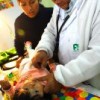
BOLIVIA: Cash for Checkups to Slash Maternal Deaths
A social programme in Bolivia that prevents the deaths of two mothers a day from complications related to pregnancy and childbirth is making headway despite administrative difficulties, and has the potential to cut the alarmingly high maternal mortality rate in this country by up to 80 percent in just five years.
URUGUAY: New President Aims for Leap in Development
"I've been crying (tears of joy) since yesterday. It's amazing to see how an ordinary person made it so far," said 44-year-old María del Rosario Corbo, referring to Uruguay's new President José "Pepe" Mujica, who was sworn in Monday at the head of this South American country's second leftist administration.CHILE: Assessing Quake Damages, Acknowledging Mistakes
While the number of victims of the severe earthquake and tsunami that hit Chile early Saturday has climbed to 723, government officials and experts admit that the catastrophe has highlighted institutional shortcomings and blunders.
HAITI: Earthquake Epicentre Copes with Aftermath
Marie Saintus sat regally on a wicker chair in the narrow alley by her makeshift home at the Anacaona Stadium, in the middle of this once bucolic city, as she teased her neighbours.MEXICO: Ecological Smoke from Fuel Efficient Stoves
The lives of many rural women and children in Mexico are changing, and the country's high deforestation rate could be reduced, as inexpensive fuel-efficient cook stoves are being distributed by non-governmental organisations with corporate and government support.HONDURAS: No Calm for Lobo on Home Front
Less than a month into his term, Honduran President Porfirio Lobo is facing street protests, complaints of human rights violations, and criticism of the truth commission he set up to investigate the Jun. 28 coup that overthrew President Manuel Zelaya.
Q&A: Brazil Leans on South America to Adopt Its Digital TV Standard
Brazil is lobbying hard to get the rest of Latin America to adopt the Brazilian version of the Japanese digital television standard, as Argentina, Chile, Peru and Venezuela have already done.
URUGUAY: A Return to Mud and Straw
More and more Uruguayans are keen on building ecological homes. The problem is that there is hardly any market or specialised labour for what is known as "bio-building."
CLIMATE-PERU: El Niño Throws a Tantrum
Peru's lack of disaster prevention policies and measures, combined with climate imbalances in South America, have led to the loss of dozens of lives and thousands of homes in this Andean country in the last few months.
HAITI: Secure Shelters Scarce as Rainy Season Looms
A cacophony of murmurs and cries echoed through the neighbourhoods of Haiti's capital city Monday night as a violent aftershock shook people awake. Ten minutes later, another tremor rocked the ground, this time more smoothly back and forth.« Previous Page — Next Page »


The Week with IPS

NEXT STOP - SDGs
Tracking global progress towards a sustainable world

