Languages
Tuesday, November 24, 2026



News and Views from the Global South
Latin America & the Caribbean
MEXICO: Kidnapping – A Growing Risk for Central American Migrants
The increase in kidnappings of Central American migrants crossing Mexico on their way to the United States will be brought up at the Inter-American Commission on Human Rights (IACHR) current session next Monday.GUATEMALA: Ok for Ex-President’s Extradition to US Just One Step
Civil society groups in Guatemala say a court decision authorising former Guatemalan president Alfonso Portillo's extradition to the United States is just a first step in a lengthy process.CLIMATE CHANGE-BRAZIL: The Threat Posed by Livestock
The livestock industry has less economic clout than the oil industry, but ranchers say it has better arguments to defend itself from accusations regarding its share of responsibility for global warming.
PERU: Priest on Campaign Trail Defrocked
A priest who is touring the country in his bid to run for president next year, at the head of a leftist movement, was indefinitely suspended by the Catholic Church for getting involved in politics.LATIN AMERICA: NGOs Demand Transparency, Reforms in IDB
Dozens of civil society organisations in the Americas are demanding greater transparency and accountability as well as structural reforms in the Inter-American Development Bank (IDB), ahead of the multilateral lender's annual meeting of governors that starts Friday in the Mexican resort of Cancún.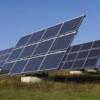
ENERGY-LATIN AMERICA: Moving Towards Renewables
Argentina is building its first solar energy park in the northwestern province of San Juan. The project calls for the manufacture of photovoltaic panels to supply the rest of the country and the other member countries of the Southern Common Market (Mercosur).
JAMAICA: The Other Side of Paradise
It's just before midnight, and the music pulsates through the massive speakers perched under the ceiling, scantily clad girls in their five-inch heels moving closer to the iron poles.
COLOMBIA: Vote-Buying and Front Men
During Sunday's legislative elections in Colombia - in which rightwing President Álvaro Uribe's allies were the big winners - polling stations in one-third of the country's municipalities were at risk of violence, corruption or fraud, according to the ombudsman's office and election observers, who reported vote-buying and pressure on voters.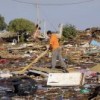
CHILE: Cracks Exposed in Readiness Plan
Inadequacies in technical equipment, specialised human resources, institutional coordination, land zoning and citizen awareness were all laid bare by the major earthquake and subsequent tsunami on Feb. 27 in central and southern Chile.MEXICO: Music and Dance Classes Foster Tolerance, Self-Esteem
Ten-year-old Jessica Algoneda leaps in the air, raising her arms and spinning around at her primary school in the Mexican capital, as if in honour of Terpsichore, the Greek muse of dance and poetry.RIGHTS-GUATEMALA: ‘Our Lives Are Cut Short at a Stroke’
"This is a time of great tension because we know that at any moment, when we least expect it, our lives can be cut short at a stroke," Tito Gálvez, a leader in the Resistance Front for the Defence of Natural Resources and Rights of the Guatemalan Peoples (FRENA), told IPS.MEXICO: Consumers on the Offensive
Mexican consumers are currently facing a combination of price rises, economic recession and lack of legal protection in the face of abuses committed by providers of goods and services.HAITI: Caribbean Unites Behind Recovery Plans
As he travels back to his headquarters in Washington, World Bank president Robert Zoellick must be painfully aware that Caribbean Community (CARICOM) countries have very strong feelings on the redevelopment of Haiti following the Jan. 12 earthquake.RIGHTS: Guatemala, El Salvador Ordered to Heed Rulings
Guatemala and El Salvador have a terrible record in terms of compliance with the recommendations and sentences handed down by the inter-American human rights bodies on cases involving appalling abuses like forced disappearance, torture and massacres committed during the armed conflicts in the two Central American countries.
CHILE: Aftershocks Rock Inaugural Ceremony
While Chile's new rightwing President Sebastián Piñera, who announced that he would lead "a government of reconstruction," was being sworn in Thursday, the earthquake-ravaged country was shaken by major aftershocks.ECUADOR: Native Leaders Call for Anti-Government Protests
"This is not the end. It is not even the beginning of the end. But it is, perhaps, the end of the beginning." The words of British Prime Minister Winston Churchill after the 1942 defeat of Germany's forces in Africa are an apt description of the situation between the government of Ecuadorean President Rafael Correa and the powerful Confederation of Indigenous Nationalities of Ecuador (CONAIE).
EDUCATION-URUGUAY: Gardens of Knowledge
"Nature is wise, and if we take the time to observe it, we can learn so much" is the underlying philosophy of a number of innovative programmes being carried out in Uruguayan schools that are using gardens as a teaching resource, explained Edith Moraes, director of the national Primary Education Board.
PERU: Suspension of Mining Operation Merely a Placebo
Although the Peruvian government reported that it had suspended the exploration activities of the Afrodita mining company in the country's northern Amazon jungle region to avoid further protests by local indigenous people, officials took no actual steps to bring the firm's work to a halt.
HAITI: The Camp That Vanished
Perched near the top of a steep hill, the fractured pink walls of Villa Manrese overlook the rest of the capital city. Both ends of the three-story compound have collapsed, spilling into mounds of rubble. The first floor was pulverised into a layer of dust. There are still bodies inside.BRAZIL: Ambitious Development Plan to Cut Inequality
Brazil will be "radically less unequal" and less vulnerable to shocks from the outside when it celebrates 200 years of independence from Portugal, if the Strategic Affairs Secretariat's (SAE) plans for the next 12 years are put into practice, according to a high-ranking official.TRINIDAD: Women Demand a Real Gender Policy
A few days after she created history by becoming the first woman to be elected as opposition leader and the leader of a major political party in Trinidad and Tobago, Kamla Persad Bissessar was kicking mad at the "misunderstanding" of the role of women and their contribution to society.« Previous Page — Next Page »


The Week with IPS

NEXT STOP - SDGs
Tracking global progress towards a sustainable world

