Languages
Tuesday, November 24, 2026



News and Views from the Global South
Latin America & the Caribbean

POLITICS-COLOMBIA: Not Enough Just to Be a Woman
Noemí Sanín, the presidential candidate of Colombia's Conservative Party, who is running second in the polls, has a few advantages over her main rival, the right-wing Juan Manuel Santos, such as extensive experience in foreign relations and in running programmes for poor families and children.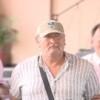
RIGHTS-PERU: Alleged Letter-Bomb Killer Faces Justice
The arrest in Peru of a former Army Intelligence Service (SIE) agent, retired Captain Víctor Penas, may clear up the murder of journalist Melissa Alfaro, and the mutilation of human rights defender Augusto Zúñiga, both victims of letter-bombs in 1991.CHILE: A Newspaper Of and For ‘the Voiceless’
Diario Uno, a newspaper with an innovative business model put out by a group of journalists and academics, went on sale Sunday in Chile, promising to provide a voice for those who do not feel represented by the country's economic model nor by the mainstream media.COLOMBIA: Rebels Release Wounded Soldier
After Colombia’s FARC rebels released 23-year-old soldier Josué Daniel Calvo, Colombian President Alvaro Uribe said he is not opposed to a humanitarian swap of imprisoned insurgents for hostages, as long as the guerrillas do not return to the fighting.
DEVELOPMENT: The Caribbean Trembles
Better known for its hurricanes, the region that extends from the Cayman Islands in the west to the chain of Windward and Leeward Islands in the east is home to one of the earth's principal seismic belts.HUMAN RIGHTS: UN Complains of Scant Progress by Mexico
Mexico has failed to make significant progress on human rights issues like violence against women, abuses by military troops involved in policing work, and attacks on journalists, the United Nations Human Rights Committee stated Friday.CENTRAL AMERICA: Ousted President or Coup Leader to Regional Parliament?
The Central American Parliament (Parlacen) has been caught up in the political confrontation in Honduras between Manuel Zelaya, the president who was ousted on Jun. 28, and the leader of the coup government, Roberto Micheletti, because the regional body is having a hard time deciding which of the two it should accept as a member.URUGUAY: Improving Conditions for Waste Pickers
"The time will come when 80 percent of the raw material used by industry in Uruguay will be recycled waste products," Marcelo Conde, a 40-year-old garbage sorter who has been digging through trash for recyclables "for as long as I can remember," says with some pride.ARGENTINA: Football Violence Flares Up Ahead of World Cup
"Your president is willing to confront the wildest hordes of opponents, but not a football fan, ever," Argentine President Cristina Fernández once joked.URUGUAY: Agro-Export Boom May Have Lethal Consequences
Behind the explosive growth of the agriculture and plantation forestry industries in Uruguay lies clear proof of the indiscriminate use of chemical products that pose serious threats to the environment and human health.TRINIDAD: Sharing a Cell with Cockroaches and Rats
One of the newest opposition politicians to join the Trinidad and Tobago Senate, Verna St Rose-Greaves knows a lot about human rights abuses.
ARGENTINA: Homemade Portraits of Life Behind Bars
"I wanted to take a self-portrait, and I thought about keeping a straight face, but it came out all weird, with these very long arms," says Liliana Cabrera about the photo she took with a camera she made herself, out of a condensed milk tin, at a workshop in an Argentine prison.
PARAGUAY: New Police Units for Domestic Violence Victims
Police officers Juan Cantero and Karin Colmán are sometimes exhausted and depressed by the time they reach the end of their shift. But they quickly recover because they feel their work at a special new police unit for abused women and children in the Paraguayan capital is important.VENEZUELA: Opposition Leader Arrested for Remarks Denied Bail
Venezuelan opposition leader Oswaldo Álvarez Paz will remain in police custody in the state intelligence service (SEBIN) until his trial, a local judge ruled Wednesday, on the grounds that he was a flight risk.BRAZIL: Bringing the Multicoloured Soul of the Favela to Life
The "favelas" or shanty towns of Brazil are a uniform red ochre, the colour of unplastered brick walls. But two visual artists from the Netherlands want to paint them every colour under the sun, a facelift intended to showcase the colourful soul of these poverty-stricken neighbourhoods.LATIN AMERICA: IDB Agrees to Reforms, But NGOs Will Keep Up Pressure
Although social organisations in the region got the Inter-American Development Bank (IDB) to agree to a process of internal reforms, there are still doubts about how the changes will be reflected in the multilateral lender's new strategy.CHILE: Restoring National Heritage in Wake of Quake
The major earthquake that recently shook Chile - the fifth most powerful in the world since 1900 - and the subsequent tsunami not only destroyed thousands of homes, but wreaked havoc on historical monuments, museums, theatres, churches, parks and heritage zones.TRINIDAD: Last Chance for Stalled Smelter Plant
The full-page newspaper advertisements touting the benefits of a controversial aluminium smelter plant appeared here just as the court of appeal is preparing to rule on whether such a facility is ever built in Trinidad and Tobago.BRAZIL: Fewer Slum Dwellers Thanks to Upgrading
A United Nations report published ahead of the Fifth World Urban Forum in Brazil says the proportion of the population of this country living in "favelas" or shantytowns was reduced 16 percent between 2000 and 2010.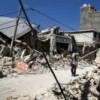
DEVELOPMENT: Haiti Must Destroy Before Rebuilding
When the Jan. 12 earthquake struck this mountainous country, in less than a minute, it transformed it from one of the poorest countries in the Western Hemisphere to the largest construction site this side of the Atlantic.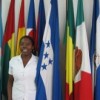
LATIN AMERICA: Still a Long Way to Go for Black Women
At the age of 17, Meybelin Bernárdez is clear about the future: "When I finish my studies, I'll return to help my community get on its feet," the young Garifuna woman from Honduras, who is studying medicine in Cuba, says without hesitation.« Previous Page — Next Page »


The Week with IPS

NEXT STOP - SDGs
Tracking global progress towards a sustainable world

