Languages
Wednesday, November 25, 2026



News and Views from the Global South
Latin America & the Caribbean
Q&A: “If You Find Yourself in a Minefield, Shout for Help”
Putting on a white t-shirt or wearing olive-green pants can be life-or-death decisions in the conflict zone in the steep Andes mountains in western Colombia where 14-year-old Andrés lives and attends eighth grade.CLIMATE CHANGE: Brazil to Recover Leadership Role with CO2 Limits
Brazil's decision to adopt voluntary reduction targets for greenhouse gas emissions is an indication that the planet's climate change emergency has joined strategic, economic and ideological issues as a new factor on the global political agenda.LATIN AMERICA: Community-Based Social Innovation Wins Prizes
Community control of public funds will no longer be just an effective local idea, put into practice by social activists and community leaders in a town in southern Brazil. Now that it has won first prize in ECLAC's fifth Social Innovation Contest, it is likely to spread throughout Latin America.
CHILE: Mapuche Voices from Prison
"If the government says let's sit down and try to reach a solution, we'll be there," Héctor Llaitul, a leader of the radical Mapuche organisation Coordinadora Arauco Malleco (CAM), who is in prison in the southern Chilean region of Bío-Bío, told a group of foreign correspondents.CENTRAL AMERICA: Gender-based Violence, the Hidden Face of Insecurity
Gender-based violence and sexual abuse are serious public security problems in Central America, and Nicaragua is no exception, according to reports by United Nations agencies and women’s organisations.
PERU: Vice President Accused of Corruption
Vice President Luis Giampietri, accused of taking a hand in irregular arms deals in the 1990s, has the dubious distinction of being the highest-ranking member of the Peruvian government to face criminal charges for corruption.BRAZIL: Deforestation Down 45 Percent
Deforestation in Brazil's Amazon jungle was reduced more than expected between August 2008 and July 2009 - 45 percent compared to the previous 12 months, the National Institute for Space Research (INPE) reported.RIGHTS-COLOMBIA: Less Torture, More Impunity
The number of cases of torture attributed to the armed forces in Colombia increased 80 percent from 2003 to 2008, in a context of near total impunity for such crimes. However, the number of documented torture cases overall fell 43.5 percent, compared to the 1998-2003 period.EL SALVADOR: More Troops on the Streets to Fight Crime
José, a 46-year-old street vendor in the Salvadoran capital, says he is happy that the leftist government of Mauricio Funes decided to put more army troops on the streets to help fight the soaring levels of crime.AGRICULTURE-ARGENTINA: Desperately Dry
The persistent drought affecting some 90 percent of Argentine territory has slain cattle in the hundreds of thousands and caused forest fires, drastic restrictions on water use and local disputes over water.MEXICO: DNA Tool to Trace Missing Kids
Andrea C. was eight years old when two unidentified women took her from her home in a neighbourhood on the north side of the Mexican capital, in September 2005. Four years later, she is still missing.
PARAGUAY: Indigenous Women Leaders Buck Discrimination
More and more indigenous women in Paraguay are overcoming sexist resistance in their communities and emerging as leaders within and outside of their villages, fighting for the rights of their people and against discrimination.ARGENTINA: ‘Grandma, Will You Read to Me?’
"Moving," "rewarding," "therapeutic" are some of the terms used to describe their volunteer work by some of the women taking part in the Storytelling Grandmothers Programme aimed at awakening a love of reading among youngsters from poor families in Argentina.BRAZIL: Green Beans to Go, Roast Coffee Grounded
For over a century and a half, Brazil has led the world in green coffee bean production and exports, without ever achieving similar success with processed beans. Some of the internal and external hurdles reflect the dilemma of reliance on agricultural commodities for export revenue.EDUCATION-URUGUAY: Literacy Starts at Home
"At first I was embarrassed and had a hard time getting involved, but then I started relaxing. I like it a lot, because it helps me share different things with my kids," says María José Jara, a young mother from a poor neighbourhood in this Uruguayan city, referring to an innovative and successful family literacy project.
CLIMATE CHANGE-BRAZIL: Towards Carbon-Free Chimneys
Scientists in Brazil are developing a technique for absorbing industry-produced carbon dioxide before it ever reaches the atmosphere. The secret lies in half-centimetre ceramic spheres.EL SALVADOR: Nature Takes Advantage of Unlearned Lessons
Cruz Ayala, 55, weeps inconsolably over the bodies of his 71-year-old mother, Catalina, and his 15-year-old niece Carolina outside of a chapel in the town of Verapaz in the central Salvadoran province of San Vicente.HAITI: A Year After School Collapse, Parents Seek Justice
On the morning of Nov. 7, 2008 shortly after 10 a.m. as the second period was beginning, College La Promesse Evangelique, a three-storey cinderblock school in the Nerette neighbourhood of Petionville, fell in on itself.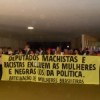
BRAZIL: Leading Ladies Give Gender Slant to Campaign
With the possible participation of three high-profile women candidates in Brazil's 2010 presidential elections, the irruption of gender issues in the campaign in Latin America's largest democracy seems inevitable.
URUGUAY: White Concrete Block Replaces Mud, Wattle and Thatch
"If it weren't for the Mevir housing project, this would be a ghost town," says the local shopkeeper who supplies the basic needs of the families living in this remote hamlet in the middle of nowhere in the South American country of Uruguay.MEXICO: Women Package the Sweet Taste of Nostalgia
Years ago, when Catalina Sánchez saw an opportunity to earn an income and improve her family’s living conditions by growing and selling nopales - an edible cactus native to Mexico - she probably never imagined that her idea would spawn three businesses.« Previous Page — Next Page »


The Week with IPS

NEXT STOP - SDGs
Tracking global progress towards a sustainable world

