Languages
Wednesday, November 25, 2026



News and Views from the Global South
Latin America & the Caribbean
HONDURAS: Unilateral “Unity Government” Announced; Deal “Dead”
Ousted Honduran President Manuel Zelaya said Friday that the agreement reached last week to solve the four-month crisis triggered by a coup d'etat was "dead."RIGHTS-NICARAGUA: Mudslinging Match Between Gov’t, Activists
Nicaraguan President Daniel Ortega has been accused before the Inter-American Commission of Human Rights of responsibility for a series of violent incidents, which in the view of some analysts and civil society organisations have harmed democracy in the country.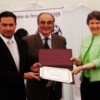
LATIN AMERICA: Journalistic Prize for Making Poverty News
The second "Latin America and the Millennium Development Goals" Journalism Prize, sponsored by the UNDP and IPS, was awarded Thursday in the Chilean capital in a ceremony addressed by the head of the U.N. agency, Helen Clark.ARGENTINA: Child Benefits Expanded to Unemployed and Informal Workers
A new monthly family allowance of nearly 50 dollars per child that will be paid out as of December to parents who are unemployed or work in the informal economy in Argentina was heralded by experts as an extraordinary step forward in terms of social policy.COLOMBIA-VENEZUELA: Border Killings Heat Up Tension
The activities of Colombian armed groups across the border in western Venezuela are aggravating the diplomatic conflict between the two governments, which are ideological opposites, and some analysts have begun to wonder just how far the tension will escalate.RIGHTS-MEXICO: Military Abuses Brought to Inter-American Commission
A case of rights abuses allegedly committed by the Mexican armed forces is coming up for a hearing at the Inter-American Commission on Human Rights (IACHR), where it joins a long list of accusations against the army in this Latin American country.
GUATEMALA: (Barely) Surviving on Beans and Tortillas
Juan Manuel Ardón's bones jut out and his hair is dull and thin: signs of severe malnutrition. He is so weak that he can hardly walk or talk, and the doctors say his weight and stature are those of a six-year-old, rather than 15-year-old, boy.VENEZUELA: Homophobia Stalks the Streets – in Uniform
One Friday at around midnight, on Villaflor Street, a favourite spot for gays and lesbians in the Venezuelan capital, Yonatan Matheus and Omar Marques noticed two Caracas police patrol vans carrying about 20 detainees, most of them very young.
PERU: Cuzco Women Stand Up to Violence
For tourists and other visitors, Cuzco has a special fascination as the ancient capital of the Inca empire. But social scientists know it as one of the areas in the world with the highest rates of violence against women.GUATEMALA: Controversy Dogs New Highway
Construction is expected to begin soon on a new highway across north-central Guatemala, the largest infrastructure project tackled so far by the government of Álvaro Colom.CHILE: Women in Arms
The official version of Chilean history renders women’s political participation "invisible" and relegates them to a secondary or anecdotal role, says journalist Cherie Zalaquett, author of a new book, "Chilenas en armas" (Chilean Women in Arms).LABOUR: Sorting Garbage – Green and Dignified Work
More than 1,500 representatives of waste recyclers from 13 countries, and thousands of other visitors, including the host country Brazil's left-wing President Luiz Inácio Lula da Silva, met last week in São Paulo, demonstrating that they are no longer pariahs in our throw-away society.
ARGENTINA: ‘Drugs Are Killing the Youngsters We’re Feeding’
"You often ask yourself why feed them if some wretch is just going to come along and sell them that rubbish," says Isabel Ruiz, who runs the Las Brujas soup kitchen in Moreno, a poor neighbourhood on the west side of the Argentine capital.
CHILE: Teen Pregnancy, a Problem That Won’t Go Away
Chile currently stands out for its spectacular progress in a number of health indicators, including maternal and child mortality and chronic malnutrition. But these successes obscure an acute social problem that refuses to yield: the steady rise in the number of teenage mothers.
BRAZIL: Five-Star Garbage
For the past 43 years, biologists Edna and Luiz Toledo have not waited for the garbage truck to collect their trash. Their three-storey house is in fact made out of "garbage", from the floor to the roof. Items that others would see as worthless are, in their eyes, valuable raw material.BRAZIL: Drugs, Guns, Gangs and Police – a Violent Mix in the ‘Favelas’
Janaína*, who lives in Jacarezinho, one of the most violent "favelas" or shantytowns in this Brazilian city, describes the control that the "movement" – the local drug mafia – exercises over the neighbourhood and local residents.GUATEMALA: Despite Flaws, Judge Selection Process Improved, Say NGOs
A new process aimed at making the selection of judges more transparent in Guatemala failed to block the appointment of several candidates who were questioned by civil society and a U.N.-sponsored commission set up to strengthen and purge the country's justice system.GRENADA: Libel Case Sends “Chilling Signal”, Groups Warn
Grenada Today did not have the staff nor circulation associated with most major Caribbean publications.MEXICO: Int’l Tribunal ‘Scandalised’ by Denials of Workers’ Rights
On the day his trade union section held elections for officials, "our offices were occupied, damaged and ransacked" by thugs from the executive committee of the National Teachers Union (SNTE), said Mexican teacher Gerardo Cruz, a leader in the CNTE, a dissident caucus seeking reform within the union.EL SALVADOR: Clandestine Graves Are Back
Spatula in hand, forensic scientist Israel Ticas carefully excavates a decomposed human foot protruding from a shallow grave in rough terrain in the mountains of Las Crucitas, close to Ciudad Arce in the west-central Salvadoran province of La Libertad.
Q&A: Peruvian Cardinal Does Not Want Rebel Priest as President
Catholic priest Marco Arana, who is also a social and environmental activist, has not yet officially decided to run in Peru's next presidential elections, but he is already facing opposition from the highest-level Catholic Church officials in the country.« Previous Page — Next Page »


The Week with IPS

NEXT STOP - SDGs
Tracking global progress towards a sustainable world

