Languages
Thursday, November 26, 2026



News and Views from the Global South
Latin America & the Caribbean
PERU: Courts Move Closer to Clarifying Accomarca Massacre
"They entered the village and called all the peasants together, tortured them to make them say who were terrorists, and killed them because they didn't talk," testified former soldier José Contreras, one of those involved in the 1985 killing of 69 people in the southern Peruvian village of Accomarca.HONDURAS: Joining ALBA ‘A Step Towards the Centre-Left,’ Says President
Honduras has joined the Bolivarian Alternative for the Americas (ALBA), amid criticism from the business community and right-wing political sectors.BRAZIL: The Complications of Coming into Sudden (Oil) Wealth
Brazil's social and economic future may depend, according to experts, on the way it ultimately handles the sudden oil wealth discovered deep under the Atlantic ocean off the country's southeastern coast.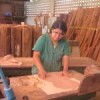
BRAZIL: Producing Guitars and Luthiers in the Rainforest
Cuban instrument-maker or luthier Raúl Lage came for six months, but has already spent seven and a half years in Manaus, the city in the heart of the Brazilian Amazon. "The project is really fantastic," he says, explaining why he plans to renew his work contract again in September.ECUADOR: President “Stabbed In the Back” by Church Over Constitution
The campaign for the Sept. 28 referendum on Ecuador’s newly rewritten constitution has got under way, with fierce arguments between the document's supporters and opponents.ENVIRONMENT-ARGENTINA: Scarce Water Threatened by Gold Mine
For nearly a year and a half, local residents in the northwestern Argentine province of La Rioja have been blocking the road that climbs up to the Nevados de Famatina mountain to protest a gold mining project that they say will pollute the water in the country’s driest district.
Q&A: “Amazonas State Is in the Environmental Vanguard”
The Brazilian state of Amazonas is "a quarry of ideas and creativity" and is in the vanguard for having preserved 98 percent of its native forests, paying for environmental services, and enacting the pioneering Climate Change Act, says Nadia D'Ávila Ferreira, the state's secretary for the environment and sustainable development.PERU: Indigenous Groups Win Major Battle in Congress
The Peruvian Congress voted Friday to repeal two decrees that opened up communally owned native lands to private investment and that triggered a wave of protests this month by indigenous people in Amazon jungle provinces.MEXICO: Anti-Crime Pledges – This Time with Teeth?
In response to the growing public outcry over Mexico’s soaring crime rates, the president, state governors, lawmakers and judges agreed to a broad new anti-crime plan, characterised by a number of old promises, but also by one novel aspect: precise timeframes, targets and follow-up mechanisms.BOLIVIA: Beef Producers’ Boycott – Latest Opposition Strategy
A beef producers’ boycott declared by agribusiness interests in eastern Bolivia is the latest attempt by the pro-autonomy opposition movement to undermine the government of Bolivian President Evo Morales.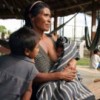
BRAZIL: Setting an Important Precedent for Indigenous Lands
An imminent decision by Brazil’s Supreme Court on the demarcation of the Raposa Serra do Sol indigenous reservation in the Amazon jungle region has the country’s native communities on edge, because of the precedent it will set.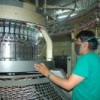
BOLIVIA: Businesses Take On the Green Challenge
What do Bolivia's largest textile mill, an organic cacao cooperative and an indigenous-run tourist hostel in the Amazon have in common? The answer lies in the path, shaky but inspiring, that they are all taking towards sustainable production.
NICARAGUA: US Fourth Fleet Treads Fine Line
The newly reactivated U.S. Fourth Fleet began its operations in Latin American waters with a humanitarian mission that made its first stop in Nicaragua, before heading on to six other countries of the Caribbean and Central and South America.CHILE: Exhibit to Celebrate Indigenous Art
More than 100 artists from Chile’s nine indigenous groups will take part in the second biennial exhibition of indigenous art in the capital Oct. 17-Nov. 2, which hopes to draw at least 30,000 visitors.PERU: Native Groups Protest Laws Facilitating Sales of Land
Defending the state of emergency declared in three provinces in Peru to crack down on protests by indigenous communities against a law facilitating the sale of their community-owned lands, Prime Minister Jorge del Castillo said the government was safeguarding "the rights of the great majority of Peruvians."CARIBBEAN: Political Union Endorsed – In Theory
You have to hand it to Patrick Manning, Trinidad and Tobago's prime minister, when it comes to persistence.PARAGUAY: “Today a New Country Is Born,” Says New President
Former Catholic bishop Fernando Lugo was sworn in Friday as president of Paraguay in a ceremony charged with emotion that broke with protocol, promising to rebuild this impoverished landlocked South American nation that was ruled by the rightwing Colorado Party for 61 years.MEDIA-LATIN AMERICA: Behind-the-Scenes Censorship
A study carried out in seven countries of Latin America found a "growing trend" in the region of subtle, largely invisible government interference with the media and journalistic independence.
HEALTH-LATIN AMERICA: Free Rein for Biobanks?
Four years ago, when Guillermo Soberón - one of Mexico’s most prominent scientists - became a grandfather, the newborn's parents received a letter requesting a donation of biological material to be used for medical research.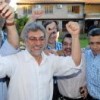
POLITICS-PARAGUAY: Rocky Road Ahead for Lugo
Amidst anticipation and apprehension regarding the imminent political transition, Paraguay is gearing up for Friday’s inauguration of centre-left President-elect Fernando Lugo, known as the "bishop of the poor", who is putting an end to six decades of Colorado Party rule.
PARAGUAY: Concerns, Tension Rise with Water Level in Yacyreta Dam
Hundreds of people living in the Paraguayan border city of Encarnación are worried about flooding as the result of a rise in water level in the Yacyretá hydroelectric dam, an issue that is also causing tension between Paraguay and Argentina.« Previous Page — Next Page »


The Week with IPS

NEXT STOP - SDGs
Tracking global progress towards a sustainable world

