Languages
Thursday, November 26, 2026



News and Views from the Global South
Latin America & the Caribbean
BOLIVIA: Divided Along Regional, Social and Ethnic Lines
The dialogue with opposition governors that Bolivian President Evo Morales has called for in the wake of Sunday’s recall referendum, to overcome the growing polarisation in the country, will run up against regional, social and ethnic divisions, according to analysts.HEALTH-MEXICO: Local Drug Companies Protest Opening of Market
Mexico’s pharmaceutical industry, which thanks to laws that have been labelled protectionist has grown into the most powerful in Latin America, warns that the unrestricted importation of medicines decided by the government will expose the public to "a possible health catastrophe."SOUTH AMERICA: Architecture Students Visit 50 Cities in 40 Days
A group of advanced architecture students and graduates from Argentina will tour more than 50 cities in their own country, Brazil, Uruguay and Paraguay to discover common characteristics in the architectural heritage of the Mercosur (Southern Common Market) countries.RIGHTS: Inter-American Court Focuses on Forced Disappearances
Manfredo Velásquez was a student at the National Autonomous University of Honduras when he was violently arrested by intelligence agents without a warrant on the afternoon of Sept. 12, 1981.BRAZIL: Spreading the Cultural Tentacles of Inclusion
"Negro F" tells how the Manos Grafite (roughly, "Graphite Hands") group started. In 1996, he and his friend Alex were walking along a street in the outskirts of the capital of the southeastern Brazilian state of Minas Gerais, when they were struck by the colours and forms painted on the walls.MEXICO: Outcry Against Soaring Crime
Indignation over the lack of public security in Mexico, fuelled by the kidnapping and murder of the teenage son of a well-known businessman, apparently by police officers, prompted the announcement of an Aug. 30 march to protest the growing levels of crime and demand more effective law enforcement.EL SALVADOR: Hard-Line Policies Vs Rule of Law
Increasingly tough "zero tolerance" laws have been the government’s response to the growing wave of crime in El Salvador, one of the most violent countries in the world. But judges and experts say the strategy is undermining the state of law.BOLIVIA: After Recall Vote, Opposition Rejects Morales’ Call for Unity
The opposition in Bolivia plans to redouble its efforts against President Evo Morales, who won strong backing - 63 percent - in Sunday’s recall referendum, according to exit polls.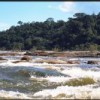
BRAZIL: Small Hydroelectric Dams Not So Green
The combined impacts of numerous small hydroelectric dams in one river basin can be at least as harmful as one large dam, warn experts, environmental activists and indigenous groups, who face a flood of new projects along the rivers of the western Brazilian state of Mato Grosso.RIGHTS-ARGENTINA: Last Vestiges of Capital Punishment Abolished
The Argentine Congress eliminated the Military Code of Justice, thereby eliminating a special jurisdiction dating back to the 19th century, as well as burying the last vestige of the death penalty and ending punishment for homosexuality.ECONOMY-PERU: Easier to Extract Minerals than Accounting Information
Sixty-six percent of the Peruvian state’s revenue from the extractive industries does not appear on government accounts. Parliament is taking a hand in the matter amid pressure from oil, gas and mining companies for the government to flout an international agreement on transparency.HEALTH: Indigenous People Speak Out Clearly on AIDS
"In my community, living with HIV is synonymous with death," Fernando Solís, a 34-year-old member of the Cuna ethnic group in Panama, told IPS. Solís, who was diagnosed four years ago, is now working in prevention efforts among other young indigenous people, which he described as "the key to eradicating the epidemic in our communities."SPORTS-ARGENTINA: More Money Would Help, But That’s Not Enough
Financial support for Argentine athletes has traditionally been meagre, but it has increased ahead of the Beijing Olympic games. However, several experts warn that more money alone is not enough to give a real boost to sports.
COLOMBIA: Video Raises Numerous Questions About Rescue Mission
"It is a serious matter that members of the armed forces clandestinely leaked news without coordination with their superiors," says a presidential communiqué issued in Colombia after a local TV station broadcast a video on the operation in which Ingrid Betancourt and 14 other hostages held by the FARC guerrillas were rescued last month.BOLIVIA: Summit Cancelled Due to Social Unrest
A meeting between Presidents Hugo Chávez of Venezuela, Cristina Fernández of Argentina and Evo Morales of Bolivia was called off because of violent protests by anti-government demonstrators in the southern city of Tarija, while clashes between miners and the police left two dead and 30 injured in the western province of Oruro.LATIN AMERICA: Unimpressive Medal Haul Expected at Beijing
Some 1,200 athletes from Latin America and the Caribbean will be taking part in the Olympic games in Beijing, but only a handful stand a real chance of landing a medal, to judge from their past performance and their own expectations.VENEZUELA: Socialism Through the Side Door
On the last night of the 18-month period he was granted by Congress to legislate by decree, Venezuelan President Hugo Chávez handed down 26 laws that, according to his critics, usher in many of the socialist-style reforms that voters rejected in a referendum on proposed constitutional amendments last December.
PERU: Secret Arms Deals – An Invitation to Corruption?
The Peruvian government will devote at least 514 million dollars this year to modernising and upgrading its military equipment, a figure surpassed only by the Alberto Fujimori regime in the 1990s, when arms buying was the main wellspring of corruption.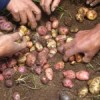
CHILE-PERU: Preserving Potatoes More Important than Age-Old Dispute
Policies to get small farmers involved in saving, preserving, producing, marketing and genetically improving potatoes should take precedence over the age-old dispute between Chile and Peru about where potatoes originated, experts from both countries say.ENVIRONMENT: Tierramerica Centre Born in Heart of Amazon Jungle
The Tierramérica International Centre for Sustainable Development and Environmental Defence held its founding assembly Thursday in Manaus, a city in the heart of the Brazilian Amazon, during a seminar on the world’s big environmental challenges.PERU: Seeking Ways to Remedy Unequal Distribution of Mining Taxes
The Peruvian parliament is studying ways to improve the distribution of the "canon minero", the portion of the taxes paid by mining companies that is transferred to the regions, in order to benefit the country’s poorest provinces.« Previous Page — Next Page »


The Week with IPS

NEXT STOP - SDGs
Tracking global progress towards a sustainable world

