Languages
Sunday, October 4, 2026



News and Views from the Global South
Arts and Entertainment

FILM: A Congolese Woman’s Journey of Survival and Triumph
Suffering through the atrocities of war affects people in different ways. Some become crippled by anger, others by fear. Some become violent and want only revenge. And some, like Rose Mapendo, an inspiring survivor of the war and ethnic cleansing in the Democratic Republic of Congo, come out with a strong commitment to work for peace and reconciliation.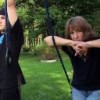
FILM: Daring to Be Gay in Small Town USA
Washington, D.C. residents Joe Wilson and Dean Hamer weren't expecting to become filmmakers when they placed an announcement of their wedding in Wilson's hometown newspaper.
LATIN AMERICA: Photos a Leveller for Maids and Their Employers
Fifty pairs of women -- maids and their employers -- from Argentina, Chile and Colombia abandoned their daily routines to pose for photographs for a project about the hierarchical relationship that unites them.Performance Series Tackles U.S. Accountability Deficit
The Culture Project, a New York City political performance group, staged the latest installment in its "Blueprint for Accountability" series - launched earlier this year to mark the anniversary of President Barack Obama's lapsed deadline to close the Guantánamo Bay detention camp – to a sold-out audience Monday.Virtual Diversity in Cuban Blogosphere
There are blogs made in Cuba, and many more Cubans living abroad who blog, both in favour of or against the Cuban government. Caught up in the sea of political passions, the hundreds of blogs about this socialist island nation reflect a growing variety of viewpoints and realities.
Rewriting 195 Million Stories of Childhood Malnutrition
In a vast field, a sinewy, dark-skinned man bends at the waist, slicing stalks of wheat with a small machete. In a village, a mother gently places her infant son, slung in a piece of blue fabric, onto a vegetable scale housed in a makeshift clinic.Mexico’s Papagayo River Still Flowing
The Papagayo river in the southern Mexican state of Guerrero is still flowing, and local communities opposed to construction of a massive hydroelectric dam are making every effort to keep things that way, as reflected in a documentary about their struggle.BRAZIL: Everyday Superheroes Against the Mad, Bad World
They fight against a crazy world, armed only with dramatic improvisation. A programme of urban interventions from a university in Río de Janeiro is battling "the mad world" based on the archetype of the anti-hero.Rise of the “Flexians”
In 2005, ahead of the G8 summit in Gleneagles, Irish rock star and philanthropist Bono dedicated a concert to Harvard economist Jeffrey Sachs for his services to global poverty alleviation.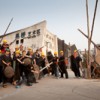
CHINA: As Threat of Eviction Looms, Artists Face Uncertain Future
Ten years ago, Ai Weiwei, one of China’s best known artists, designers and activists, moved into a dusty village in the city’s far north-east corner, where he designed a compound for himself and friends, along with a gallery called China Art Archives and Warehouse.
MIDEAST: Dreaming With Their Feet
Ahmed Ismail, 23, is leading a dance out of troubled times in Gaza. Breakdancing is his way to help the youth of Gaza begin dreaming and having fun again.
Q&A: “Old Rich” Countries Owe Debt for Climate Crisis
Countries closest to the equator will suffer most from climate change, according to Gwynne Dyer, a geopolitical analyst and journalist who predicts catastrophic events over the next few decades if temperatures continue to rise.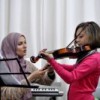
MIDEAST: Children Fight Off Israel With Music
"Why are you rushing? Isn't it nicer like this?" Mohammed Omer, oud teacher (an oud is similar to a lute) at the Gaza Music School, asks his student. Omer takes the oud and demonstrates, playing the song slowly, gracefully, with the ornamentations that are key to Arab music.MEXICO: Acrobatics for At-Risk Children
Learning to do aerial acrobatics has not only helped 13-year-old Atenas Padilla overcome her fear of heights, but also to become more tolerant and creative.ARGENTINA: “Women in Focus” at Film Festival
The First International Women and Film Festival for Gender Equity drew enthusiastic audiences this month in the Argentine capital, where movies from nearly 40 countries were screened.Argentine Serials Watched in Living Rooms Around the World
In little over a decade, Argentina has become one of the world leaders in production and export of films, mini-series, telenovelas (soap operas), entertainment programmes and commercials.Training Young Mapuche Filmmakers in Chile
"I want to film the few untouched natural resources we have left and show the injustices that have been committed against our communities," Claura Anchio, who took part in an innovative free filmmaking course for young Mapuche Indians in Chile, told IPS.CUBA: Keeping the Festival Magic Alive
As the cinema lights switched off, the groups of painters, impromptu filmmakers and craftspeople who filled the parks and plazas of this eastern Cuban town over the past week began to drift away. The musicians who played every night till dawn are gone, and so are the vendors of prawn cocktails, crabmeat pies and roast suckling pig.
Q&A: “It’s a Complete Reboot of How We See Things”
The blockbuster, critically acclaimed film 'Avatar' portrays the ruthless plundering of a pristine ecosystem on a distant planet by greedy corporate interests – a scenario that is all too familiar to many indigenous communities here on Earth.CUBA: Children Reach Out Through the Screen to Peers in Post-Quake Haiti
Five girls and five boys are taking time to remember the hurricane that devastated their home town of Gibara in eastern Cuba two years ago, mingling their memories with their dreams, and filming images to make a video message for children in Haiti.
VENEZUELA: Yanomami Put Body Painting Down on Paper
Men and women of the Yanomami people paint their bodies, drawing straight, curved, dotted and parallel lines, arcs and circles, triangles, rectangles, grids, spider's webs or rings, all arranged as if on a checkerboard.« Previous Page — Next Page »


The Week with IPS

NEXT STOP - SDGs
Tracking global progress towards a sustainable world
Tracking global progress towards a sustainable world
