Languages
Saturday, September 26, 2026



News and Views from the Global South
Conflict Prevention - Africa
SOUTH SUDAN: Fuel Shortages Grip Country
South Sudan is facing severe fuel shortages less than three weeks before it gains independence from the rest of the country. Many gas stations have shut down and those that remain open have people lining up overnight for fuel.SOUTHERN AFRICA: Reforms First, Elections Later
A new constitution, voters’ roll and electoral law, among other things, have to be in place before elections in Zimbabwe can be held but observers doubt if this can be implemented.COTE D’IVOIRE: Challenge of Restoring Security
In a shelter covered by a tattered blue tarpaulin, Ibrahim Traoré sits beside his militia commander to hear complaints from residents of the Abidjan neighbourhood of Abobo-Avocatier.LIBYA: Zuma says Gaddafi Ready for Truce
Muammar Gaddafi is ready for a truce to stop the fighting in his country, Jacob Zuma, the South African president, has said.Explosions Greet Nigerian President’s New Term
Bomb blasts hit a military base in the northern Nigerian city of Bauchi on Sunday, killing ten and injuring more than a dozen just hours after the swearing in ceremony of President Goodluck Jonathan in the capital, Abuja. News reports also said three others died in a bombing in Zuba, just outside the capital.New Leadership for the ICC
As the International Criminal Court gears up to elect six judges and a new prosecutor, observers are warning that political rather than merit-based considerations could govern the evaluation of candidates.
Afghan Forces ‘Not Ready’ for Handover
Almost a decade of neglect has raised serious concerns about the readiness of Afghan security forces to take over from foreign forces by the end of 2014, a new report claims.KENYA: Frustration Over Limits of ICC Charges
A decision to exclude crimes committed in the western city of Kisumu and the Nairobi slum of Kibera from a case against alleged organisers of violence following Kenya’s 2007 election could undermine the International Criminal Court’s effort to combat impunity in the East African nation, civil society groups have warned.Nigeria Riots Delay Two State Polls
Elections for the governors of two states in Nigeria's predominantly Muslim north have been postponed because of violence, officials have announced.
COTE D’IVOIRE: Hesitant Steps Towards Normal Life
The prime minister of Côte d'Ivoire, Guillaume Soro, held his first cabinet meeting away from the Golf Hotel on Tuesday. The meeting - at the Prime Minister's Office in the Plateau d'Abidjan - was symbolic, intended to signal a return to normal life in a city that endured heavy fighting between Mar. 30 and the fall of former president Laurent Gbagbo on Apr. 11.
Wrestling Over ICC’s Role in Africa
On its face, Kenya’s failed bid to defer International Criminal Court cases against alleged organisers of post-election violence in 2007-2008 was a story of changing positions. But to argue that either the U.S. or Africa has switched sides in the debate over the appropriate role of the ICC is too simplistic.Libyan Rebels Reject African Union Road Map
Libya's opposition Transitional National Council has rejected outright the African Union's proposal to negotiate a way out from the country's deepening crisis.
KENYA: ICC Suspects Cautious at ‘Heroes Welcome’
Two alleged organisers of violence around Kenya’s December 2007 elections delivered impassioned speeches during a raucous political rally in Nairobi on Monday, just days after an International Criminal Court judge advised them to refrain from inflammatory language.
Gaddafi Accepts AU Plan to End Fighting
Muammar Gaddafi, the Libyan leader, has accepted a "road map" for a ceasefire with rebels, according to a delegation of African leaders.
Manufacturing Cote d’Ivoire’s ‘Good Guy’
As Côte d'Ivoire's bloody leadership contest draws to a close and the surrender of Laurent Gbagbo, the incumbent president, seems imminent, a long list of atrocities and electoral irregularities mark the records of both him and his opponent, Alassane Ouattara.
Cote d’Ivoire on the Edge of Chaos
Forces of law and order have abandoned their posts in Abidjan, creating a vacuum which has rapidly filled with violence, looting and fear.SOMALIA: Manifestation of Stealth Trusteeship
Somalia is currently under what James Fearon and David Laitin of Stanford University call "a neo-trusteeship system". Various external powers, while disagreeing among themselves, make the important decisions for the Somali people./UPDATE*/: Violence Threatens Nigerian Elections
Nigeria's staggered general elections have been postponed after the Independent National Electoral Commission was unable to deliver voting materials to polling stations in time. Campaigning for the polls was overshadowed by pre-election violence including bombings and gun attacks on campaign rallies, politically-motivated assassinations and violent clashes between members of rival parties.
Violence Threatens Nigerian Elections
As Nigerians go to the polls on Apr. 2, pre-election violence has raised fears the elections will not be free and fair. The campaign period has featured bombings and gun attacks on campaign rallies, politically-motivated assassinations and violent clashes between members of rival parties.
LIBERIA-COTE D’IVOIRE: Border Villages Sharing the Little They Have
This Butuo man only knows one phrase in French: Viens manger. Come eat. That's what they said to him years ago, when he was one of hundreds of thousands who fled to Côte d'Ivoire to escape the brutal 14-year civil war in Liberia.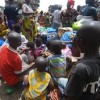
Ghana Border Town Braced for Influx of Ivorian Refugees
As many as a million people have fled Côte d'Ivoire's commercial capital, Abidjan, due to intensified fighting. Many people are fleeing to areas in the north, centre and east of the country as thousands of youth answered a call to join forces loyal to Laurent Gbagbo; others are trying to leave the country.« Previous Page — Next Page »


The Week with IPS

NEXT STOP - SDGs
Tracking global progress towards a sustainable world
Tracking global progress towards a sustainable world
