Languages
Thursday, October 1, 2026



News and Views from the Global South
Conflict Prevention - Africa
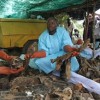
Hundreds of Bodies Removed From Zimbabwe Mass Grave
The identity of as many as a thousand decomposing bodies in an abandoned mine in Mount Darwin, 100 kilometres north of Harare, may never be known. "War veterans" associated with the ruling Zimbabwe African National Union-Patriotic Front party are removing them with no regard for preserving evidence.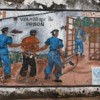
WOMEN’S DAY: DRC Mobile Court a Sign of Hope
Eleven soldiers found culpable in the rape of more than 50 women in the Congolese town of Fizi Centre in January, have begun serving lengthy sentences in the provincial capital, Bukavu. Their speedy trial and sentencing by a mobile court is a welcome sign of a new commitment to ending impunity for sexual violence in the Democratic Republic of Congo.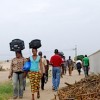
Growing Humanitarian Crisis in Cote D’Ivoire
The U.N. has announced that some 200,000 people have already fled the Abobo neighbourhood, in the north of Abidjan. Each morning for a week now, luggage on their backs, bundles on their heads, the sick riding in wheelbarrows, new borns cradled in their arms, thousands of people have fled Abobo on foot.
Niger Delta Demands for Justice Undaunted by Decades of Violence
Nigerian environmental rights groups have been making the case for the expulsion of oil companies from the Niger Delta in the southeastern part of the country at the World Social Forum in Dakar.
AFRICA: ICC Justice a Dream Deferred
The African Union Summit drew to a close today in the Ethiopian capital, Addis Ababa. Among the headline decisions was the continental body's support for Kenya's planned request to defer prosecution by the International Criminal Court (ICC) of six suspects in post-election violence that claimed more than 1,200 lives in 2008.
AFRICA: Arms Treaty to Rein in Trigger-Happy Rogue Regimes
A half a century after U.S. president Dwight Eisenhower named and denounced the military-industrial complex’s ever-increasing influence on world affairs, the arms trade thrives more than ever, with African states frequently being the destination.
Female Factor Key to Human Rights
Gender training for peacekeeping operations "is not something you do for two weeks before you go for deployment," says Florence Butegwa, UNIFEM representative to the African Union (AU) and U.N. Economic Commission for Africa (UNECA).
SUDAN: Rape Is Not Adultery
Women in the Sudanese region of Darfur have been raped with impunity since the start of the conflict there in 2003. Now a campaign to reform the rape law is gaining momentum in the country, promoted by Alliance 149, a national coalition born in late 2009.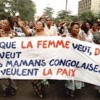
DR CONGO: ‘An Opportunity to Say Never Again’
Civil society in the DRC's eastern province of South Kivu is determined that meaningful action will follow from the publication of the U.N.'s Mapping Project, a report detailing some of the most serious human rights violations by state and non-state actors in the DRC between 1993 and 2003.
SOUTH SUDAN: Children Too Hungry to Return to Civilian Life
When Timothy was forced into the southern Sudan People’s Liberation Army (SPLA) at age 11, the first thing they did was beat him. Then they took him to a military base where his tasks were to carry other soldiers’ bags, wash their clothes, collect firewood for them, and cook their food.
POLITICS-RWANDA: “Climate of Repression” as Voting Concludes
As voting concluded in Rwanda’s presidential elections, with incumbent President Paul Kagame expected to win by a landslide, fears remain that not all citizens will accept the results amidst claims the elections were neither free nor fair.
Boycott Cedes Power To Burundi’s Ruling Party
The coalition of 11 major opposition parties which boycotted July 23 national assembly elections will also boycott elections to the senate on July 28. The Alliance of Democrats for Change, as the coalition is known, claims that two previous polls - to elect Burundi's district administrators and the president - were characterised by "massive fraud".SOUTHERN AFRICA: Youth Vulnerable to Violence
James Banda, 27, is an unemployed youth although he occasionally is hired to act as a bus conductor at Lusaka’s Kulima Tower Bus Station. He may not have a permanent job, but it is easy to find him. Anyone looking for him just has to go to the bus station and ask. Everyone knows who he is. Banda, or ‘ba-Jay’ as people call him, is a young man who commands a lot of respect from his friends – he is a thug for hire.
Somalia Centre Stage Ahead of AU Summit
The African Union summit opens in Kampala on July 19 amid heightened security following twin bomb attacks a week earlier.Doubts Over Zimbabwe Diamonds
Three days of tense deliberations by members of the Kimberley Process have failed to reach consensus on whether diamonds from Zimbabwe's Marange fields should be certified as conflict-free. Zimbabwe has already announced that it intends to resume exports of the precious stones immediately.ZIMBABWE: ‘We Too Want to be Wealthy’
Saddled with debts of more than $7 billion, Zimbabwe is anxious to resume diamond exports, suspended in May amidst international condemnation of alleged human rights violations in the Marange diamond fields. But the treatment of people living in the fields themselves suggests the country's record on rights bears further examination.WORLD: Inviting Africans to G8 Meeting “Is Just Window-Dressing”
Questions are being asked about whether the Group of Eight invitation to seven African states to attend its summit in Ontario, Canada, reflects its concern about the litany of unmet promises dating from its 2005 Gleneagles meeting -- or whether it merely amounts to another bout of window-dressing.
DR CONGO: Pursuing Rebels at What Price
Operation Amani Leo, launched jointly by MONUC (the United Nations Mission in Congo) and FARDC (the Congolese army) in January to regain control of mining territories in the eastern provinces of North and South Kivu from rebels, while ensuring security for the local population has been extended to September. But Congolese women are arguing for changes in the conduct of military operations.
Q&A: “Militarisation of Zimbabwe’s Diamond Fields Continues”
Almost a year after a review mission of the Kimberley Process Certification Scheme (KPCS) found Zimbabwe guilty of "serious non-compliance" with the scheme’s minimum criteria on conflict diamonds, the militarisation of the southern African country’s diamond mining operations continues.
AFRICA: Military Manoeuvres in the Sahel
Military exercises are under way in the Sahel region as part of the United States-led Trans-Saharan Counter Terrorism Partnership. Participating militaries are enthusiastic, but civil society cautions that force may not be enough to ensure regional security.Kinshasa Rejects Report of Congolese Army Atrocities
A report alleging that government troops summarily executed fifty civilians in early April in fighting around Mbandaka, the capital of the Democratic Republic of Congo's northwestern Équateur Province has been rejected by the government.« Previous Page — Next Page »


The Week with IPS

NEXT STOP - SDGs
Tracking global progress towards a sustainable world
Tracking global progress towards a sustainable world
