Languages
Tuesday, October 27, 2026



News and Views from the Global South
Democratic Republic of Congo (DRC)
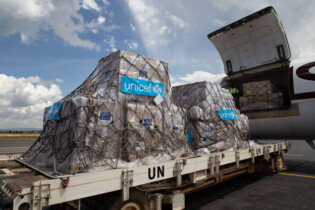
Ebola Spread Raises Fresh Urgency for Africa’s Domestic Health Funding
An Ebola death last week in Kenya is highlighting the urgency of Africa’s public health emergency preparedness and how the continent’s governments are committing their national budgets to the health sector.
GEF Approves Adaptation Funds Strengthening Resilience in Vulnerable Countries
Bangladesh, the Democratic Republic of Congo, Guinea-Bissau, Niue, Senegal, Solomon Islands, Sudan, and Togo will receive over USD 67 million in new funding to help strengthen resilience.
Civil Society Launch a Campaign Against Extractive Industry Exploitation and Land Grabs
Over 800 households in Ikolomani Constituency in Kakamega County, Western Kenya, fear eviction to pave the way for a British firm, Shanta Gold Limited, to begin extracting gold valued at Sh683 billion ($5.29 billion) on an estimated 337 acres of residential and agricultural land.
Why Ugandan Male Sexual Violence Survivors Suffer In Silence
When people ordinarily think about sexual violence, it's of the rape of women by men. In Uganda, as in other countries, activists say men are also victims of sexual violence perpetrated by women, though males remain silent.
Day Laborers, Trapped in a Complex War Between M25 Rebels and the DRC, Return Home
Fulgence Ndayizeye, a Burundian bicycle taxi driver who used to cross the Congolese-Burundian border every day to support his family, wanted to return home. He and more than 500 other Burundians, including women, men, and children, stranded in Uvira on the border between the DRC and Rwanda, were finally allowed to return to their country on Sunday, December 14, 2025, by M23-Congo River Alliance (AFC) rebels after being stuck in the DRC due to an M23 rebel offensive that had taken the town a few days earlier.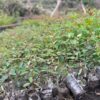
DRC: Reforesting Sites Once Used by War Displaced People
The Youth Circle for Nature Conservation and Community Development is working toward the reforestation of sites where displaced people lived near the town of Goma.
Forests, Fossil Fuels, and the Fight for the Future: DRC’s Oil Expansion Sparks Global Alarm
The Democratic Republic of Congo (DRC) stands on the precipice of a profound environmental and social crisis, as the government prepares to auction 55 new oil blocks that cover more than half the country’s landmass.
A Crisis of Contagion and Collapse: Why Cholera Continues To Be a Problem in the DRC
The Democratic Republic of Congo (DRC) is grappling with one of its worst cholera outbreaks in recent history, exposing deep systemic cracks in public health, water infrastructure, and humanitarian response, leaving its youngest citizens in peril.
Goma: What Have We Done to God to Deserve All This?
Zawadi Delphine is a soldier's wife and mother of three. She and her family live in Camp Katindo, east of the city of Goma, the provincial capital of North Kivu. Recalling what happened on the night of Sunday, January 26, 2025, she says that her husband had come from the front, north of the city of Goma, visibly angry and in a hurry. Without telling her what was really going on, he had told her that they would only meet again by "divine grace."
Africa Taking Targeted Preparedness Measures as Mpox Cases Increase
As the mpox virus continues to spread to new countries across Africa, triggering a continental health emergency, health authorities are sparing no effort in taking targeted measures to control the outbreak—and have called on funders to ensure that resources are distributed fairly.
Q&A: Documenting COVID-19 Effect on Youth Sexual and Reproductive Health
With the COVID-19 pandemic adding complex layers of challenges to the issue of sexual and reproductive health for the youth, governments should prioritise documenting these effects for data collection purposes, Dr. Simon Binezero Mambo co-founder and team leader of the Youth Alliance for Reproductive Health in the Democratic Republic of the Congo, told IPS in an interview.

A ‘Cure’ for Ebola but Will it Stop the Outbreak if People Won’t Get Treatment?
While people in the Democratic Republic of Congo (DRC) are slowly being made aware that scientists have discovered two drugs that are effective in treating Ebola, letting go of the fear and anxiety that has prevailed across the country this year will require more work.
DR Congo’s Mai-Ndombe Forest ‘Savaged’ As Landless Communities Struggle
Thousands of logs loaded into makeshift boats at the port of Inongo at Lake Mai-Ndombe stand ready to be transported to Kinshasa, the capital of the Democratic Republic of Congo (DRC).
DRC: A Crisis the World Can No Longer Afford to Ignore
The numbers are hard to fathom. Nearly two million people driven from their homes in 2017 alone. The worst cholera epidemic of the past 15 years, with over 55,000 cases and more than 1,000 deaths. Countless others killed, maimed or sexually assaulted.
UN Makes Record Appeal for Humanitarian Aid in 2018
The UN has made its largest appeal to work towards reaching the more than 135 million people across the world in need of humanitarian assistance and protection.
Resettling Congolese Refugees in Angola, a New Shot at a Normal Life
The UN’s refugee agency is relocating more than 33,000 Congolese refugees from overcrowded temporary shelters in northern Angola to a more permanent establishment in Lóvua.
UN Appoints Experts to DRC’s Kasai to Probe Harrowing Rights Abuses
The UN High Commissioner for Human Rights, Zeid Ra’ad Al Hussein, appointed a team of three international experts yesterday to collect information and raise awareness about grave atrocities in the ongoing conflict in the remote Kasai region of the Democratic Republic of Congo (DRC).
Brazilian Capoeira Heals Wounds in the DRC
On the earthen floor, to the sound of a single-string percussion instrument called a Berimbau, Congolese children stand in a circle practicing rhythmic movements with their arms and feet and chanting.
Two UN Experts Found Dead in DRC, Search Continues for Interpreter, Drivers
The bodies of two UN experts have been found in the Democratic Republic of Congo (DRC) two weeks after their team went missing.
Militarised Conservation Threatens DRC’s Indigenous People – Part 2
The Bambuti people were the original inhabitants of Virunga National Park in the Democratic Republic of Congo, the oldest national park in Africa whose boundaries date back to 1925 when it was first carved out by King Albert of Belgium. But forbidden from living or hunting inside, the Bambuti now face repression from both park rangers and armed groups.
Militarised Conservation Threatens DRC’s Indigenous People – Part 1
It is late afternoon when a light drizzle begins to fall over a group of young men seated together in Mudja, a village that lies approximately 20 kilometres north of Goma on the outskirts of the Virunga National Park. Mudja is home to a community of around 40 families of indigenous Bambuti, also known as ‘pygmies.’*Next Page »





The Week with IPS

NEXT STOP - SDGs
Tracking global progress towards a sustainable world
Tracking global progress towards a sustainable world
