Languages
Tuesday, October 20, 2026



News and Views from the Global South
Developing Countries Coping With Climate Change
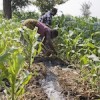
SOUTH AFRICA: While Politicians Deliberate Climate Change, Others Adapt
While many scientists, academics and politicians still theorise about ways to adapt to climate change, a South African civil society organisation has launched a hands-on project that mobilises communities to take easy steps to reduce carbon emissions.OP-ED: Expanding Deserts, Falling Water Tables and Toxins Driving People from Homes
People do not normally leave their homes, their families, and their communities unless they have no other option. Yet as environmental stresses mount, we can expect to see a growing number of environmental refugees. Rising seas and increasingly devastating storms grab headlines, but expanding deserts, falling water tables, and toxic waste and radiation are also forcing people from their homes.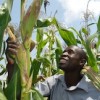
KENYA: Lime Improves Maize Harvest
As the world’s worst food security crisis continues across the Horn of Africa, including in Kenya, some smallholder farmers in the western part of the country are still feeding their families with last year’s abundant harvest.
MOZAMBIQUE: Climate Change Threatens Smallholder Farmers
Long after the wintry sun set over her patch of crops outside the Mozambican capital Angelina Jossefa keeps pulling out weeds. Much of her lettuce, carrots and beetroot died during a cruel winter, which means she has to work harder to feed her three children.
NAMIBIA: No Option but to Adapt to a Changing Climate
Extreme weather conditions predicted because of climate change in Namibia are likely to have a tremendous effect on the 70 percent of the country’s people who live in rural areas and depend heavily on agriculture.
NEPAL: Improved Wood Stoves Save Health, Environment
When Binita Lamichhane got married she was troubled by her husband's bloodshot eyes. "What happened to your eyes?" the 18-year-old bride asked. "Smoke," came the answer.
PAKISTAN: After the Flood, Green Homes
Subhan Khatoon’s brand new home is nothing like the one that got washed away, along with all her worldly goods, in the 2010 monsoon floods that submerged a fifth of Pakistan and left 2,000 people dead.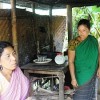
BANGLADESH: Tribal Women Take on Forest Ranger Roles
Jasinta Nokrek loves nothing better than to range through the dense Modhupur forest, the way her Garo tribal ancestors have always done.
Trekking Trails Lead Nepal Women to Empowerment
Dawa Gyalmo Sherpa’s three sons went to look for blue-collar jobs in Malaysia, Jordan and Saudi Arabia, saying Mulkharka, their tiny village in Kathmandu valley, had no livelihood prospects.Somalia to Dadaab: The Journey from Hell
The lorry sways slowly from side to side along a dirt track as it ambles towards its place of rest. The red straw bags, clothes and empty yellow water bottles tied to the rear end of the open cargo hold tower above the pensive faces peering over colourfully painted steel panels.INDONESIA: Network Turns Teachers Into Environment Advocates
Educators in Indonesia are turning green with environmental advocacies they plan to integrate into the curriculum of state-run elementary and high schools through the "Green Teacher Network".
KENYA: Budget Cushions Agricultural Sector Amidst Staggering Inflation
As the country’s inflation rate hits a staggering 14.5 percent – compared to 4.5 percent in December 2010 - Kenyans are struggling to afford basic commodities like maize, amid a shortage of the staple food.
Women Keen to Ease Greenhouse Effect on Their Ability to Provide
A successful entrepreneurial programme in the north of Namibia that infuses farming practices with gender-responsive environmentalism may serve as a model for other countries on the African continent.
SOUTHERN AFRICA: Trying to Access Funding for Climate Change
Leaving out non-governmental organisations in climate finance strategies will result in little impact on the ground in the southern Africa region.
ZAMBIA: “Every Year Flooding Makes This Place a Little Hell”
During the rainy season, and many weeks afterwards, home is never the best place to be for Miriam Banda. Until the end of 2008, she enjoyed living at her house in Kanyama, a high-density settlement bordering the central business district in Lusaka, Zambia's capital.
CLIMATE CHANGE: Water Sources Need to be Protected
Seventy-five-year-old Verdiana Protas is worried that the 20 cattle she bought with her pension money will soon die because the 10-kilometre-long river in her village in northwest Tanzania has been dry for two years now and finding alternative sources of water is getting more and more difficult.
EGYPT: Solar Energy Projects Picking up Again After Uprising
On a blazingly hot summer’s day in Cairo, it’s 36 degrees Celsius in the shade. Air-conditioners and fans whirr across the city, burdening the national electricity grid. Last summer, the populous city experienced frequent water and power cuts, causing a furore. Consumption had grown by 2,600 megawatts, an increase of 13,5 percent from 2009.
CLIMATE CHANGE: African Agriculture and Food Supply at Risk
Climate change and global warming are likely to have dramatically negative effects on African agriculture and food supply by reducing river runoffs and water recharge, especially in semi-arid zones such as Southern Africa, two new reports say.
CLIMATE CHANGE: Putting Children in Harm’s Way
It is late afternoon and the lone figure of nine-year-old Nancy Chepkemboi trudges home. To keep her head dry from the heavy rains, Chepkemboi has placed her books inside her shirt and used the polythene bag that is her school bag to cover her head.
ZIMBABWE: Import of Second Hand Japanese Cars to be Banned
For Mathew Marufu, who has a disabled 10-year-old son, owning a second hand Japanese car has been an ‘answer from God’.Need to Protect Millions Displaced by Environmental Disasters
Heavy rainfall means that over 500,000 people living in mountainous areas in Uganda need to be relocated as they live in areas at risk to landslides.« Previous Page — Next Page »





How can climate change provide opportunities for developing countries? IPS reports from across the South on key risks, trade-offs and political challenges to coping with the changing environment.

The Week with IPS

NEXT STOP - SDGs
Tracking global progress towards a sustainable world
Tracking global progress towards a sustainable world

This page includes independent IPS news coverage that is an output from a project funded by the UK Department for International Development (DFID) for the benefit of developing countries. However, the views expressed and information contained in it are not necessarily those of or endorsed by DFID, which can accept no responsibility for such views or information or for any reliance placed on them.
|
|
||
