Languages
Friday, October 9, 2026



News and Views from the Global South
East Africa
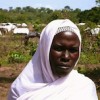
SUDAN: Rape Is Not Adultery
Women in the Sudanese region of Darfur have been raped with impunity since the start of the conflict there in 2003. Now a campaign to reform the rape law is gaining momentum in the country, promoted by Alliance 149, a national coalition born in late 2009.
Could Water-Efficient Maize Boost Africa’s Food Security?
As controlled field trials of a genetically modified (GM) crop are about to begin in five African countries amidst promises of improved crops grown under poor conditions, critics are charging organisations with selling out the interests of African farmers.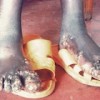
UGANDA: Sand Fleas: Neglected Threat to Primary Education
Jowaali Dhikusoka sits on the side of the road, alone and bored. The twelve-year-old doesn’t play much with the other children in his village because he has trouble walking. His hands and feet are infested with sand fleas, in Uganda commonly called jiggers, which itch and cause him a lot of pain.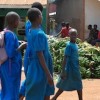
Outcry as Rwandan Govt Shifts Money to Primary Education
In an attempt to meet the development goal of universal access to primary education by 2015, Rwanda’s government has decided to reallocate a large part of its tertiary education budget to the primary education sector.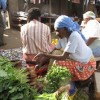
DEVELOPMENT-KENYA: Micro-Credit Helping Farmers to Plough Ahead
Seventeen years ago it seemed like an impossible dream to provide thousands of low-income farmers with a way to borrow small amounts of money. But people working in the tea sector in the rural areas of central Kenya were determined to address farmers’ lack of access to credit. They started the Muramati Savings and Credit Cooperative Society.
KENYA: More Men Preventing HIV Transmission to their Unborn Children
Pastor Joseph Muhembeli and his wife, Beatrice, queue at the Vihiga health centre with their six-month-old daughter for their prevention of mother-to-child treatment (PMTCT). But before long, as per the clinic’s policy, the couple are whisked to the front of the line – all because Muhembeli has accompanied his wife for the treatment.AFRICA: Hunger Intensifying But Cash Transfers Improving Lives
Chronic hunger is intensifying in Africa, despite the world’s commitment to address this Millennium Development Goal and reduce world hunger by half by 2015.DEVELOPMENT: Welfare of Poverty-Stricken Families Depends on New Policy
For HIV-positive Tereza Chatsilizika, the monthly cash grant of 10 dollars she receives means that she can educate her disabled daughters and put food on the table.KENYA: Room to Improve on Governance
Kimani Wanyama*, a homosexual man living in Nairobi, knows what human rights violations are all about. His attempts over three years to receive treatment for reoccurring rectal gonorrhoea had resulted in verbal abuse and intense stigmatisation from the very people who were meant to help him.
Hope for Expanded Protection Against TB
Despite the availability of a vaccine, 1.3 million people worldwide died from tuberculosis (TB) in 2008, according to the World Health Organisation. Most of them lived in Africa and Southeast Asia.
Handheld Computers Speed Up Burundi Food Aid
Aid organisations say a small handheld computer will allow them to more rapidly assess where food aid is needed most urgently. As a result, fewer Burundians will suffer hunger this year.DR CONGO: Mapping Road Towards Ending Impunity
Rights defenders in the Democratic Republic of Congo are encouraged by the publication of a report detailing grave violations of human rights in the DRC. The report, covering more than 600 incidents in the ten years between March 1993 and June 2003, has drawn criticism from several governments in the region.
ECONOMY: Electrifying African Interest in Renewable Energy
Various countries in East Africa are making gradual progress in moving from a solely carbon-based electricity network to a cleaner power grid.AGRICULTURE-UGANDA: Pee Solves a Problem
Faced with a severe decline in soil fertility and low crop production as a result, Ugandan farmers have turned to human urine to improve the richness of their soil.AFRICA: Customary Law Bars Women’s Access to Land
Regina Namukasa has been twice dispossessed – first when her husband died and his clan left her out when dividing up his estate, and again when she was denied a share in her father's land. But this time she's fighting back.Retraining Rwanda’s Traditional Birth Attendants
Two years spent training traditional birth attendants in remote rural areas has allowed Rwanda to reduce the country's maternal mortality rate, says the country's health department.
AFRICA: In Search of Lasting Farming Solutions to Climate Change
In the semi-arid Laikipia district of Kenya’s Rift Valley province, research scientist Sarah Ogalleh Ayeri travels from one village to another, documenting methods used by peasant farmers as they attempt to adapt to changing climatic conditions.Uganda Failing to Control TB
John Mahanga sits on his hospital bed, coughing persistently. The 42-year-old has been suffering from tuberculosis (TB) for the past three years. He has been in treatment for it, but repeatedly stopped taking medication when he felt better. Doctors have now diagnosed him with multi-drug resistant (MDR) TB.Progress in Prevention of Mother-to-Child Transmission of HIV
The number of pregnant women being tested for HIV and accessing treatment in Sub-Saharan Africa has shown significant progress – indicating that virtual elimination of mother-to-child transmission of the virus by 2015 is possible.KENYA: Agricultural Budget Out of Reach of Small-Scale Farmers
Although the majority of Kenyans are agricultural producers, only 3.6 percent of the country’s national budget goes towards the sector. This falls severely short of government’s promise to spend at least ten percent on agriculture.
AFRICA: Women Traders Confronting Sexual Harassment at Borders
Harassment and sexual exploitation by border officials seeking bribes constitute the biggest obstacles for female informal cross-border traders in Africa, according to a United Nations Development Fund for Women (UNIFEM) research study.« Previous Page — Next Page »





The Week with IPS

NEXT STOP - SDGs
Tracking global progress towards a sustainable world
Tracking global progress towards a sustainable world
