Languages
Sunday, October 11, 2026



News and Views from the Global South
East Africa

AFRICA: More Commitment to Education Needed
African nations lack the political will to provide access to primary education to all children, according to the Global Campaign for Education (GCE), a coalition of organisations in 100 countries.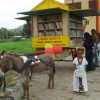
ETHIOPIA: Children Delight in Tales on Wheels
The middle of September marked the beginning of Meskerem, the first month, the beginning of a new year, just after the girls dance in Tigray to mark the end of the rains and the coming of the summer in a ceremony called Ashenda. Children in Mekelle and other parts of this region in northern Ethiopia had added reason to rejoice.
AFRICA: “Future Lies in a Free Trade Area From Cape To Cairo”
African governments’ ambitious plan for a tripartite free trade area (FTA), stretching from South Africa to Egypt, could be more realistic than getting existing ineffective regional customs unions on the continent to work.
ETHIOPIA: New Wheat Variety to Deal with Wheat-killer Diseases
Like most farmers in Ethiopia, Jundi Hajji expected that the profit from his wheat harvest would be sufficient to feed his family of eight until next year's harvest.
Restoring Ethiopia’s Forest Cover
Mesfin Mengistu has been growing trees on his two-hectare farm in Menagesha Woreda for years.
Financing Public Health in Africa
Campaigners for increased health financing welcome the commitment by African Union member states to direct more resources to health. But the needs of the continent seem to dwarf available budgets.
KENYA: Primary School Teachers Test Poorly in Mathematics
Like many primary school teachers in Kenya, Nemwel Mokua is not coping. He has to teach at least six subjects a day, which include a mix of arts, mathematics and science.
KENYA: TB Patients Held in Prison
When a doctor instructs a patient to take one tablet three times a day, she often has no way to ensure the instructions are followed.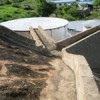
Harvesting Water to Save Crops and Lives
Peter Kivuti, a 51-year-old farmer from Eastern Kenya, never relied on meteorological weather predictions all his life - until three years ago. It was then that rainfall in the region become less predictable.
AFRICA: Governments Failing to Take the Threat of HIV Seriously
Experts worry that African governments are failing to take the threat of HIV seriously enough by not dedicating enough of their resources to prevention of mother-to-child transmission (PMTCT) efforts.Kenyan Women Sceptical Over Constitution’s Promise
Charity Karemi operates a pay-phone booth and sells mobile phone scratch cards in a Nairobi suburb east of the capital. She has mixed expectations of the benefits she will gain from Kenya’s new constitution.
AFRICA: Stronger Will Needed from Governments to Save Poorest Children
"Herding goats is tough with the thirst, sun, loneliness and hunger each day. And it can last forever. You herd as a girl, then as a wife, as a pregnant woman, as a mother and even as a grandmother," says Rukia Ibrahim whose 13-year-old younger sister was married off to a herdsman.KENYA: Monitoring Antiretroviral Intake Among Children
When 11-year-old Ronald Gathece was placed on antiretrovirals (ARVs) after being diagnosed HIV-positive, medical staff did not monitor his reaction to the treatment. But the side effects had been so bad that the young boy had contemplated suicide.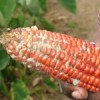
AFRICA: Woman Researcher Tackles Aflatoxin Poisoning*
Despite a bumper harvest of maize just a few months ago, many residents in the eastern part of Kenya are facing hunger and starvation. While granaries in the region may be full, the grain cannot be freely sold, let alone eaten.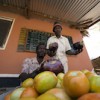
Revolution in African Agriculture Gathering Momentum
As one major meeting on agriculture ends, another begins: farming is truly back on Africa's agenda.
Uganda Could Become Regional Rice Exporter say Researchers
In a small garden at the Entebbe Botanical garden, about 40 kilometres from Kampala, a few yellowish plants are trying to adapt to their new environment.
AFRICA: ‘Welcome to My Taxi – Let’s Do Business with My Cellphone’
In cities across Africa, being an entrepreneur requires no office, business card or investors. All it takes is a cell phone, according to Adele Botha, a researcher at the Council for Scientific and Industrial Research (CSIR) in South Africa.
EAST AFRICA: Protecting Lake Victoria’s Top Predator
Coordinated conservation measures to arrest the steep decline of stocks of Nile perch in Lake Victoria are showing encouraging results - for fish, if not for fishing communities around the lake.
UGANDA: Unfriendly Nurses and Culture Hinder Male Involvement in HIV Prevention
Irene Wangolo was advised to undergo an HIV test during her antenatal visit and to return to the clinic with her husband so they could be counselled on preventing HIV transmission to their unborn baby. But her husband refused to accompany her saying it was not his business and Wangolo never returned to the clinic in Bungokho in eastern Uganda. So she missed all the services, including the prevention of mother-to-child transmission (PMTCT).MALAWI: Women Candidates Hard Hit by Election Postponement
News that Malawi’s November local government elections are to be postponed yet again has hit female candidates hard – and mostly in their pockets. And it could mean that the country will have less female candidates to vote for when they finally go to the polls.HEALTH-UGANDA: Problems with Anti-Counterfeit Bill Persist
Health rights activists still insist that, despite some improvements to Uganda’s controversial Anti-Counterfeiting Bill, it will affect the availability of generic medicine if enacted in present form.« Previous Page — Next Page »





The Week with IPS

NEXT STOP - SDGs
Tracking global progress towards a sustainable world
Tracking global progress towards a sustainable world
