Languages
Sunday, October 4, 2026



News and Views from the Global South
Food and Agriculture Organization of the United Nations (FAO)
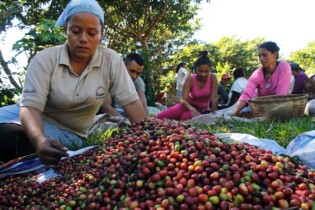
A Stronger Future for Coffee Starts Where It Is Grown
Imagine your morning coffee. You smell the aroma as steam rises from the cup. It wisps and swirls, thins, then disappears. You lift the cup to your mouth. The first pure joy of the day.
FAO and the Global South: Advancing Agrifood Transformation through South-South and Triangular Cooperation
The world’s agrifood systems are under mounting pressure from economic uncertainty, climate change and persistent inequalities. Farmers, rural communities and the most vulnerable are bearing the heaviest burden. We must act faster and scale practical, proven solutions.
World Hunger Is Falling – We Know How To Keep It That Way
Here is a fact that should interrupt the world’s drumbeat of bad news: Hunger fell again in 2025.
Hunger in Latin America Keeps Falling – Now Healthy Diets Must Become Affordable
Hunger is falling across most of Latin America and the Caribbean. The region’s next challenge is harder: ensuring that everyone can afford a healthy diet, not merely enough calories to survive.
Smart Farming Is Not the Future. It Is Already Here
Farmers today are producing food under pressures that would have been unimaginable to previous generations. Input costs are rising and supply chains are unreliable. Water is scarcer. Weather is less predictable. And for a growing number of farmers — in Sudan, in Ukraine, in Myanmar, in Gaza — the challenge is producing food at all, in the middle of active conflict. These are not marginal conditions. They describe the reality facing hundreds of millions of people who grow the food the world depends on.
Tea’s Future Depends on Its Farmers
The tea in your cup this morning began its journey in someone else's hands. Hands whose work most of us never think about. Almost certainly, those hands belonged to a smallholder farmer tending a small plot of land, plucking leaves by hand beneath long mornings of mist and rain.
One of the Oldest Agricultural Innovations Needs New Actions
For thousands of years, humans have kept bees. Beekeeping is a key agricultural activity, yet its full potential remains largely unrealized. Beekeeping produces far more than honey and generates far more income than many have chosen to acknowledge.
Keep Inputs Moving to Keep Food Affordable
Across Europe, winter wheat is already in the ground. What farmers apply in the coming weeks will determine the size of this year’s harvest. Those decisions are now being made under a sudden surge in costs that did not exist when seeds went in.
COP30: Urgent Financing to Transform Agrifood Systems
Climate change is no longer a future threat; it is a reality that is reshaping agrifood systems and compromising global food security. Its impacts are evident in both the quantity and quality of food, affecting agricultural yields, water availability, pest emergence, disease spread, and fundamental processes such as pollination. Even changes in atmospheric CO₂ concentration are altering crop biomass and nutritional value.
Food Inflation: a Key Challenge To Sustain the Achievements of Latin America and the Caribbean
Just a few years ago, at the height of the COVID-19 pandemic, millions of families in Latin America and the Caribbean did not know whether they would have enough food for the next day. The shutdown of economies, massive job losses, and the sharp rise in prices pushed food insecurity to levels not seen in decades.
Latin America and the Caribbean Lead the Way Toward a Future Without Hunger
In a region where hunger has cast a persistent shadow for generations, from the debt crises of the 1980s through the volatility of the 1990s to the recent shock of COVID-19, an unexpected and powerful development is now emerging: Latin America and the Caribbean is making significant progress in the global fight against hunger.
Food Security in Latin America and the Caribbean: Progress, Challenges and the Commitment to Move Forward
The latest publication of the State of Food Security and Nutrition in the World 2024 (SOFI) report launched last July in the framework of the G20 meeting in Rio de Janeiro provides a detailed overview of progress and setbacks in the fight against hunger.
Tackling Climate Change Will Be a Pyrrhic Victory If We Lose Sight of the Poor
Last July, we were confronted with alarming statistics: 733 million people experienced hunger in 2023, equivalent to one in eleven people globally. In Africa it was even higher, with one in five people going hungry. Climate change is a significant driver of this crisis.
As the Climate Crisis Bites, Soil Needs Doctors Too
In a wiser world, the term ‘treating someone like dirt’ would be a good thing. After all, 15 of the 18 nutrients essential to plants are supplied by soils and around 95% of the food we eat comes directly or indirectly from them, according to the United Nations Food and Agriculture Organization (FAO). So dirt is actually a precious resource that deserves to be treated with respect, care and perhaps even a little love.
Mobilizing Against Hunger in Brazil, Where It Affects 33.1 Million People
A campaign against hunger, a problem that affects 15.5 percent of the Brazilian population, seeks to mobilize society once again in search of urgent solutions, inspired by a mass movement that took off in the country in 1993.
Cuba, a Small Island State Seeking to Manage Its Vulnerability
Cuba, already beset by hurricanes, floods, droughts that deplete its main water sources, among other natural disasters, has seen its socioeconomic difficulties, similar to those faced by other Caribbean island nations, aggravated by the COVID-19 pandemic.
Woman Farmer Shows Way as Small Island Developing State Battles Pandemic’s Impacts
A woman farmer in Samoa is using innovation and technology to overcome economic hardship as the Pacific Island nation seeks ways to adapt to the challenges resulting from the Covid-19 pandemic.
Fighting COVID-19, But Thinking About the Post-COVID-19 World
Europe, the United States and other countries have made important progress in reducing the dramatic impact of COVID-19 in key sectors of the economy and population. However, in some parts of Africa, Latin America, Asia and the Middle East, the devastating effects of the pandemic continue to severely affect these sectors. One sector in particular, the food and agriculture sector, has been deeply impacted.
Q&A: Understanding COVID-19’s Impact on Food Security and Nutrition
While it is too early to assess the full impact of the global COVID-19 lockdowns, at least 83 million to 132 million more people may go hungry this year -- 690 million people were classified as hungry in 2019 -- as the pandemic has highlighted the vulnerabilities and inadequacies of global food systems.
Food Markets in the Caribbean Take Stock of Vulnerability during COVID-19
 The COVID-19 pandemic has raised the spectre of food insecurity as countries and citizens fear a return to the conditions that roiled the international food markets during the 2008 economic crisis.
Climate-Smart Agriculture means More Time for Eswatini Women Farmers
Aside from the seven hours Mantfombi Msibi (63) would spend daily during the Eswatini farming season planting, applying herbicides and weeding her 1.2-hectare maize field, she would also spend E1 750 ($125) on tractor services. It was a huge cost of both time and money. But this season, Msibi will be benefiting from climate-smart farming technology that has opened up a new world of farming to her, saving her time in the process.Next Page »


The Week with IPS

NEXT STOP - SDGs
Tracking global progress towards a sustainable world
Tracking global progress towards a sustainable world
