Languages
Thursday, October 22, 2026



News and Views from the Global South
ICTs and Clicks

AFRICA: Investment Growth Benefiting Only Some Poor States
While foreign direct investment in least developed countries (LDCs) in Africa has risen sharply over the past decade, most of it went to resource-rich economies and had little impact on employment creation.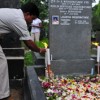
SRI LANKA: War Long Over, Media Still Muzzled
It has been two years since the end of Sri Lanka’s decades long war, and life in general has begun to slowly edge back towards normalcy here. Not so for the country’s besieged media community, according to observers and journalists alike - reporting still feels hemmed in and muzzled, they say.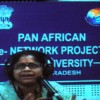
INDIA: Engaging Africa With Software and Soft Power
India cannot match China’s massive investments in Africa, but it is using its information technology capabilities and its affordable university courses to stay relevant on the continent.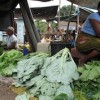
AFRICA: World Bank Identifies Five Poor States as “Growth Poles”
Africa faces an unprecedented opportunity to transform itself, says the World Bank. Its new strategy for the continent aims to leverage growing South-South investment to ensure more inclusive development, while identifying five poor states as "Growth Poles".Expressions Of A Free Arab Cinema
At this year’s 61st edition of the Berlin International Film Festival Iranian filmmaker Asghar Farhadi took the highest prize.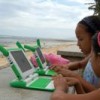
PHILIPPINES: Island Kids Get Connected
In a remote island community where fishing is the main source of living, one would expect children to be surfing the waves and not surfing the net.The Ethics of Social Networking for Journalists
The digital revolution is turning people into producers, as well as consumers, of media content. But this new reality has yet to be fully assimilated, and journalists face questions and uncertainties about their social role, their duties and also their rights.VIETNAM: Communist Party Steps on Already Stifled Newspapers
A week after Vietnam’s ruling Communist Party ended its pivotal congress of the country’s political elite, there is little evidence in the state-controlled media of a possible return to the openness that once saw high-profile corruption scandals exposed in print here.VIETNAM: Communists Gag the Web
By clamping down on the Facebook.com social networking service, Vietnam’s ruling Communist Party is revealing its discomfort with the rapidly expanding avenue for free expression even as it pushes to transform the once poor agrarian nation into a modern industrial society by 2020.
INDIA: 100-Dollar Laptops Bring In Distant Kids
Responding to the lack of computer training in Mukteshwar’s schools, Veena Sethi, a retired Delhi University professor, set up two used personal computers in the basement of her home with the aim of bringing the basics of computing to school children.Women Fight Assault Over Internet
Millions use Facebook to keep in touch with their friends, post photos of reunions and parties and share links to interesting articles and videos. But for 24-year old Maria (not her real name), the popular social networking site became a source of public shame when a former boyfriend posted nude photos and videos of her in an account he had created under her name.THAILAND: Online Censorship Triggers Fear among Bloggers
When he is not designing another house for this city’s sprawling urbanscape, a Thai architect in his mid-forties worries about another run-in with this kingdom’s cyber police.
Culture Vulture Kids on Argentine TV
A public children’s television channel broadcasting high quality fiction, animation and documentary programmes designed by the Argentine Education Ministry for the two-to-12 age range can now be viewed elsewhere in Latin America via the internet.CULTURE-CUBA: Night of One Thousand and One Texts
The legendary Scheherazade has exchanged her enthralling tales of "One Thousand and One Nights" for a compact disc with 1,001 academic articles, essays and books, giving Cubans access to materials that would otherwise be very difficult to obtain.VENEZUELA: New Rules to Rein In the Internet
Controversy has flared up in Venezuela over planned reforms to the law on online media, especially because restrictions that already apply to the content of radio and television broadcasts would be extended to the internet. Portals and networks that transmit messages deemed to be illegal may face heavy fines, or even be shut down.
RIGHTS-PAKISTAN: For Women, Cyber Crimes Are All Too Real
The Grade 10 student was first drugged, and then four men raped her. The group then apparently tried to extort money from her family. When the family filed a complaint with the police instead, the extortionists in October then posted a cellphone video of her whole ordeal on the Internet.
ARGENTINA: Click Here to Escape Gender Violence
"Men are drunks and batterers," Lorena Maurin tells IPS before heading in to her computer class, an oasis for women in the 22 de Enero neighbourhood on the outskirts of Buenos Aires.INDIA: Now the ‘Mother of All Scams’
As India is rocked by a series of billion-dollar scams, the question on everybody's mind is whether the perpetrators will go scot-free in what has been described as a low-risk, high-gain activity in this country.Internet At Home – A Distant Dream in Cuba
A submarine fibre optic cable which is expected to greatly increase internet connection speed in Cuba will soon be operational, and is creating moderate expectations among civil society on the island, where private access to the net is not a government priority.PHILIPPINES: When A Typhoon Comes, Turn to Twitter
Disaster time is social networking time for a growing number of humanitarian agencies, weather agencies, volunteers and individuals in the Philippines, one of the most disaster-prone countries in the world.BHUTAN: Slowly, Internet and Communication Let the World In
An introduction in Bhutan these days is usually accompanied by "I'm on Facebook!" Anjali Bista, 11, is no exception.« Previous Page — Next Page »





The Week with IPS

NEXT STOP - SDGs
Tracking global progress towards a sustainable world
Tracking global progress towards a sustainable world
