Languages
Sunday, November 8, 2026



News and Views from the Global South
Millennium Development Goals (MDGs)
OP-ED: G20 Ministers of Agriculture Must Focus on Smallholder Farmers
The first-ever official meeting of Ministers of Agriculture from G20 countries, to be held in Paris Jun. 22-23, presents an extraordinary opportunity. Tasked with developing an action plan to address price volatility in food and agricultural markets and its impact on the poor, the ministers are uniquely positioned to not only tackle the immediate price volatility problems, but also to take on a more fundamental and long-term challenge - extreme poverty and hunger.Women’s Groups Unite Ahead of Busan Aid Forum
Twenty women from four continents consider the words discussion leader Anne Schoenstein, of the Association for Women’s Rights in Development (AWID), has written on a flip chart. She strikes out in blue ink a previous sentence. She begins writing a new one - a demand aimed at aid donors - dictated by Nurgul Djanaeva.Q&A: Universal Energy Access is Possible With the Right Support
Providing electricity and modern cooking technology to billions of ‘energy poor’ people worldwide is one of the priorities of the U.N.’s Millennium Development Goals (MDGs) - one that experts say is achievable over the next few decades.ICC Urged to Accept ‘Ecocide’ as an International Crime
Images of the immense, dark stain of oil covering the waters of the Gulf of Mexico made their way across the globe last year as one of the largest oil spills in history unfolded. Other images - of the ‘Great Pacific Garbage Patch’, a gigantic pile of litter floating in the North Pacific Ocean; of countless felled trees in the Amazon; of tar sands in Canada - have gained much fewer headlines, but are likely to remain as monuments to the price tag of wanton human appetites.
RIGHTS-UGANDA: Government Needs to Prioritise Maternal Health
Just a week after a group of civil society organisations petitioned Uganda’s constitutional court demanding that the government’s non-provision of essential services for pregnant mothers was a violation of the right to life; Margaret Nabirye lost her baby in childbirth.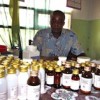
SIERRA LEONE: A Quarter of Vital Donated Drugs Missing or Stolen
Three-year-old David bolts up from his feverish stooper as a needle pricks his thumb, producing a tiny bead of blood. He looks down horrified but is too exhausted to cry and falls back into his mother's lap as the blood is wiped awaySWAZILAND: Girls Leave School Because of No Sanitary Wear
After a newspaper that Prudence* (16) used as sanitary wear fell from her while she played with friends at school, she left and never returned.IBSA: Pro-Western Mindset Hinders India-Brazil Pharma Deals
Cooperation between India and Brazil in pharmaceuticals and medical biotechnology has begun to falter, because Indian authorities would rather collaborate with western counterparts than those in developing countries, new research shows.JAPAN: HIV Cases Rise as Awareness Wanes
Slackening awareness and deep-rooted social discrimination are behind the latest figures that show Japan with a record number of HIV-positive and AIDS patients, officials and experts say.Climate Regulatory Gap Could Result After 2012 Kyoto Expiration
The growing awareness that the ongoing U.N. climate change talks here won't deliver a treaty to extend the international governance regime on reducing greenhouse gas emissions after 2012, is driving environmental experts to foster alternative solutions to global warming.UGANDA: The Value of Immunisation Programmes
GAVI, the Global Alliance for Vaccinations and Immunisation, secured pledges of 4.3 billion dollars from donors in London on Jun. 13 with the aim of securing funding to ensure life-saving vaccinations for every child on the planet.Corporate Influence Clouds Vaccine Pledging Conference
Between 2011 and 2012, 6.4 million children could die of preventable diseases, a number greater than the total population of Denmark or Norway.
Biodiverse Venezuela Flunking Basic Conservation
Threats to biodiversity, spreading pollution, degraded river basins and disappearing forests are problems in oil-rich, megadiverse Venezuela, where climate change is knocking on the door.PAKISTAN: Women Shield Children From Extremism
When Farah’s 16-year-old son began to disappear for several nights a week without saying where he went, she was naturally worried. After he returned one day and shattered the television screen in their Peshawar home, the mother of three decided it was time to quit her job as a teacher and to find out what was making her youngest child so angry.
Q&A: “Women Have Yielded the Cooking Profession to Men”
"Women didn't want to be slaves any more, or work professionally at what they were trying to liberate themselves from," renowned Venezuelan chef Helena Ibarra told IPS, explaining why women have taken so long to compete in a workplace as symbolically feminine as the kitchen.
INDIA: A School of Hope for Nomad Children
High up in the Himalayan mountains, 13-year-old Mohammad Junaid helps his family collect fresh fodder for their buffaloes, all the while dreaming of the day he could once again play cricket.OP-ED: Global CO2 Emissions Reach a New Record High
The alarm bells this time are not being rung by climate scientists or by environmental activists. They are being rung by none other than the International Energy Agency (IEA) - the institution established in the 1970s to defend the interests of Western oil consuming nations.AIDS Funding Gap Threatens Treatment Targets
A staggering nine million people are still awaiting HIV treatment, yet the 22 billion dollars the Joint United Nations Programme on HIV/AIDS (UNAIDS) says is needed to give them access to medicine and care has far from materialised.MALAWI: Village Hands Join to Save Forest for Juice
Seventy kilometres outside Malawi's commercial capital, Blantyre, a profitable cooperative enterprise is providing villagers jobs and preserving forests.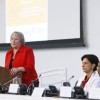
Thirty Years On, AIDS Epidemic a Women’s Battle
As world leaders gather in New York for a high-level conference on HIV/AIDS, United Nations agency heads, goodwill ambassadors and activists alike hope they will remember the virus's most vulnerable victims: women and girls.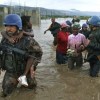
Millions May Soon Be Fleeing the Floodwaters
Mass migration will inevitably be part of human adaptation to climate change, experts agree, since parts of the world will become uninhabitable in the coming decades.« Previous Page — Next Page »





The Week with IPS

NEXT STOP - SDGs
Tracking global progress towards a sustainable world
Tracking global progress towards a sustainable world
