Languages
Sunday, November 8, 2026



News and Views from the Global South
Millennium Development Goals (MDGs)

ECUADOR: Still a Ways to Go, After Historic Ruling Against Chevron
The plaintiffs in the case against Chevron tried in Ecuador, who won a historic 9.5 billion dollar verdict after a nearly 18-year struggle over environmental and health damages caused in a quarter-century of oil operations in the Amazon jungle, are not disheartened by the road still ahead.
NAMIBIA: Basic Income Grant: ‘Let Others Taste What We Have Tasted’
A universal Basic Income Grant (BIG) would create laziness and dependence among Namibia’s poor, say politicians. A daring pilot project set out to prove that this untrue. IPS spoke to one of the beneficiaries of the BIG.
NAMIBIA: ‘You Know I’m Hungry, Feed Me Today’
A universal income grant in Namibia would alleviate poverty in one of the most unequal societies on earth, say campaigners. Free handouts only lead to laziness, responds an unwilling government.Obama AIDS Plan Stumbles over Funding
When U.S. President Barack Obama raised the curtain on a six- year, six-billion-dollar Global Health Initiative (GHI) in May 2009, he appeared to be embarking on the path of promises that paved the way to his election victory earlier that year.
Niger Delta Demands for Justice Undaunted by Decades of Violence
Nigerian environmental rights groups have been making the case for the expulsion of oil companies from the Niger Delta in the southeastern part of the country at the World Social Forum in Dakar.
SOUTHERN AFRICA: Securing Safe Water for a Million More
Long years of armed conflict have obstructed development in the areas on either side of the Angola-Namibia border. Now a 45 million dollar infrastructure upgrade is set to improve access to clean drinking water and decent sanitation for one million people.
Q&A: The People Need to Take Leadership
While the international community is now talking of a triple global crisis – food, climate and economic - a weeklong session of the World Social Forum (WSF) is coming to a close in Dakar, Senegal.SOUTH AFRICA: Rising Leader With Her Feet on the Ground
Zanele Magwaza-Msibi is a woman with a mission: to serve the people of South Africa. She is poised to become leader of South Africa's newest political party, the National Freedom Party (NFP), after breaking away from the Inkatha Freedom Party (IFP), where she served as national chairperson.Pakistan Sinking Into Water Crisis
Pakistan is still reeling from flooding that caused one of the world's costliest natural disasters in 2010, with millions of people lacking shelter, infrastructure in ruins and donations falling short of appeals. But worse may come.
Surviving the Sexist Genocide in Guatemala
"He would punch my head all the time, pull my hair, smack and kick me. And he would make me wear long sleeves to hide the bruises; even on my wedding day I had a black and blue mark on my arm," Heidi Velásquez told IPS in Guatemala.SOUTHERN AFRICA: Together Against the Rising Water
A decade after heavy floods wrecked havoc in Southern Africa, the region is better prepared to monitor and respond to seasonal flooding. This is thanks as much to the growing strength of transboundary institutions as it is to technical improvements.U.N. Intensifies Campaign Against Female Genital Mutilation
The United Nations is intensifying its global campaign to eliminate one of the most widely-condemned religious and cultural rituals in the world today, mostly in Africa and Asia: female genital mutilation/cutting (FGM/C).
PERU: Popular Women Vote-Catchers Stand in for Real Participation
Women candidates nominated for the presidential and legislative elections in Peru in April tend to be big names in the worlds of sports, television or show business, or are following family tradition. But political parties are failing to promote meaningful participation by women in politics.
WORLD SOCIAL FORUM: ‘Signs of Change’ Says Bolivia’s Morales as World Social Forum Opens
Tens of thousands of people marched through the streets of Dakar on Sunday to mark the start of the annual World Social Forum. Activists carried colorful banners denouncing land grabs, restrictive immigration laws, agricultural subsidies in Europe and the U.S. and many other issues.
Q&A: Looking to a World Without LDCs
Maximising time, energy and resources toward improving living conditions for millions of people in the poorest countries of the world - the so-called Least Developed Countries (LDCs) - means that the "business-as-usual" approach must yield to a holistic strategy, says Arjun Karki, a longtime expert on grassroots, democratic peace-building and development.
MEXICO: Agave Sweetens Economic Prospects of Indigenous Women
With a wooden spoon in hand, Hortencia Rómulo briskly stirs the amber-coloured liquid cooking in an enormous steel pot.
ECONOMY: Same Old System Can Only Produce New Crisis
The world is in financial crisis thanks to the reckless behaviour of bankers, say campaigners, yet ordinary people are picking up the tab. Debt activists fear the recession will provide cover for a fresh round of toxic debt to countries in the South.Rising Food Prices May Not Signal New Crisis
As food prices rose for the seventh month in a row in January, contributing to recent popular unrest in the Middle East and a spike in commodities purchases by developing countries last week, some analysts are quick to make comparisons to the dry years of 2007-2008.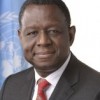
Q&A: Meeting a World of Seven Billion with Optimism
Before the end of 2011 there will be more humans on earth than in all of the planet's 4.5-billion-year history. As the world steels itself to support its seven billion-strong population, Dr. Babatunde Osotimehin, the new executive director of the United Nations Population Fund (UNFPA), greets the impending challenges with gusto.
NICARAGUA: Gender Revolution in Schools Not Reflected at Work
Karla Mendoza, a 26-year-old Nicaraguan, has worked hard to have a professional career. But despite two technical degrees, courses in computer science and public relations, a nearly complete university degree, and eight years of work experience, she is not there yet.ZIMBABWE: Filtering Fact From Fiction About D.I.Y. Water Treatment
The southern Zimbabwean city of Bulawayo has not been spared the heavy rains that have fallen across Southern Africa; the water is welcome in this semi-arid part of the country, but the coming of the rainy season has provoked fresh memories of the 2008 cholera epidemic.« Previous Page — Next Page »





The Week with IPS

NEXT STOP - SDGs
Tracking global progress towards a sustainable world
Tracking global progress towards a sustainable world
