Languages
Monday, November 9, 2026



News and Views from the Global South
Millennium Development Goals (MDGs)
Malaria Funding Falls Short of Six-Billion-Dollar Target
As African countries continue their relentless battle against the spread of malaria, a global fund to fight the deadly tropical disease has fallen short of expectations.Opposition Mounts to Carbon Compensation Schemes
The World People's Conference on Climate Change and the Rights of Mother Earth, which opened Monday in Bolivia, will reflect vigorous resistance to financial compensation for forest conservation in return for permits to emit greenhouse gases, activists told IPS.
PARAGUAY: Native Group Defends Land Claim Before Inter-American Court
One of the three public hearings held this week in Lima by the Inter-American Court of Human Rights discussed the responsibility of the Paraguayan state for violations of the right of indigenous communities to collective ownership of their land.
AGRICULTURE: Affordable Solution to Costly Pests
The International Centre for Plant Physiology and Ecology (ICIPE), based at Mbita, on the Kenyan shores of the world’s second-largest freshwater body, is advocating "push-pull cultivation" as the answer to feeding future generations in Africa.
NAMIBIA: Banking Water for the Future
In the driest capital city south of the Sahara, water engineers are "banking" ground water to meet future demand, but the enormous costs might sink the project before water can be harvested.HEALTH: Maternal Deaths Drop, but Progress Still “Slow”
One day closer to an ever-approaching deadline to achieve the Millennium Development Goals (MDGs), U.N. Secretary-General Ban Ki-moon announced a Joint Action Plan to improve reproductive, maternal and newborn health on Wednesday, flanked by international leaders and development experts.DEVELOPMENT: Farmers on Fringe of Intl Agriculture Policy?
How's this for short-sighted: A billion people go hungry every day, food prices have climbed 30 to 40 percent, climate change is reducing agricultural production - and for the past two decades, the world has slashed investments in publicly-funded agriculture until it is a pittance in most countries.AFRICA: Monitoring a Changing Climate
The gathering environmental crisis presented by global warming makes effective weather information and prediction a matter of urgency. As Africa's farmers come to grips with adapting to climate change, it may be that the best way to equip them is to involve them directly in collecting the data.HEALTH: Empowering Women to Slash Mother and Child Deaths
In developed countries, child and maternal mortality is a health problem that has largely been solved.
SENEGAL: Small-Scale Irrigation: Key to Rural Development
Over the past four years, the Local Small-scale Irritation Project has spent more than $10.5 million U.S. dollars supporting rural communities in Senegal.
Q&A: Equality for Women – “The Core of the Problem is Care”
"Women help to reduce poverty and raise family incomes, but they pay too high a price for it, because in every country their working days are longer than men's," said Sonia Montaño, head of the Economic Commission for Latin America and the Caribbean's (ECLAC) Division for Gender Affairs.
ZAMBIA: Health Fears Follow Floods
As the heavy rains subside, signifying the end of the rainy season, a cholera outbreak is sweeping through the Zambian capital, Lusaka.DEVELOPMENT: Fragile Nations Speak Up To Donors
An international dialogue meeting in East Timor Saturday saw fragile states make giant steps in showing developed nations how aid can be more effectively channelled to achieve their key development goals.MALI: Shea Production Vital to Women’s Incomes
Across the semi-arid Sahel region of West Africa, the shea tree prized by women, who produce a butter from its nuts that is a key ingredient in food and cosmetics. However, drought and diseases threaten this source of income.
ECONOMY: Brighter Business Prospects for Swazi Women
Business in Swaziland is perceived as a man’s playground, and Swazi women have long found themselves on the periphery. Not only are big industries dominated by men, they are also the ones who award tenders in government and other institutions.
Q&A: IBSA Summit Aims to Strengthen South-South Cooperation
When the political leaders of three of the world's major democracies in the global South - India, Brazil and South Africa (IBSA) - gather at a high-powered summit meeting in Brasilia next week, one of the key items on the agenda would be how best to strength economic cooperation among developing nations.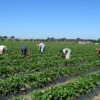
URUGUAY: Fighting Climate Change from the Countryside
"We would get up and go to bed every day looking up at the sky, hoping for something to fall, but nothing happened, not even a drop fell," says María Inés Queiros, who makes artisanal cheese in the southern Uruguayan province of San José.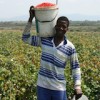
WATER : Swazi Village Gets a Self-Sustaining Water Supply
No one loves the bill collector, and Sifiso Shongwe gets a chilly welcome as he goes from household to household collecting money for Maphilingo's community water scheme.
UGANDA: Information Technology Helps Farmers
Mayuge district has 31,000 farming families served by just nine agricultural extension workers. In Wainha village, an internet centre run by the Busoga Rural Open Source and Development Initiative is more than filling the gap in assisting farmers.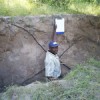
MOZAMBIQUE: Earthquakes: Not a Matter of If, But When
Time is everything in responding to a natural disaster. Mozambique's disaster management specialists are worried that they are missing key data on the small tremors that take place almost daily in the quake-prone country.
ENVIRONMENT-ZIMBABWE: Future Generations Will ‘Inherit Only the Wind’
The plumes of smoke rising above the dense working class suburbs of Bulawayo are a sign of the environmental impact of Zimbabwe's electricity crisis.« Previous Page — Next Page »





The Week with IPS

NEXT STOP - SDGs
Tracking global progress towards a sustainable world
Tracking global progress towards a sustainable world
