Languages
Monday, November 9, 2026



News and Views from the Global South
Millennium Development Goals (MDGs)
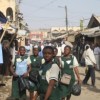
RIGHTS: Nigeria Failing To End Discrimination Against Women
Nigeria ratified the Convention on the Elimination of Discrimination Against Women (CEDAW) in 1985 without reservations. But few of its citizens have ever heard of the document. Day-to-day life for women in Nigeria is shaped less by international conventions than it is by the diverse cultures, traditions and religions found in the country.Q&A: CEDAW – Signed, Sealed and Largely Left on the Shelf
Mauritania formally adopted the Convention on the Elimination of Discrimination Against Women in 2001, but in the eight years since, it has had limited effect on the status of women.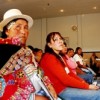
BOLIVIA: Women Clamour for Right to Land
Despite major advances in land distribution in Bolivia, single, widowed and undocumented women in this South American country have little chance of owning rural land due to the patriarchal traditions and customary practices of indigenous peoples, in violation of international instruments and conventions protecting women’s rights.GUATEMALA: Sex Education, Family Planning Finally Available
Social organisations in Guatemala are celebrating the entry into effect of a family planning law that will usher sex education into the country's classrooms and facilitate access to birth control methods, as a victory in the fight against the country's high birth and maternal and infant mortality rates.
GENDER-SOUTH AFRICA: ‘There Is A Sense Of Vindication’
Born in a squatter camp in Orlando East and raised by a single mother; working in a factory while completing secondary school by correspondence; arrested and banned by the apartheid government: South Africa's ambassador to Italy is an example of the long road her country has travelled.
MEDIA: The Untold Stories of Violence Against Women
"You don’t need to go far, it is all around us," said Robert Dijksterhuis, head of the gender division in the Dutch Ministry of Foreign Affairs, to a room mostly full of women. "Up to one in three women around the world has been abused in some way - most often by someone she knows," he added, quoting UNFPA (United Nations Population Fund) numbers.
PERU: IACHR Calls for Justice for Victims of Forced Sterilisation
The Peruvian government is once again being called on to bring to justice the perpetrators of the Voluntary Surgical Contraception (VSC) programme carried out by the Alberto Fujimori (1990-2000) regime, under which tens of thousands of women were forcibly sterilised. This time, the demand comes from the Inter-American Commission on Human Rights (IACHR).Q&A: “We Have Linked Machismo and Femicide in the Public Mind in Chile”
More than 500 Chilean women have been killed by their partners, ex-partners or strangers since 2001. This year alone, there have been 52 "femicides", economist Gloria Maira said on Wednesday, the International Day for the Elimination of Violence against Women.RIGHTS-FRANCE: Domestic Violence – Everybody’s Business
Several people are gathered outside a window, staring wide-eyed at a scene within. They watch as a man brutally beats a woman, pounding her face with his fists, kicking her. No one says anything, until an onlooker screams agonisingly: "stop".
GENDER: For U.S., Lessons in CEDAW From San Francisco
In 1998, San Francisco stepped up and joined the world.DEVELOPMENT: Lights Out – World’s Poor Remain in the Dark
With the flip of a switch, a light comes on or an electric toothbrush revs to power. If service is cut, either for repairs or because of a natural cause, there will most likely be much fuss about how quickly power is restored - to people who live in the developed world.
PERU: Parties Thwart Public Demand for Women in Politics
Women already make up 44 percent of the active members of the country's parties, but Peruvians want to see more women in political posts. Party structures and a lack of funding for women candidates, however, conspire to hinder and even obliterate women's participation in public decision-making bodies.GUATEMALA: A Tax Code by and for the Oligarchs?
Taxation and government spending are the targets of a new report on Guatemala that argues the government is failing in its fiscal commitments to food, health and education.DEVELOPMENT: “Water Gap” to Widen Dramatically by 2030
A balanced approach of demand- and supply-side measures are needed to meet a growing "water gap" in which global water demand will be 40 percent more than supply by 2030, says a new report from the 2030 Water Resources Group.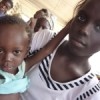
WATER: Poor Sanitation Killing Liberia’s Young
Nineteen-year-old Beauty Phillips clutches her emaciated baby tightly to her chest. At seven months, Inga suffers from malnutrition.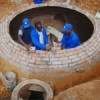
ZAMBIA: Putting Waste to Work
When Obed Mumba first came to the Zambian copper mining town of Ndola in search of work, it was still known reverently as "Ku kalale" - the land of the white man. In the decades since, he has witnessed his Kabushi township outgrow the limited dreams of its planners.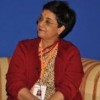
Q&A: Glass Half-full 15 Years After ICPD – Part 2
Fifteen years after the International Conference on Population and Development (ICPD), the glass is half full, according to Purnima Mane, deputy executive director of the U.N. Population Fund (UNFPA). And not much better for the U.N. Convention on the Elimination of all Forms of Violence Against Women (CEDAW) after 30 years.Q&A: ‘MDGs Don’t Recognise Role of Human Rights in Poverty Fight’
As the number of people living in poverty swell to over two billion, Amnesty International Secretary-General Irene Khan makes a strong argument for human rights to be made central to development and eradication of poverty.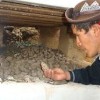
PERU: Fighting Hunger with Native Crops
As if he were showing off a treasure, Dionicio Sarmiento holds up his seed potatoes with a smile. "Look how nice they are, all ready to plant. It'll be a good harvest," says the peasant farmer from Huancavelica, Peru's poorest province, where most of the population depends on subsistence farming.GENDER-AFRICA: Some Progress Amidst Continuing Challenges
The Beijing Platform for Action in 1995 set out an agenda to address gender equality in priority areas, including poverty, education, and health care. It also committed governments to address violence against women, equitable access to economic resources and decision-making power.POLITICS: U.N. in Final Push for 2015 Development Goals
A special U.N. summit of world leaders, scheduled to take place next year, is expected to make "a final push" to help reach the world body's widely-touted development goals by the targeted date of 2015.« Previous Page — Next Page »





The Week with IPS

NEXT STOP - SDGs
Tracking global progress towards a sustainable world
Tracking global progress towards a sustainable world
