Languages
Wednesday, November 11, 2026



News and Views from the Global South
Politics
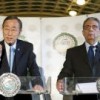
LIBYA: U.N. Chief’s Ambivalent Role in the No-Fly Zone
When the U.N. Security Council adopted a wide-ranging resolution last week recommending humanitarian and military action inside Libya, both U.N. Secretary-General Ban Ki-moon and Arab League Secretary-General Amr Moussa were assigned key roles in "coordinating" the implementation of the mandate.Egyptians Endorse Constitutional Change Amid Mounting Polarisation
Egyptians overwhelmingly endorsed a raft of proposed constitutional changes in a nationwide referendum on Saturday. But while the vote -- the first since the Feb. 11 ouster of longstanding president Hosni Mubarak -- was hailed as the freest in recent Egyptian history, it also served to polarise public opinion along broadly sectarian lines.Israel Accused of ‘A Form of Ethnic Cleansing’
"If the regime that encourages incitement, racism and anti-democracy is not toppled soon, we will find that the future is already here," says Israeli columnist Sefi Rachlevsky in the Israeli daily 'Haaretz'.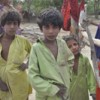
PAKISTAN: Citizens and NGOs Step Forward to End Illiteracy
The man known as ‘Master Ayub’ holds classes for free, between three and seven o’clock. His classroom is a public park, and his students are street children six to 16 years of age who otherwise would be picking trash, begging, or slowly becoming petty thieves.WIKILEAKS: Australians Call For Legislation to Protect Whistleblowers
Some Australians are convinced their government is sharing intelligence information with foreign powers about citizens implicated by documents released by Wikileaks.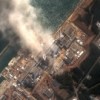
Who Controls the Nuclear Control Agencies?
As Japan struggles to confront a nuclear disaster that could be the worst in history, it seems clear that any discussion about the safety of nuclear energy should address the independence of regulatory agencies.VENEZUELA: Long on Weapons, Short on Accountability
Venezuela has been a major arms purchaser from Russia, China and other suppliers in the last five years, but has failed to acquire the necessary competence to deal with hypothetical conflicts, says a non-governmental organisation specialised in security and defence.Libyan Rebels Form “Interim Government”
Libya's pro-democracy fighters have formed an "interim government" even as forces backing the country's leader, Muammar Gaddafi, press ahead with attacks against them.
MOZAMBIQUE: Linette Olofsson – A Life Spent in Politics
There is no way one can have a conversation with Linette Olofsson without being dragged into her collection of images about her community agricultural project in central Mozambican Province of Zambezia.
SOUTH AFRICA: Firebrand Politician Enters Mayoral Race
The woman described by former South African President Nelson Mandela as his "favorite opposition politician", Patricia de Lille, has thrown her hat in for the position of mayor of Cape Town.
ECUADOR: Water Management Transcends “Public or Private” Debate
For one day, civil servants are trading their desks for the chilly highland plains in a rural community 3,500 metres above sea level on the outskirts of the Ecuadorian capital, where they are helping to plant native trees.SOUTHEAST ASIA: Despite Japan’s Crisis, Vietnam Aims to Win Region’s Nuclear Race
Vietnam’s race to build nuclear power plants has barely skipped a beat despite the troubling scenes unfolding in Japan, where a nuclear nightmare has gripped the country for over a week. It places the Southeast Asian nation at odds with its regional neighbours who have similar plans but are urging caution.Settlers Observe ‘Day Of Rage’ Pouring Wrath On Palestinians
Israeli settlers observed their own 'Day of Rage' last Thursday, launching reprisal attacks on Palestinians for the recent murder of a settler family in an illegal Israeli settlement in the occupied West Bank, and the demolition of a settlement structure by the Israeli authorities.
African Union at a Loss Over Libya
On Saturday, the U.S., France and the UK launched attacks on Libya's air defences and other targets following U.N. Resolution 1973. The three African members of the Security Council voted for the resolution, but a chorus of criticism has greeted the air strikes.JAPAN: Vulnerability and Uncertainty Prevail In Wake of Nuclear Disaster
Accidents at four nuclear power reactors hit by the earthquake and tsunami in Fukushima have left thousands of residents in the vicinity facing an uncertain future as they prepare for evacuation orders to protect them from dangerous radiation contamination.
YEMEN: Selling Freedom Tea at Change Square
Popcorn, peanuts, protest posters, tons of tea and the ubiquitous Yemeni flag dominate the anti-government sit-in demonstration outside Sana'a University as entrepreneurs have sought to meet the demands of protesters.
ZAMBIA: Young Voters Push Grassroots Issues to the Fore
Concina Haajila was only a year old in 1991 when Zambia turned from 27 years of autocracy and dictatorship to political pluralism and democratic governance. During the past 20 years she and millions of her peers have grown to adulthood and become disenchanted with the politics of their nation which have swung from an issue base to hero worship and personal purse enlargement.Obama Leaves Door Open to Regime Change in Libya
The fate of Libyan leader Muammar Gaddafi remains up in the air after the United States and its allied partners began missile strikes over the weekend to impose a no-fly zone (NFZ) in the North African country.LIBYA: Conflicting Interests Cloud Military Intervention’s Objectives
Conflicting national and electoral interests as well as clashing military and political objectives and potential are jeopardising the U.S.-Europe led military mission to implement the no-fly zone over Libyan territory, as stipulated by U.N. Security Council resolution 1973.
BRAZIL-US: Libya Attack Sours Obama-Rousseff Meeting
The first black president of the United States visited the first woman president of Brazil: their meeting resulted in modest progress in bilateral relations, but a bitter taste could not be avoided over the announcement, in Brazil, of the U.S.-led air attack on Libya.
Regional Support Erodes for Air War on Libya
When the United Nations Security Council Resolution (UNSCR) imposing a no-fly zone in the airspace of the Libyan Arab Jamahiriya passed Thursday by a predicted 10-0, no one stopped to ask what ends the means of military force hoped to achieve.« Previous Page — Next Page »





The Week with IPS

NEXT STOP - SDGs
Tracking global progress towards a sustainable world
Tracking global progress towards a sustainable world
