Languages
Wednesday, November 11, 2026



News and Views from the Global South
Politics
Gap Widens Between U.S. and Arab World
Arab public opinion will become increasingly difficult for the United States to favourably influence in light of recent regional unrest, according to experts speaking at a conference organised by the Brookings Institute on Wednesday.ARGENTINA: Progress in the Fight for Gender Identity
"In my family, they always saw me as a girl, but at school they called me by my boy's name, which is why I dropped out," Paula Sosa, a transvestite who recently managed to change her name on her identity document, told IPS.All Eyes on Egypt’s High Command
After 30 years in power, a handful of assassination attempts, the historical backing of five United States presidencies, 68 billion dollars in U.S. aid and 18 consecutive days of massive, pro-democracy demonstrations, Egyptian President Hosni Mubarak finally ceded power Friday, leaving observers in Washington wondering what happens next.Egypt’s U.S.-Armed Military in Transitory Commanding Role
When embattled Egyptian President Hosni Mubarak reluctantly called it quits after more than two weeks of mass demonstrations against his 30-year-old authoritarian regime, he temporarily turned over the country to an institution trained, armed and nurtured by the United States: the 350,000- strong military.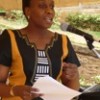
Q&A: Political Support Needs Financial Backing
"The agenda for women's rights and empowerment in each country must be supported by the political leadership," says Norah Matovu-Winyi, Executive Director, African Women's Development and Communication Network (FEMNET).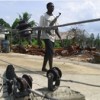
Niger Delta Demands for Justice Undaunted by Decades of Violence
Nigerian environmental rights groups have been making the case for the expulsion of oil companies from the Niger Delta in the southeastern part of the country at the World Social Forum in Dakar.EDUCATION-CUBA: The Sharp Edge of Change
Tougher entrance exams for higher education, to be applied in the next academic year in Cuba, are worrying families who see getting into university as a major achievement for their children.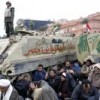
UPDATE: People Power Pushes Mubarak Out
Several hundred thousand protesters massed in Cairo's central Tahrir Square exploded into joy Friday, after Vice-President Omar Suleiman made the announcement that Hosni Mubarak had resigned as president of Egypt after three decades in office.EGYPT: Mubarak ‘Out of Touch With Reality’
In a televised address late Thursday night, embattled Egyptian President Hosni Mubarak delegated executive authority to his newly-appointed vice-president, but stopped short of stepping down. The announcement enraged anti-Mubarak demonstrators in Cairo's Tahrir Square, who say they will maintain their uprising - now in its 18th day - until Mubarak's unconditional resignation.Rohingyas Flee Burma by Boat
On a beach dotted with swanky, star-class hotels, a boatload of bedraggled men appeared out of the dark sea one midnight, exhausted from nearly two weeks at sea fleeing Burma’s repressive military.
Arab Women Lead the Charge
Asmaa Mahfouz, a 26-year-old Egyptian woman who two weeks ago had only one name, now boasts at least three. These include "A woman worth 100 men", "The girl who crushed Mubarak" and "The leader of the Egyptian revolution".U.S.: Military Intervention Trumping Humanitarian Aid
In the midst of a belt-tightening political climate in which pledges by prominent lawmakers to slash the United States' foreign affairs budget will likely soon be realised, some rights groups and experts are concerned about the increasingly blurry distinction between security and development in the face of shrinking resources.PERU: Government under Fire for Waiving Environmental Certificates for Dams
The Peruvian government has been forced to offer talks with governors, the ombudsperson's office and Catholic Church leaders, to stem the outcry over two emergency decrees that waive the requirement for environmental certificates for 33 investment projects, including hydroelectric dams in the Amazon rainforest.U.S.-IRAN: Unrealistic Agenda Undermined Nuke Talks
No observers of U.S. relations with Iran over the past three decades were surprised when late-January talks in Istanbul failed to hint at, let alone deliver, a breakthrough that would ease tensions between the Islamic Republic and the West.
Q&A: The People Need to Take Leadership
While the international community is now talking of a triple global crisis – food, climate and economic - a weeklong session of the World Social Forum (WSF) is coming to a close in Dakar, Senegal.ECONOMY-LATIN AMERICA: The Downside of Strong Currencies
Latin America returned in 2010 to the strong economic growth it enjoyed over the past decade, after only a minimal slowdown during the global crisis that broke out in 2008. But the weakness of the dollar relative to local currencies is a cause for concern among governments and sectors that produce goods for export.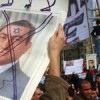
EGYPT: Labour Unrest Feeds Growing Protests
President Hosni Mubarak's speech Thursday night in which he refused to quit has provoked anger and could spark further unrest. Massive demonstrations, and pitched battles between pro-democracy protesters and the regime’s security forces, have already been intensifying in every corner of the country.SOUTH AFRICA: Rising Leader With Her Feet on the Ground
Zanele Magwaza-Msibi is a woman with a mission: to serve the people of South Africa. She is poised to become leader of South Africa's newest political party, the National Freedom Party (NFP), after breaking away from the Inkatha Freedom Party (IFP), where she served as national chairperson.
INDIA: Agitation Challenges Asbestos Import
Activists hope that a popular agitation against the setting up of a factory to manufacture asbestos products in the eastern Bihar state will result in a nationwide ban on the large-scale import into this country of the deadly mineral fibre.Jordan Feels a Jolt
The wave of political protests that has struck parts of the Middle East and North Africa over the past few weeks has also affected the Hashemite Kingdom of Jordan. The protest movement here, initiated in the wake of the Tunisian Jasmine revolution, underscores the population’s demand for political reform.
SRI LANKA: Garment Industry Woos Women Workers
Sri Lanka’s garment industry has launched a multi-million rupee campaign to bring in female workers shunning the country’s most profitable sector for better paying jobs.« Previous Page — Next Page »





The Week with IPS

NEXT STOP - SDGs
Tracking global progress towards a sustainable world
Tracking global progress towards a sustainable world
