Languages
Saturday, November 14, 2026



News and Views from the Global South
Politics
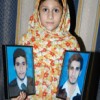
RIGHTS-PAKISTAN: Mob Brutality Raises Painful Questions
A breakdown in Pakistan’s justice system, a sign of a society desensitised to violence, an example of mob brutality.BURMA: Military Shake-up Reveals Junta’s Plans for New Gov’t
As the November general election in Burma approaches, the country’s junta is revealing the political designs underway in order to place the powerful military under civilian authority after a lapse of 22 years.
Q&A: Capital Punishment in Canada, Revisited
Thirty-four years ago, Canada was one of the first Western countries to abolish the death penalty. In 1987, the question of capital punishment and whether it should be reinstated resurfaced in the House of Commons.Outrage Grows Over Failure to Protect DRC Civilians
As details emerged this week of the U.N.'s knowledge of rebel activity in the villages where nearly 200 women were systematically gang raped by armed groups in the eastern Democratic Republic of the Congo (DRC) late last month, human rights groups are demanding an investigation into the U.N.'s failure to prevent the raid from occurring.PHILIPPINES: Media Take a Hit in Hostage Crisis
In the wake of the bungled hostage-rescue operation that left eight Hong Kong tourists and the gunman dead, the Philippine media are finding themselves a target of anger by many who say that sensationalism and no-holds-barred coverage added to the bloody end to a crisis they call an international embarrassment.MIDEAST: Bureaucracy Limits Rights of Palestinian Women
As Hamas cracks down on the rights of Palestinian women in the Gaza Strip, their sisters in the occupied West Bank are slowly gaining ground. But a bureaucracy, that is sometimes supported by foreign aid, is crippling these advances.LATIN AMERICA: Wanted: Non-Punitive Approach to Drug Policy
Experts from 13 Latin American countries called for a shift in counter-drug policies from a punitive to a public health-based approach for users, in order to reduce drug-related violence, on the argument that the current "war on drugs" has been lost in the region.Kazakhstan Leads Battle to Ban Nuclear Testing
The first International Day against Nuclear Testing will be marked Sunday by festivities in Astana, Kazakhstan and major cities around the world, with the goal of raising awareness of the importance of banning nuclear tests and to educate people on the catastrophic effects past tests have had on human beings and the environment.Sudan’s President and Criminal Court in Cat-and-Mouse Game
Sudan's elusive President Omar Hassan Al-Bashir and the unrelenting Chief Prosecutor of the International Criminal Court (ICC) Luis Moreno-Ocampo are playing a political cat- and-mouse game.GUATEMALA: New Challenges for Anti-Corruption Commission
New challenges and a long list of shocking cases involving hidden power structures are faced by the new head of the United Nations-mandated International Commission Against Impunity in Guatemala (CICIG).Groups Praise U.S. Rights Report as Good First Step
In the first ever U.N.-mandated self-assessment of the United States' human rights record, the Barack Obama administration has reaffirmed its commitment to closing the detention centre at Guantanamo Bay and to fixing the country's "broken immigration system".SOUTH-EAST ASIA: China Flexes Hydropower Muscle
After all the turbines in the Xiaowan hydropower station sputtered to life this week in China’s south-west Yunnan province, the Asian giant was able to lay claim to having the world’s largest hydropower capacity.INDIA: Activists Use Legal Weapons to Stop Thermal Power Plants
Green activists have various ways of pushing their causes, from enlisting movie stars to launching protests, but India’s campaigners have also been quietly using legal weapons to try to get the projects they oppose, such as thermal plants, stopped or reversed.
SOUTH AFRICA: Public Health Strained by Nurses’ Strike
Striking health workers have continued their work stoppage despite accusations that it endangers patients' lives. They are part of a nationwide strike by public sector workers that has some observers concerned that rising wage demands could harm South Africa's economy.Obama Resists Pressure for Red Line on Iran’s Nuclear Capability
President Barack Obama's refusal in a White House briefing earlier this month to announce a "red line" in regard to the Iran nuclear programme represented another in a series of rebuffs of pressure from Defence Secretary Robert Gates for statement that the United States will not accept its existing stocks of low enriched uranium.VENEZUELA: Opposition Hopes to Make a Comeback
The campaign for Venezuela's Sept. 26 legislative elections is officially on, and the opposition, which boycotted the last vote five years ago, is back in the running, hoping to win enough seats to act as a counterweight to President Hugo Chávez.CORRUPTION-PERU: Gov’t Tries to Track Down Millions from Convicted Officials
The Peruvian government will try to track down funds hidden away by former officials of the Alberto Fujimori regime (1990-2000) and others sentenced for corruption.ENERGY: Is Fracking Even Worse Than Drilling?
With cleanup of the Gulf of Mexico barely underway, energy companies are already assuming a crouching stance in anticipation of a no-holds-barred attack by environmentalists on what the industry says is the next major breakthrough in natural resource extraction.NICARAGUA: Major Blow to Illiteracy Among Native Groups
For 46 years, Nicanor García didn't know that his first name was seven letters long and that the first letter was also the start of the names of his country, Nicaragua, and his father, Norberto. He found out just eight months ago, when he finally learned how to read and write.MALAWI: Women Candidates Hard Hit by Election Postponement
News that Malawi’s November local government elections are to be postponed yet again has hit female candidates hard – and mostly in their pockets. And it could mean that the country will have less female candidates to vote for when they finally go to the polls.Climate-related Security Predictions Coming True in Pakistan
Analysts have been warning for several years that the impacts of climate change directly relate to the national security of the U.S. and other countries, but the link has never been so clear as it is today in northwest Pakistan.« Previous Page — Next Page »


The Week with IPS

NEXT STOP - SDGs
Tracking global progress towards a sustainable world
Tracking global progress towards a sustainable world
