Languages
Monday, November 9, 2026



News and Views from the Global South
Politics
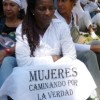
RIGHTS-COLOMBIA: Murdered Activist’s Children Go into Exile
"They are very distressed. Their father, mother and two brothers have been killed. They have expressed the wish to leave the country," Colombian Vice President Angelino Garzón said after meeting Tuesday with the surviving daughters and son of Ana Fabricia Córdoba, a prominent land rights activist assassinated on Jun. 7.AU Concerned With One-Sided Interpretation of Libya Resolution
Like Russia, China, India and Brazil, the African nations seem to be getting increasingly wary of the consequences of the Western powers’ military strikes in Libya - the oil rich North African country currently embroiled in violent political upheaval.OP-ED: G20 Ministers of Agriculture Must Focus on Smallholder Farmers
The first-ever official meeting of Ministers of Agriculture from G20 countries, to be held in Paris Jun. 22-23, presents an extraordinary opportunity. Tasked with developing an action plan to address price volatility in food and agricultural markets and its impact on the poor, the ministers are uniquely positioned to not only tackle the immediate price volatility problems, but also to take on a more fundamental and long-term challenge - extreme poverty and hunger.BALKANS: Serbia Promoting Partition of Kosovo
For most of the world the issue of Kosovo is long over. The nation declared independence from Serbia in 2008 and has gained recognition from 76 out of 192 U.N. member states.U.N. Still Lags Far Behind on Gay, Lesbian Rights
The United Nations is lagging far behind some of its own member states in recognising the rights of gays and lesbians who remain closeted in an institution that does not always practice what it preaches to the outside world.Women’s Groups Unite Ahead of Busan Aid Forum
Twenty women from four continents consider the words discussion leader Anne Schoenstein, of the Association for Women’s Rights in Development (AWID), has written on a flip chart. She strikes out in blue ink a previous sentence. She begins writing a new one - a demand aimed at aid donors - dictated by Nurgul Djanaeva.Q&A: Universal Energy Access is Possible With the Right Support
Providing electricity and modern cooking technology to billions of ‘energy poor’ people worldwide is one of the priorities of the U.N.’s Millennium Development Goals (MDGs) - one that experts say is achievable over the next few decades.ICC Urged to Accept ‘Ecocide’ as an International Crime
Images of the immense, dark stain of oil covering the waters of the Gulf of Mexico made their way across the globe last year as one of the largest oil spills in history unfolded. Other images - of the ‘Great Pacific Garbage Patch’, a gigantic pile of litter floating in the North Pacific Ocean; of countless felled trees in the Amazon; of tar sands in Canada - have gained much fewer headlines, but are likely to remain as monuments to the price tag of wanton human appetites.YEMEN: U.S. Escalates War Against Al-Qaeda
Increasingly worried that Al-Qaeda in the Arabian Peninsula (AQAP) is taking advantage of the growing political chaos in Yemen, the administration of President Barack Obama has tasked the Central Intelligence Agency (CIA) to use drone missiles to strike at suspected AQAP militants.Four Months into Uprising, Syria Still Plagued by Unknowns
Journalists, analysts, and policymakers have struggled to separate truth from fiction as the political situation in Syria steadily deteriorates. The lack of accurate, credible information has mired the Syrian situation beneath a fog of war that has complicated the world's understanding of the regime, its opposition, and the realities behind the uprising's latest developments.U.S.: Immigration Detainees Shuttled from Jail to Jail
Frequent and long-distance transfers to remote detention facilities are jeopardising the political and human rights of immigrants detained in the United States, according to the New York-based Human Rights Watch (HRW).Climate Regulatory Gap Could Result After 2012 Kyoto Expiration
The growing awareness that the ongoing U.N. climate change talks here won't deliver a treaty to extend the international governance regime on reducing greenhouse gas emissions after 2012, is driving environmental experts to foster alternative solutions to global warming.Rule of Law Strongest in Rich Nations, Weakest in Poor
The rule of law - a critical element of good governance - thrives best in Norway, Sweden, and New Zealand and worst in Pakistan, Liberia, Cameroon, Cambodia, Kenya and Venezuela, according to the latest edition of a four-year-old index released Monday by the World Justice Project (WJP).Central America Should Turn to Community Policing, Experts Say
The countries of Central America should adopt community policing as a strategy to fight organised crime, say experts in the region ahead of a key summit on security to be held Jun. 22-23 in the Guatemalan capital.Reducing Soot and Smog Would Help Stabilise Climate
Clean the air, cool the planet and prevent millions of deaths with fast action on soot and smog, a new report urges.Corporate Influence Clouds Vaccine Pledging Conference
Between 2011 and 2012, 6.4 million children could die of preventable diseases, a number greater than the total population of Denmark or Norway.
Biodiverse Venezuela Flunking Basic Conservation
Threats to biodiversity, spreading pollution, degraded river basins and disappearing forests are problems in oil-rich, megadiverse Venezuela, where climate change is knocking on the door.IRAN: Protests Mark Two-Year Anniversary of Contentious Polls
A silent protest through the streets of Tehran under the watchful eyes of a heavy security presence marked the second anniversary of Iran's June 2009 contested polls Sunday, amid a growing rift between Supreme Leader Ayatollah Khamenei and President Mahmoud Ahmadinejad, and among different conservative wings preparing to compete in the March 2012 Parliamentary elections.SOUTHERN AFRICA: Reforms First, Elections Later
A new constitution, voters’ roll and electoral law, among other things, have to be in place before elections in Zimbabwe can be held but observers doubt if this can be implemented.JAPAN: Aid Cut to Hit Health Campaigns
International campaigns against AIDS, tuberculosis and malaria are headed for cuts in funding assistance, now that Japan is reducing its Overseas Development Assistance (ODA) budget in the wake of the disaster that hit the country in March.PAKISTAN: Women Shield Children From Extremism
When Farah’s 16-year-old son began to disappear for several nights a week without saying where he went, she was naturally worried. After he returned one day and shattered the television screen in their Peshawar home, the mother of three decided it was time to quit her job as a teacher and to find out what was making her youngest child so angry.« Previous Page — Next Page »





The Week with IPS

NEXT STOP - SDGs
Tracking global progress towards a sustainable world
Tracking global progress towards a sustainable world
