Languages
Monday, November 9, 2026



News and Views from the Global South
Poverty & MDGs

Q&A: NGOs Must Play Key Role in Rio+20 Summit on Sustainable Development
As the United Nations readies for a major international conference on sustainable development next June in Brazil, non-governmental organisations (NGOs) are preparing to play a key role in the run-up to the summit meeting and are preparing a plan of action to be adopted by world leaders.
Q&A: ‘Cooperatives Aren’t Charity’
As industrial production penetrates all corners of the planet and transnational capital gains have unfettered access to virtually every country and community, the United Nations has declared 2012 to be the ‘International Year of Cooperatives (IYC)'.CENTRAL AMERICA: ‘Green Economy’ Not a Panacea
The "green economy" will not solve the problems of poverty and natural disasters in Central America as long as the development model continues to be based on over-consumption and over-production, regional experts say.GHANA: Struggle to Prevent Import of Counterfeit Drugs
Counterfeit medicines have flooded the market in Ghana and have even made their way into government hospitals as the country’s drug regulator struggles to control the importation of drugs.
MAURITIUS: Drug Use on the Increase among Kids
With drug trafficking rampant in the small Indian Ocean island nation of Mauritius, social workers and drug treatment centres are noting an increasing number of children and youth are now becoming addicted to drugs.Africa Remains Hamstrung in Battle for Water and Sanitation
The statistics coming out of Africa are staggering: 40 percent of Africa’s 1 billion people live in urban areas and 60 percent live in slums, where water supplies and sanitation are "severely inadequate", according to the Nairobi-based U.N. Environment Programme (UNEP).
Haiti’s Earthquake Victims: ‘Abandoned Like Stray Dogs’
Eighty thousand tiny houses dot the countryside near this coastal city, located just west of the epicentre of the Jan. 12, 2010 earthquake that killed some 200,000 and displaced over one million.‘Sustainable Development Must Start with People’
When world leaders meet in Brazil next June for a U.N. Conference on Sustainable Development, the third since the landmark 1992 Earth Summit in Rio de Janeiro, the question lingering in the minds of many is: what really is "sustainable development" in the context of a fast-changing world of growing poverty, hunger, pollution, political repression and social unrest?
KENYA: Poor Struggle as Inflation Soars
As Kenya's inflation rate reached 15.53 percent, compared to 3.18 percent in October 2010, the country's poor have been struggling to afford the most basic of essentials. In some areas families can no longer rely on regular meals and have reduced them to one a day, others mostly eat potatoes to get by, and in one Rift Valley slum, poor families now buy toothpaste by the drop.CONGO: Many Indigenous Women Still Give Birth in the Forest
Marguerite Kassa feared she would find herself alone in the small crowd of a dozen other pregnant women at the integrated health centre in Mossendjo, in the southwestern Republic of Congo. "I am six months pregnant already, but I hesitated to come here before now, because there is so much contempt for us," the thirty-year-old indigenous woman tells IPS. "Yet I was warmly welcomed."
Mexican Fisherwomen Organise Against Climate Change
Every night, Adlemi Marrufo goes out to catch bait crabs used to fish for octopus in this small seaside town and others along Mexico's Yucatan Peninsula, as part of a women's cooperative that is working to adapt to and fight climate change.8.7 Million Species Run Spaceship Earth
The life support system that generates the planet’s air, water, and food is powered by 8.7 million living species according to the newest and best estimate. We know next to nothing about 99 percent of those unique species - except that lots of them are going extinct.Mega Cities Could Trigger Water Shortages and Social Unrest
The rapid growth of urban population - described as one of the world’s major demographic trends - has triggered an explosion of "mega cities" in Asia, Latin America and Africa, causing a breakdown in basic services, including water supplies and sanitation facilities.OP-ED: Expanding Deserts, Falling Water Tables and Toxins Driving People from Homes
People do not normally leave their homes, their families, and their communities unless they have no other option. Yet as environmental stresses mount, we can expect to see a growing number of environmental refugees. Rising seas and increasingly devastating storms grab headlines, but expanding deserts, falling water tables, and toxic waste and radiation are also forcing people from their homes.
SOUTH SUDAN: Inter-Ethnic Clashes Become More Frequent and Deadly
Thousands of women and children are being abducted and over 1,000 people have died this year as communities in oil-rich South Sudan war over a precious commodity – cattle.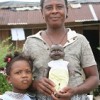
U.N. Development Goals Should Include Anti-Racism Targets
The first world summit of people of African descent, held in the city of La Ceiba on Honduras's Caribbean coast, ended with a declaration calling for the fight against racism to be included in the Millennium Development Goals (MDGs).
Too Much Water As Dangerous As Too Little
The international community is running the risk of losing the battle for water and sanitation in many cities around the world.
ECONOMY-ZIMBABWE: Good Policies Make for Good Business
With effective political and economic policies, Africa can be a haven for multinational companies (MNCs) even in the continent's least developed countries.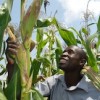
KENYA: Lime Improves Maize Harvest
As the world’s worst food security crisis continues across the Horn of Africa, including in Kenya, some smallholder farmers in the western part of the country are still feeding their families with last year’s abundant harvest.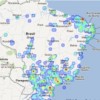
LATIN AMERICA: Citizens Chart Crime Using Online Maps
"I was walking down the street, talking on my cell phone, when a guy on a motorbike came by and grabbed the phone out of my hand. I ran after him but I couldn't catch him. He had probably been following me."
SOMALIA: Massive School Dropouts As Famine Continues
Jamaal Abdi, an eight-year-old boy at the Badbaado camp on the outskirts of Mogadishu, would like to have an education. He has his own dreams for the future.« Previous Page — Next Page »





