Languages
Monday, November 9, 2026



News and Views from the Global South
Poverty & MDGs
Citizen Actions Turn Up the Heat for a Warming Planet
Civil society leaders meeting here for the 2011 CIVICUS World Assembly are looking ahead toward next year's Rio+20 summit – a milestone anniversary of the 1992 Rio Earth Summit, and a crucial meeting of U.N. member states and non-governmental organisations to work towards a greener future.
GUATEMALA: More Not Always Better for Women
"Women have more opportunities nowadays to participate in the economic, social and political development of the country, but this has still not improved the quality of their lives," said Laura Reyes, one of the three women candidates for vice president of Guatemala.Reproductive Health Security Empowers Women’s Choices
Each day, one thousand women die in childbirth and one million people become infected with sexually transmitted infections (STIs), including 7,000 cases of HIV. Yet these numbers are preventable, experts insist, when countries possess the resources and willpower to address and deal with them.
COLOMBIA: Women Make an Oasis in Violence-Wracked Neighbourhood
In one of the poorest neighbourhoods in the Colombian capital, 26-year-old Sandra Sánchez has created an oasis that offers meals, recreational opportunities, company and much more to hundreds of children and elderly people, in an example of solidarity and leadership that has transcended borders.
TRADE: Africa Still the Odd One Out
While globally trade agreements are more and more about linking production chains between countries and continents, Africa remains locked in a struggle to overcome the colonial legacy of fragmentation, trade experts say.
PAKISTAN: Dodging Drones and Bullets to Beat HIV
Having to contend with U.S. army drones and the crossfire between the Taliban and the Pakistani army, the residents of Pakistan’s tribal areas find access to treatment for HIV/AIDS harder than in most other parts of the world.
AFRICA: Slow Progress in Reducing Maternal Mortality
Agnes Kalunda’s doctor feared that because of her slight frame there was a high chance of her developing complications during delivery.
SOMALIA: Armed Militia Grab the Famine Business
Armed groups are withholding aid and preventing Somali famine refugees from leaving camps to ensure the continued supply of food by aid agencies that they are presently selling on the open market.DEVELOPMENT: ‘Boomerang Aid Enriches Donors’
Development aid is ineffective mostly because it is tied to contracts worth billions of dollars awarded to firms in developed countries in a phenomenon called boomerang aid, a new study says.
BRAZIL: Rousseff Winning Allies in Undeclared War on Corruption
Brazilian President Dilma Rousseff is starting to gain support for a war on corruption that she is quietly waging.IBSA: ‘Cash Grants Must Back Food Access’
Studies by the India-Brazil-South Africa (IBSA) Academic Forum on food security issues in the three countries suggest that providing food access works best when backed by cash transfers.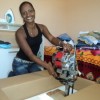
CLIMATE CHANGE: Brazilian Women Rise Above the Waters
Almost a year and a half after floods wreaked havoc in a large part of the state of Rio de Janeiro, a group of women are struggling to rebuild their lives. They lost everything except their will to pick themselves up again and make the best of the aid they receive, to become self-sufficient again.GUATEMALA: All Candidates Jump on the Social Programmes Bandwagon
Although he is accused by the opposition of failing to live up to his promises of transparency, job creation and security, Guatemalan President Álvaro Colom has received praise from all sides for his government's successful social programmes.‘EU Needs to Tell Itself More About Development’
There is increasing political will now for a globalised strategy for the European Union to raise awareness about development, experts say. But at the same time, the European budget for education on development issues remains strikingly low.ARGENTINA: Child Allowance Restores Families’ Ties with Schools
Conditional cash transfers to poor families with children in Argentina "have had a very positive impact," says an enthusiastic Graciela Dulcich, the principal of a primary school in a poor neighbourhood on the outskirts of Buenos Aires.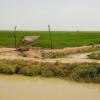
MAURITANIA: Fresh Attempt at Irrigated Agriculture
In a bid to reduce food insecurity, the Mauritanian government is turning to several new approaches to agriculture, including expanded irrigation schemes, popularising new crops and harnessing the energy of recent graduates.
HAITI: Patchy Healthcare Adds to Miseries of Women and Girls
"I just gave birth on the ground...I had no drugs for pain during delivery," one Haitian mother tells Human Rights Watch (HRW) in a report released Tuesday that says a year and a half after the country's devastating earthquake, women and girls are still facing gaps in access to available healthcare services necessary to stop preventable maternal and infant deaths.
Aiming a Kick at Homelessness
Loud bursts of cheering startled the throngs of tourists posing for pictures in front of the Eiffel Tower here last weekend.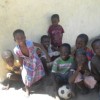
Neglected Diseases Group Seeking Child-Friendly AIDS Drugs
A scientific alliance in which developing countries are playing a key role has taken on the challenge of producing paediatric AIDS drugs, an area that is no longer a priority for pharmaceutical companies because mother-to-child transmission of HIV has virtually been eliminated in the industrialised world.
COLOMBIA: Microcredit Growing Steadily at 15 Percent a Year
The more than 1.2 million microenterprises operating in Colombia are responsible for around 50 percent of all employment. And many of these small businesses owe their existence to the microfinance system, according to a report by Visión Económica, a local business research group.Palestinians Thirsting for Justice in Water-Starved Occupied Territories
In the strife-stricken Middle East, oil has always been in the realm of politics. But in the Israeli-occupied territories of Gaza and the West Bank, oil has been supplanted by water.« Previous Page — Next Page »





