Languages
Wednesday, November 11, 2026



News and Views from the Global South
Poverty & MDGs
NICARAGUA: A Month of Free Fun and Games for Poor Children
More than one million poor children in Nicaragua will enjoy a massive Christmas celebration this month, complete with recreational activities and presents, organised by the government of President Daniel Ortega. But the opposition is criticising the project as populist and eccentric.
GENDER: Zimbabwe Basket Fund Takes Off
A basket fund aimed at increasing the economic participation of women in Zimbabwe, has been relaunched after a start which faltered due to the delayed appointment of the new government earlier this year.INDIA: Mobiles For Gender Empowerment
The Indian Government should consider providing mobile phones at a subsidy to women from the bottom of the pyramid since it helps improve their status and welfare, says a recent report.Q&A: Africa – High On Political Empowerment, Low On Education
"It is clear that there are huge discrepancies within Sub-Saharan Africa, but overall the region is doing extremely well in terms of political empowerment," says Saadia Zahidi, head of the Women Leaders and Gender Parity Programme at the World Economic Forum (WEF) in a telephone interview from Geneva.
AFRICA: Campaign to Unite Against Malaria Kicks Off
Growing up in Cameroon, Joseph-Antoine Bell and his friends used to think that by playing football they could get rid of malaria.SENEGAL: Farmers Anxious About Aid
As part of a project to support community initiatives and fight poverty in South Senegal, the Sédhiou Local Development Fund received a donation of agricultural equipment worth more than half a million dollars in a bid to reverse the region's dramatic drop in agricultural production in recent years.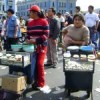
PERU: Women Workers Forced into Informal Economy
In Peru, 51 percent of all jobs are generated by the informal economy, a sector that has a female face, as more than 60 percent of the women workers in the country are forced into informality, with only 15 percent having health coverage and a mere four percent enjoying retirement benefits.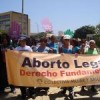
DOMINICAN REPUBLIC: Women Facing Increased Risk
Dominican organisations focused on the rights of women are bringing in assistance from all over Latin America to aid them in their fight against Article 30 in the recently approved constitution which states that the right to life is inviolable from conception until death.DEVELOPMENT: Global Challenges Require Innovative Partnerships
The High-level United Nations Conference on South-South Cooperation kicked-off here Tuesday, with U.N. Deputy Secretary-General Asha Rose Migiro calling for practical solutions and reinforced South-South and North-South partnerships to address the demands of our "deeply interconnected world."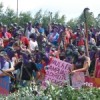
ENVIRONMENT: Tree Plantations Are Not Forests, Women Activists Say
Touted as "harvested forests," single-crop tree plantations are fast encroaching on the native forests and grasslands of Argentina, Brazil and Uruguay, affecting the environment and the lives of local communities, rural women say.
Q&A: Forging New Paths to Sustainable South-South Cooperation
Countries from the South are assuming leading roles in decisions on global issues ranging from economic recovery to food security, climate change and HIV/AIDS.Q&A: ‘You Have To Be Educated To Be A Leader’
Traffic flowing in and out of her office, each interruption addressed with effortless calm, the nurse in charge of Hospitalisation and Immunisation at Nyamata Health Center in Bugesera District, is a confident woman in her element.
WORLD AIDS DAY: Children Still Falling Through the Cracks
While most HIV-positive people in the Western world can gain decades of good health thanks to increasingly effective drug regimens, in the developing world, nearly a third of children born with HIV are still dying before their first birthday.WORLD AIDS DAY: Groups Urge Repeal of “Antiquated Colonial Laws”
On the heels of a new report by UNAIDS that the HIV virus is now infecting Caribbean men and women at an equal rate, activist groups are urging regional leaders to eliminate laws that further the stigmatisation associated with the deadly virus.
RIGHTS: Nigeria Failing To End Discrimination Against Women
Nigeria ratified the Convention on the Elimination of Discrimination Against Women (CEDAW) in 1985 without reservations. But few of its citizens have ever heard of the document. Day-to-day life for women in Nigeria is shaped less by international conventions than it is by the diverse cultures, traditions and religions found in the country.Q&A: CEDAW – Signed, Sealed and Largely Left on the Shelf
Mauritania formally adopted the Convention on the Elimination of Discrimination Against Women in 2001, but in the eight years since, it has had limited effect on the status of women.
BOLIVIA: Women Clamour for Right to Land
Despite major advances in land distribution in Bolivia, single, widowed and undocumented women in this South American country have little chance of owning rural land due to the patriarchal traditions and customary practices of indigenous peoples, in violation of international instruments and conventions protecting women’s rights.GUATEMALA: Sex Education, Family Planning Finally Available
Social organisations in Guatemala are celebrating the entry into effect of a family planning law that will usher sex education into the country's classrooms and facilitate access to birth control methods, as a victory in the fight against the country's high birth and maternal and infant mortality rates.
GENDER-SOUTH AFRICA: ‘There Is A Sense Of Vindication’
Born in a squatter camp in Orlando East and raised by a single mother; working in a factory while completing secondary school by correspondence; arrested and banned by the apartheid government: South Africa's ambassador to Italy is an example of the long road her country has travelled.
MEDIA: The Untold Stories of Violence Against Women
"You don’t need to go far, it is all around us," said Robert Dijksterhuis, head of the gender division in the Dutch Ministry of Foreign Affairs, to a room mostly full of women. "Up to one in three women around the world has been abused in some way - most often by someone she knows," he added, quoting UNFPA (United Nations Population Fund) numbers.
PERU: IACHR Calls for Justice for Victims of Forced Sterilisation
The Peruvian government is once again being called on to bring to justice the perpetrators of the Voluntary Surgical Contraception (VSC) programme carried out by the Alberto Fujimori (1990-2000) regime, under which tens of thousands of women were forcibly sterilised. This time, the demand comes from the Inter-American Commission on Human Rights (IACHR).« Previous Page — Next Page »





