Languages
Thursday, November 12, 2026



News and Views from the Global South
Poverty & MDGs

LEBANON: Law to Stop Violence Against Women Takes Time
There was some good news for women’s activists in Lebanon last week.GUATEMALA: Crisis Hits Local Governments in Pocketbook
Incomplete infrastructure works and development projects and dismissals of teachers and municipal employees are some of the consequences of the global economic crisis in rural Guatemala, due to the central government’s decision to cut the budget for the country’s 333 municipal administrations.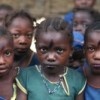
EDUCATION-AFRICA: The Other Crisis
The World Economic Forum on Africa has just concluded in Cape Town. If government leaders and captains of industry called for an eight trillion dollar bailout for the continent’s beleaguered education system - like the one found for the world’s biggest bankers - it went unreported.Q&A: The Key is Economic Growth for People
Countries around the world have committed themselves to reach eight Millennium Development Goals (MDGs) by 2015. MDG 8 seeks to develop a global partnership for development, including sustainable debt and an open, rule-based and non-discriminatory system of trade and finance.
VENEZUELA: Grassroots Empowerment for Women
In Venezuela "women have passionately embraced community activism, taking on a more committed and active role, and this is reflected in the increasing female participation in neighbourhood assemblies," Alba Rojas, spokeswoman for a community council in Tacagua, a township that spreads along the Caracas-La Guaira highway, told IPS.DEVELOPMENT: Global Campaign to Salvage U.N.’s Health Goals
The global economic crisis, which has pushed millions more into extreme poverty, is threatening to have a devastating impact on the health of women and children.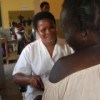
HEALTH-MOZAMBIQUE: Scant Progress With Paediatric HIV
Christina M.* looks worried as she cradles one of her sick twin babies. The mother of five already lost twins and another baby to illness soon after childbirth a few years ago.ZIMBABWE: Tsvangirai Gets Obama’s Seal of Approval
Zimbabwean Prime Minister Morgan Tsvangirai received U.S. President Barack Obama's seal of approval and a promise of 73 million dollars in education, health, and governance-related assistance after a mid-afternoon meeting at the White House here Friday.HEALTH-KENYA: Two Dollars And Change: Enough To Save a Mother’s Life
At the age of 14, Zulekha Mumma delivered her first child. At 21, the birth of her seventh child killed her. She died from excessive bleeding in her home in Nyalenda, a slum on the outskirts of Kisumu city in western Kenya, some 400 kilometres from Nairobi.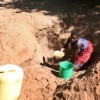
SOUTHERN AFRICA: Groundwater Still Underutilised
Despite the significant role groundwater could play in alleviating poverty, improving food security and contributing to overall development in Southern Africa, a lack of skills, finances and awareness of the resource means only a small percentage of the region's supplies are tapped into.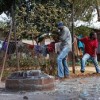
Q&A: Why Sanitation Is the Forgotten Sister
As part of the International Year of Sanitation in 2008, Zimbabwe developed a national strategy for sanitation, launched in February 2008. Just five months later, a cholera outbreak that was to claim over 4,000 lives began.SWAZILAND: Donor Support For Health Sector Drying Up
As the global economic downturn begins to take its toll on developing countries, Swaziland's health system - already strained by the burden of HIV/AIDS - has come under severe threat. The third of the national health budget which comes directly from donor agencies is abruptly drying up.
INDIA: Farm Suicides Turn Children Into Farmers
Eleven-year-old Digambar Rathod looks older than his age. Shy and uncertain, he stares disconcertedly at the garlanded photograph of his father Jaideep, a 42-year-old cotton farmer who committed suicide on Jan. 1, 2009 in Tiwsala village, in eastern Maharashtra state’s suicide-torn Yavatmal district.MILLENNIUM GOALS: Nicaragua Can’t Afford to Cut Poverty Rate
The global recession, internal economic contraction and loss of vital international aid are further distancing Nicaragua, one of the poorest countries in the Americas, from the Millennium Development Goals (MDGs).HAITI: Recruiting Far and Wide for Great Young Minds
When Garry Delice arrives at St. Joseph, a public high school in rural Haiti, something’s amiss. The cinderblock building is full of students, but no teacher can be found. Young men and women are finishing exams, and the staff has already left for the day.
DEVELOPMENT: Thousands March as Food Crisis Deepens
An estimated 300,000 people across the globe hit the streets Sunday to support the World Food Programme (WFP) and its mission to feed hungry schoolchildren and battle malnutrition worldwide.URUGUAY: ‘Just Like a Daughter’ – Until You Exert Your Rights
"If you protest or stand up for your rights, they start playing little psychological games with you. You immediately go from being the darling of the household, ‘just like a daughter,’ to being treated rudely, and sometimes they even accuse you of stealing."
POVERTY-ANGOLA: NGOs Sceptical of Govt’s Rural Development Plans
In an attempt to reduce rural poverty, Angola’s government plans to diversify its oil-focused economy by trying to restore the country’s once-booming agricultural sector.RIGHTS: Honour Pledges on Reproductive Health
In 1994, the International Conference on Population and Development (ICPD) proposed a groundbreaking shift in the approach to reproductive health: women's reproductive capacity was to be transformed from an object of population control to a matter of women's empowerment to exercise personal autonomy.
LEBANON: Women Battle for Citizenship Rights
One can be born in Lebanon and live here all one's life, and still not be a Lebanese citizen. Lebanon is one of few remaining countries in the Middle East where a mother is unable to pass citizenship to her children.CLIMATE CHANGE: Bolster Natural Carbon Absorption, Says UN
Expanding the capacity of natural areas for capturing and storing carbon is one of the keys to curbing climate change, and would be a relatively low-cost solution that would also improve the quality of life of millions of farmers, the United Nations said Friday.« Previous Page — Next Page »


