Languages
Tuesday, October 13, 2026



News and Views from the Global South
Poverty
Price Hikes Trigger Mozambique Protests
September in Mozambique’s capital has begun with violent protests. Thousands have been striking over an increase in the prices of basic goods, including bread. Police responded with force - firing on crowds gathered on the streets in several suburbs and townships in and around Maputo.
ZAMBIA: Water Committee Prospers in Lusaka
Residents of Lusaka's George Compound remember the bad old days in the early 1990s, when the area suffered ugly outbreaks of waterborne diseases.
MALAWI: Local Management the Tonic for Water Woes
Hop over a seep of filthy sludge behind a bathroom screened with ragged sacks, turn past the toilet with battered cardboard walls, crab between mud-brick shanties roofed with rusty metal... There: emerge into a small, neat yard where a dozen women and girls are filling plastic buckets from five water taps sticking out of concrete wall.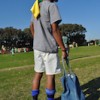
WORLD CUP: ‘Now We Demand They Do It For the Poor’
Weak floodlights barely held back gathering darkness as Somalia met Serbia in the finals of the Poor People's World Cup. A small band of supporters were on hand to see an African side lift the cup in Cape Town's Vygieskraal Stadium.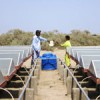
PAKISTAN: Water Trickles Back into Village, Thanks to Solar Desalination
Ismail Achar never thought a day would come when his island village would be reduced to a barren tract of land with hardly a drop of water to drink.PAKISTAN: Prevalence of Hepatitis Infection Still Alarming
Unable to afford treatment for his disease, Azizur Rehman, 29, has been suffering from hepatitis C for the past one year. "My elder sister died of the same killer ailment one year ago for lack of treatment," he laments.THAILAND: Inequality Gap Stains Thailand’s MDG Achievements
Thailand may have earned praise for meeting national targets to slash poverty and hunger ahead of a global deadline, but the two-month long street protests in Bangkok exposes a troubling fact – economic inequality.
EDUCATION-NEPAL: Unique School Aims to Be a Ticket to Equality
Had Uttam Sanjel stayed on in the Indian city of Mumbai to pursue his dream of becoming a Bollywood director years ago, the Samata (‘equality) schools that he set up here in Nepal may not be around today.
WORLD SOCIAL FORUM: Sierra Leone Sees Opportunity to Rise Up
The World Social Forum held in Nairobi in 2007 inspired Sierra Leonean activists to organise themselves to demand things like housing, health care and greater accountability from their government. That inspiration was not sustained.
KENYA: Mapping An African Slum
In early November, a group of explorers set out to map a blank space in Africa’s map. Twelve youths armed with global positioning system (GPS) devices made the rounds of the Nairobi slum of Kibera.NIGERIA: Fears for the Future as Religious Violence Claims 35
Government has again clashed with a religious sect in the state of Bauchi. Just under six months ago, an Islamist sect called Boko Haram launched attacks on police stations across four northern states, and hundreds of lives were lost before the situation was brought under control.
EGYPT: Cheap Bread Frees Women to Work
At a small bakery in Cairo's Boulaq district, dozens of hands thrust through a barred window waving coins and small banknotes. The clerk inside deftly takes the money and deals loaves of round flatbread into plastic bags.
RIGHTS-FRANCE: Homeless Prefer Streets to Gov’t Shelter
They huddle in the doorways of buildings with their few belongings, trying to keep warm. Or they sleep in covered shopping centres, accompanied by their pets - usually dogs. Some, reluctantly, make their way to government-run shelters.
RIGHTS-LAOS: Improved Roads Exact A Price – Part 3
Lao women express their equality by being as mobile as men. The numbers astride motorbikes in particular, are the same as those of men. But there is a cost.
RIGHTS-LAOS: Lapses with Labour – Part 2
"Most workers have limited knowledge, ultimately you don't know how many hidden killers are in your workplace. The boss knows, but he won't tell you," Wang Fengping, an engineer who was once employed by Hong Kong-based Gold Peak batteries at their factory in Guongdong, China.Q&A: ‘MDGs Don’t Recognise Role of Human Rights in Poverty Fight’
As the number of people living in poverty swell to over two billion, Amnesty International Secretary-General Irene Khan makes a strong argument for human rights to be made central to development and eradication of poverty.Q&A: Wanted: Economy at the Service of Mankind
The outbreak of the global financial crisis that followed the collapse of the U.S.'s major financial institutions last year sent many economies into a downward spiral. Many were also forced to rethink their economic development models.PAKISTAN: Soup Kitchens Spring Up to Stave Off Growing Hunger
Until meagre resources began dwindling to almost nothing, 43-year-old Firdaus Begum had not ventured into the Khana Ghar (Food House), which serves up inexpensive but filling meals.PHILIPPINES: Children Worst Hit by Economic Crisis
"I get an allowance of 50 pesos (about one U.S. dollar) a day, of which 20 pesos (40 U.S. cents) is for fare," says 17-year-old Dana Jane Estrada.
SWAZILAND: More Boreholes, No Water
In the drought-stricken area of Siteki, Tibuyile Maziya has been trying to fill up her four 20-litre buckets with water at a community for the last four hours. With a baby on her back and two more buckets to fill up, 19-year-old Maziya says she walks to this well at least three times a week to get water for her family of 15.PHILIPPINES: Storm-weary Farmers Suffer Huge Losses
Café by the Ruins, a popular rustic restaurant situated in Baguio City, the Philippines' famed mountain city resort, usually caters to tourists and residents who enjoy sipping their cups of brewed coffee while appreciating the artworks displayed on the café’s stone walls.« Previous Page — Next Page »





The Week with IPS

NEXT STOP - SDGs
Tracking global progress towards a sustainable world
Tracking global progress towards a sustainable world
