Languages
Wednesday, October 14, 2026



News and Views from the Global South
Science and Technology

ASTRONOMY: Big Southern Eye in Search of Extraterrestrial Life
The construction of the world's largest telescope in the northern region of Antofagasta could make Chile an international leader in astronomy research and provide a launch pad for developing other scientific disciplines.Brazil Exports Technology While Farmers at Home Do Without
Brazil has become an agricultural power in recent decades as a result of know-how that is now an important export item and part of its international cooperation programme. But the technology developed does not reach the vast majority of farmers within the country itself.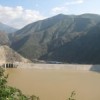
PERU: Murky Waters Cut Through Andes
The Olmos megaproject, which will divert water from the Huancabamba River through a trans-Andean tunnel to a desert area along Peru's northern coast, is being touted as a catalyst for development, but disputes are heating up over land, crops and water.2010 – International Year of Biodiversity Loss?
In 2002, world leaders committed to reduce the rate of global biodiversity loss by 2010, but the date has come and gone for these commitments to be fulfilled.
KENYA: Successful Weather Prediction Uses Old and New
In the wake of ever-changing climatic conditions, a study in western Kenya has discovered that combining traditional methods of weather prediction with meteorological forecasting is the best way of obtaining more accurate forecast data.
Citizen Scientists on the Trail of Disappearing Bees
It's the world's worst-kept secret: bees are in a state of crisis. One of nature's most benign pollinators is dying in record numbers, much to the alarm of beekeepers and gardeners.
Q&A: Coal, a Silent Killer
Fatal accidents at coalmines, like the recent tragedies in China and the United States, cause great public alarm. But U.S. physician Alan Lockwood warns that many more deaths are caused by the pollution that comes from the use of coal as an energy source.GM Crops Go to US High Court, Environmental Laws on the Line
The U.S. Supreme Court will hear arguments Tuesday in its first-ever case involving genetically modified crops. The decision in this case may have a significant impact on both the future of genetically modified foods and government oversight of that and other environmental issues.RIGHTS-AUSTRALIA: Plan For Nuclear Waste Dump Faces Backlash
Aboriginal landowners in Australia’s far north are battling government plans to construct this country’s long-term nuclear waste storage facility on their land.Will Polio Go the Way of Smallpox?
Only one disease has ever been totally eradicated by human beings: smallpox, the last natural instance of which was reported in 1975. Two doctors are now making the case for adding a second disease to the list.
ENVIRONMENT: Giant Bacteria Colonise the Oceans
A mat the size of Uruguay composed of giant bacteria has been discovered in the mid-depths of the ocean off the coasts of Chile and Peru, report scientists who are working on a series of studies of the ocean's smallest life forms.CHINA: In Latest Quake, Poorly Built Schools Haunt Gov’t – Again
Collapsed buildings, homes turned to rubble, students killed or trapped in the wreckage of schools and dormitories – last week’s 7.1-magnitude earthquake in western China’s remote Qinghai province offered chilling reminders of the Sichuan earthquake that killed almost 90,000 people in 2008.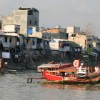
PHILIPPINES: Revival of Filthy River Flows from Changed Habits
While more developed countries consider waterfronts prime property, most Filipinos have regarded rivers and creeks as their "backyard" and sewage system.
AGRICULTURE: Affordable Solution to Costly Pests
The International Centre for Plant Physiology and Ecology (ICIPE), based at Mbita, on the Kenyan shores of the world’s second-largest freshwater body, is advocating "push-pull cultivation" as the answer to feeding future generations in Africa.AFRICA: Monitoring a Changing Climate
The gathering environmental crisis presented by global warming makes effective weather information and prediction a matter of urgency. As Africa's farmers come to grips with adapting to climate change, it may be that the best way to equip them is to involve them directly in collecting the data.
UGANDA: Information Technology Helps Farmers
Mayuge district has 31,000 farming families served by just nine agricultural extension workers. In Wainha village, an internet centre run by the Busoga Rural Open Source and Development Initiative is more than filling the gap in assisting farmers.
AGRICULTURE-NAMIBIA: Turning to Wild Bean for Protein
Obed Kamburona has tried to grow many different crops on his large farm, but the dry sandy soil in Otjovanatje has thwarted him every time.DEVELOPMENT: No Room for Complacency in Avian Flu – Experts
Government and international non-government organisations need to put as much effort in fighting the spread of complacency in the battle against the H5N1 virus as they do in curbing avian flu itself, experts say.HEALTH: Seeking Funds to Fight Neglected Diseases
Experts from around the world are trying to attract attention to deadly but little-known illnesses, such as Chagas disease, visceral leishmaniasis and sleeping sickness, that have been neglected by the pharmaceutical industry.VENEZUELA: New Frogs Appear; Their Discoverers Disappear
Shortly after it informed the world of the discovery of three new species of frogs, the environmental organisation Fundación Andígena closed its doors in Venezuela this month due to lack of financial support.HEALTH-ZAMBIA: Government’s SMS System for HIV Test Results
HIV-positive Bupe Mwamba, 22, lies next to her newborn baby girl at the rural clinic she just gave birth in and wonders if her baby is HIV-positive too.« Previous Page — Next Page »





The Week with IPS

NEXT STOP - SDGs
Tracking global progress towards a sustainable world
Tracking global progress towards a sustainable world
